

Coal throughput at Rotterdam increased 15.3% in the first nine months of 2026, alongside gains in crude oil and petroleum products, suggesting sustained demand for certain cargo types. However, broader European inland-waterway freight declined 3% in 2025 to 118 billion tonne-kilometres according to Eurostat data, with agricultural freight contracting even as coal and crude-petroleum movements rose. The composition of the inland barge fleet is already responding to these changes, with the number of dry-cargo vessels registered in Rhine countries falling from 6,410 in 2023 to 6,224 in 2025, while tanker numbers increased from 1,400 in 2022 to 1,477 in 2025.
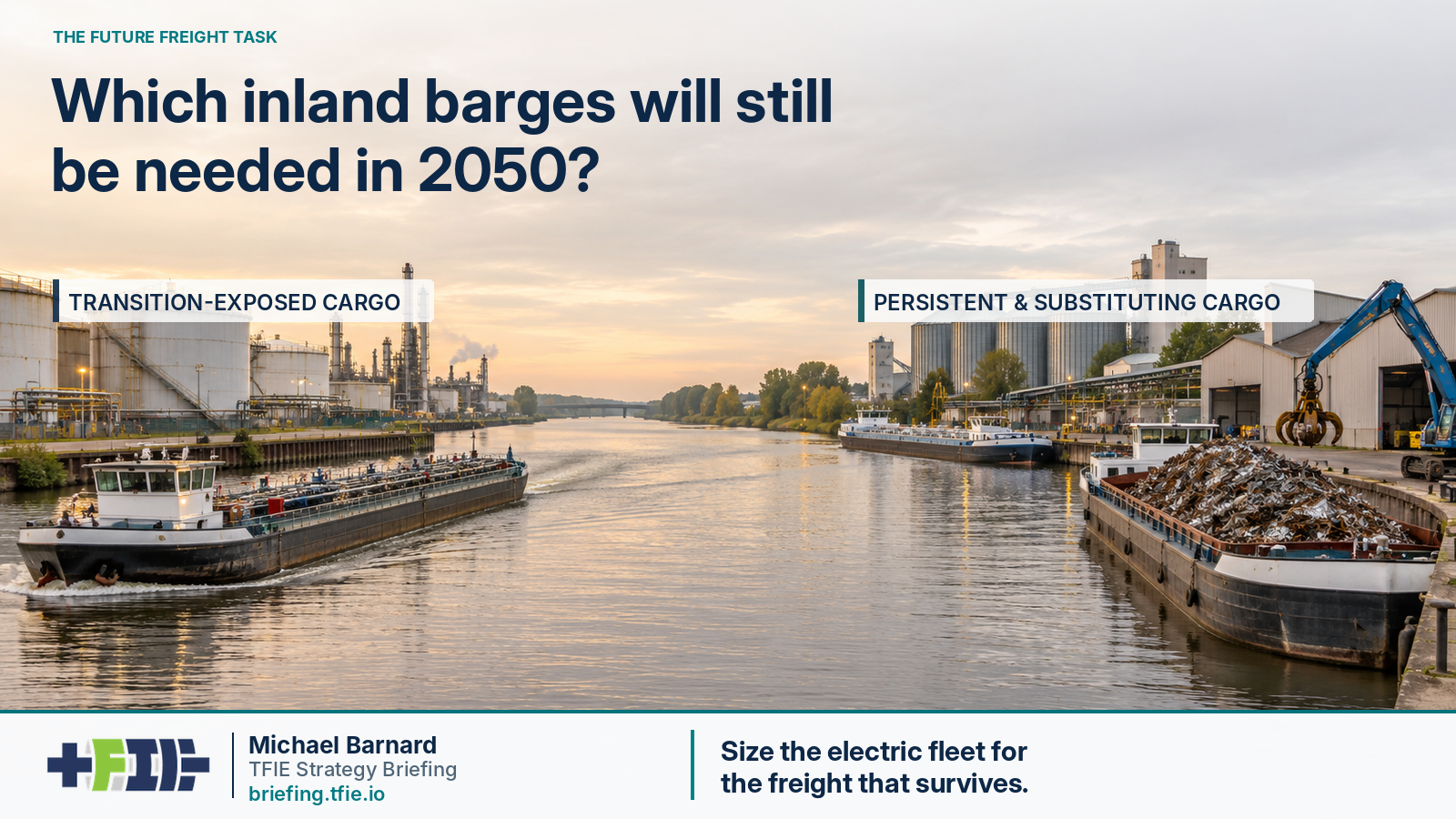
Vessel owners face two interconnected capital decisions: whether freight customers will persist throughout an asset’s operational life, and which propulsion system can serve that market economically. A scenario model for a major European industrial port corridor projects bulk cargo falling from 57.8 million tonnes to 34.4 million tonnes by 2050, with the largest reductions concentrated in fossil-fuel-linked cargo. Fossil fuels and refinery streams are modelled to drop from 19.0 million tonnes to 1.5 million tonnes, while coal and other solid fossil fuels decline to zero, together accounting for approximately 20 million tonnes of the projected 23.4-million-tonne net reduction.
Cargo substitution will reshape services even where industrial functions continue. Steel production illustrates this dynamic, with imported iron ore declining from 4.5 million tonnes to 3.0 million tonnes while scrap and circular feedstocks rise from 1.8 million to 3.5 million tonnes. Biofuel feedstocks present a separate consideration, peaking near 5 million tonnes in 2030 before falling to 1.5 million tonnes in 2050, potentially creating temporary profits insufficient to justify thirty-year vessel or terminal investments.
The fleet analysis reveals that tonnage measurements alone cannot determine electrification requirements. The modelled scenario translates commodities into powered vessel-equivalents accounting for parcel sizes, routes, and productivity, projecting a reduction from approximately 1,150 powered equivalents to 664, a 42% decline. Pushed formations complicate the calculation, as converting one powered unit does not necessarily require replacing every physical hull in the formation. Water level constraints and seasonal load factors further affect actual cargo capacity and routing decisions.
Ports, vessel operators, and utilities should establish a comprehensive freight register identifying declining, persistent, and changing cargo streams before infrastructure and propulsion investments are made. Battery-powered vessels already operate successfully on container and bulk routes; the commercial opportunity lies in electrifying services connected to sustainable customer bases and surviving freight corridors rather than expanding electric fleet capacity ahead of confirmed cargo demand.
Article Attribution | Read More at Article Source
Article summary produced by Claude AI