

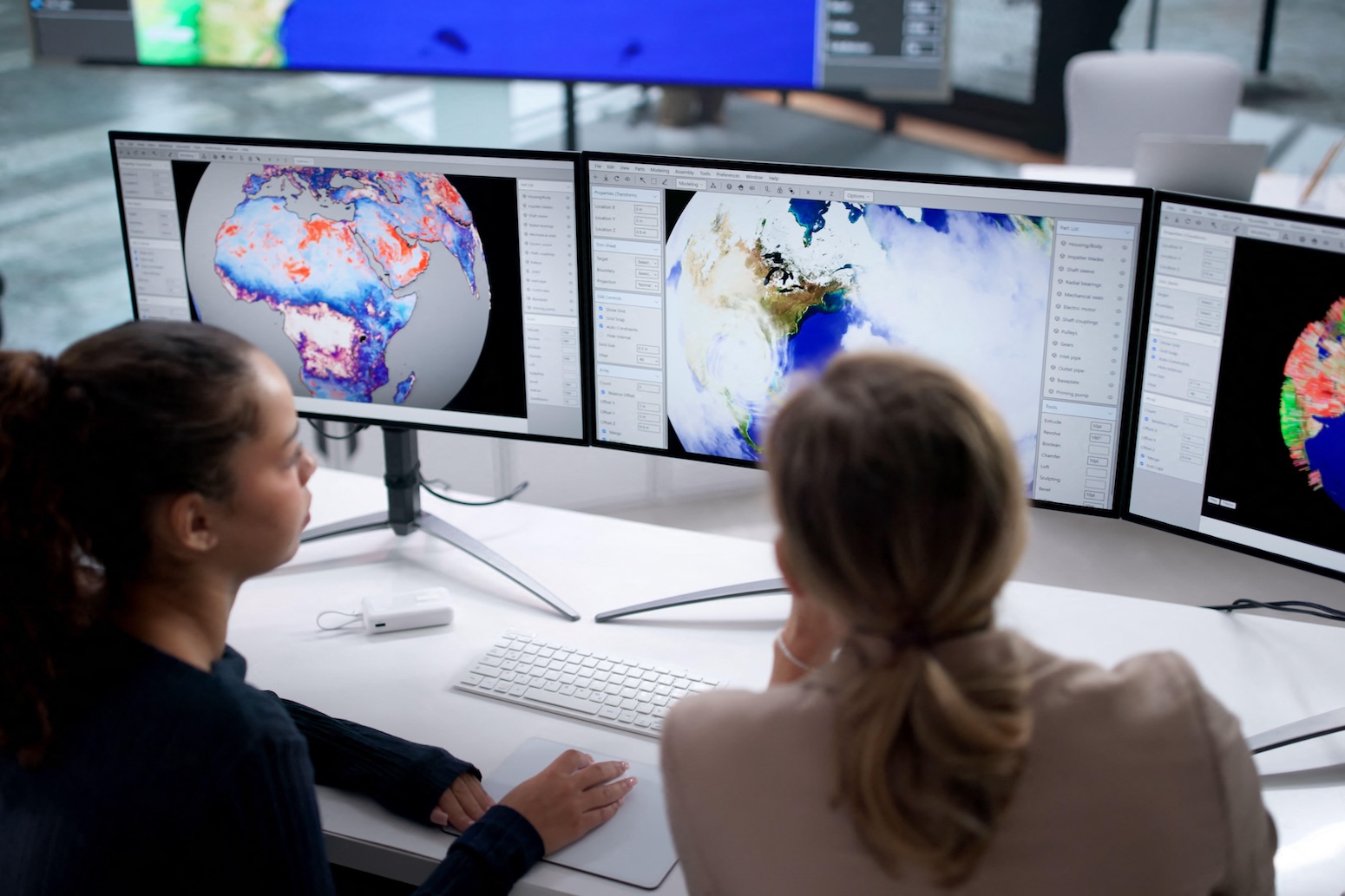
Artificial intelligence is playing an expanding role in climate science, with applications ranging from weather prediction to satellite-based environmental monitoring. According to experts consulted on the topic, machine learning systems have demonstrated particular success in short-term weather forecasting, where they can match or exceed traditional numerical models while requiring substantially less computational power.
However, experts note that translating these successes to longer-term climate projections presents distinct challenges. Unlike weather forecasting, which relies on extensive historical observational data, climate science requires predictions for future conditions that fall outside existing records. Researchers are exploring hybrid approaches that combine artificial intelligence with traditional physics-based models to balance computational efficiency with the scientific understanding necessary for reliable climate projections.
Beyond forecasting, AI technologies are being deployed to analyze the vast quantities of satellite imagery now available for monitoring Earth’s systems. Applications include tracking methane emissions from industrial sources through hyperspectral satellite data, detecting illegal logging and land-use changes, monitoring glacier retreat, and measuring sea ice characteristics. These systems can process data at scales and speeds impossible for human analysts.
Despite these advances, significant challenges remain. AI weather prediction models tend to underperform in extreme weather events—precisely the scenarios most relevant for climate adaptation planning. Experts identify the development of improved evaluation methods, hybrid models incorporating physical constraints, and solutions for predicting unprecedented conditions as central research priorities.
The field also faces broader concerns regarding energy consumption of AI systems, potential overreliance on unverified results, and questions about equitable access to these technologies across the global scientific community. Research institutions are establishing coordinated evaluation frameworks to compare physics-based, machine learning, and hybrid forecasting approaches systematically.
Article Attribution | Read More at Article Source
Article summary produced by Claude AI