

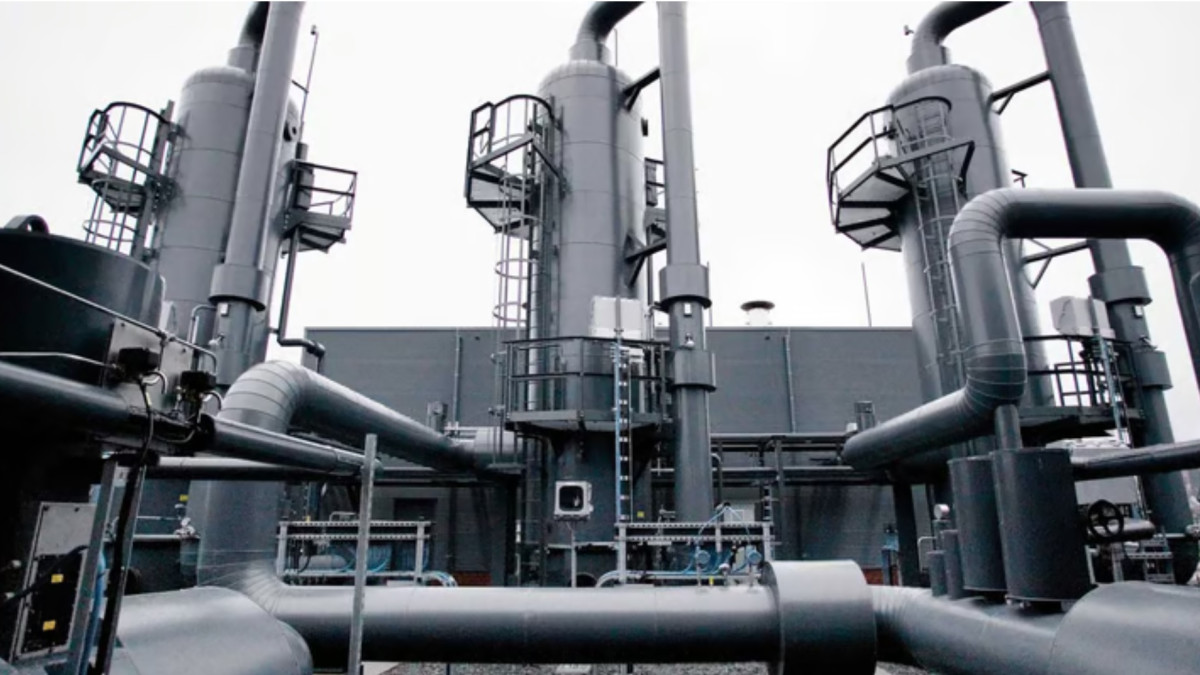
Germany has failed to meet the European Union’s mandatory requirement to fill natural gas storage to 80% capacity before the winter heating season begins. The country has achieved only approximately 61% capacity, a significant shortfall given that Germany maintains the EU’s largest gas storage infrastructure, representing over one-fifth of the bloc’s total capacity, and is simultaneously the bloc’s largest natural gas consumer.
Industry analysts had predicted this outcome for several weeks. Germany’s gas storage association, INES, issued warnings in September indicating that at prevailing liquefied natural gas acquisition rates, the country would struggle to reach even 77% capacity by the start of November. The organization has since issued additional warnings, attributing the storage shortfall partly to geopolitical developments in the Middle East that have rendered gas storage refilling economically unviable. Market participants had apparently anticipated a potential peace agreement between Iran and the United States that might have reduced gas prices, but instead faced escalating tensions and extended force majeure declarations from major suppliers like QatarEnergy.
The storage deficit has prompted calls from industry bodies for direct government intervention. INES has urged the Federal Ministry for Economic Affairs to introduce mandatory storage obligations for suppliers and to enshrine such requirements in law expeditiously. However, not all stakeholders view the situation identically. Klaus Mueller, head of Germany’s energy market regulator, has contended that meeting storage targets is no longer essential for supply security, arguing that strategic liquefied natural gas purchases during winter could adequately serve the nation’s needs, albeit at substantially elevated prices.
Gas futures markets suggest price pressures will persist through early 2027, with contracts for December 2026, January 2027, and February 2027 all trading above 100 euros per megawatt-hour. This pricing environment is forcing utilities to increase reliance on coal-based power generation, a development that conflicts with Germany’s energy transition objectives. Earlier analysis predicted a 25% increase in EU coal power generation over the six-month period ending in March 2027 as operators shift away from expensive natural gas.
Germany confronts competing pressures as winter approaches. The nation must either procure gas at escalating prices or increase coal consumption, both options presenting policy complications. These constraints are compounded by forecasts predicting below-average temperatures in the coming period and the limited capacity of remaining coal power plants to accommodate surge demand.
Article Attribution | Read More at Article Source
Article summary produced by Claude AI