

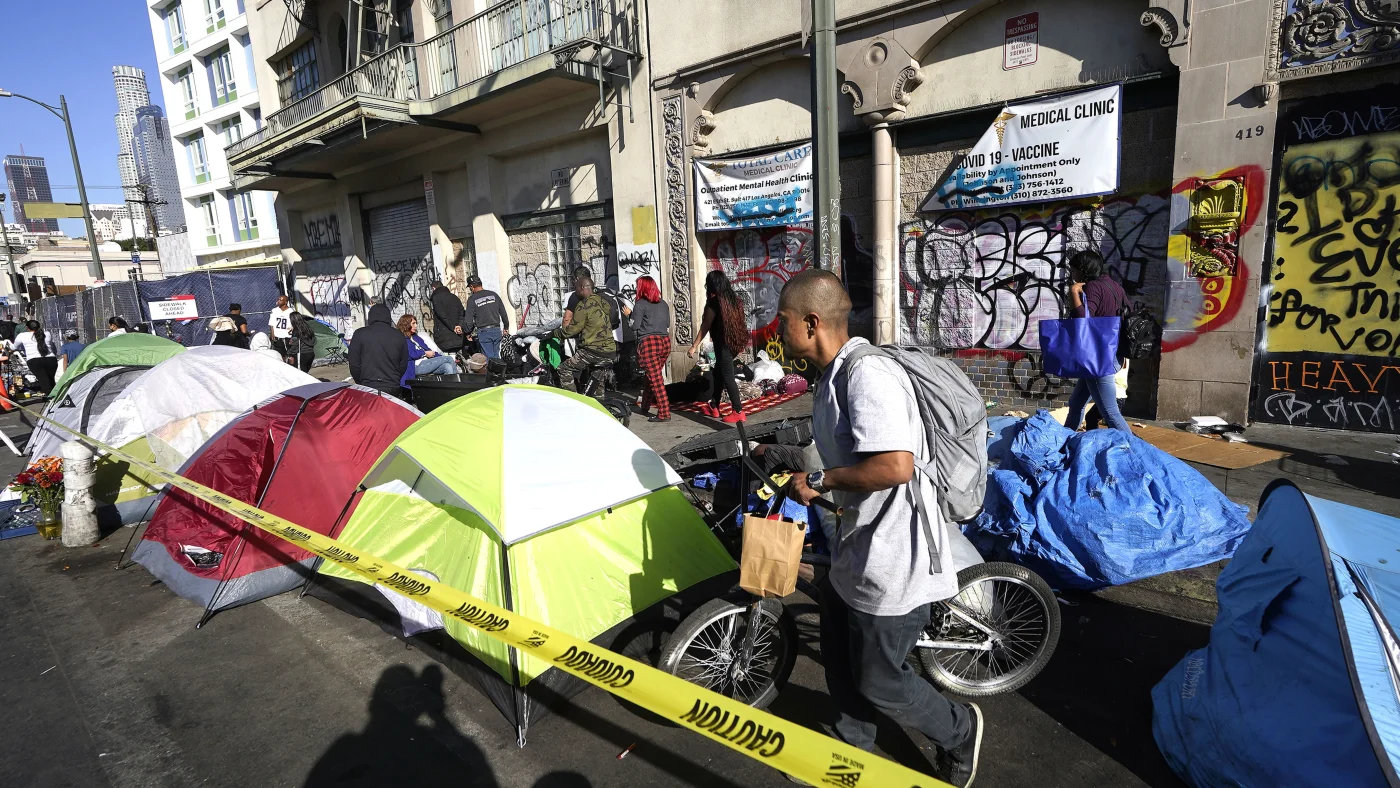
The homeless population in the United States experienced a significant decline in 2025, dropping more than 6 percent compared to the previous year. This reduction, representing approximately 49,000 fewer people without housing, marks the second consecutive year of declining homelessness after years of increases that had reached record levels. Despite this progress, nearly 700,000 individuals remain living in shelters or on the streets, a figure substantially higher than pre-pandemic levels.
The Trump administration attributed the decline primarily to changes in immigration policy, noting that border security measures and enforcement actions contributed to the reduction. The administration pointed to cities like New York, Chicago, Boston, and Denver—which experienced significant surges in asylum seekers during the Biden administration—as having driven roughly half of the recent nationwide decrease. However, an independent analysis commissioned by the National Alliance to End Homelessness credited federal programs funded by Congress and various community initiatives as primary factors in the decline.
Other contributing factors included policy shifts toward sober-living housing options in cities like San Francisco, as well as Supreme Court decisions in 2024 that permitted municipalities to restrict public sleeping and camping. Additionally, softening rental markets in certain regions may have slowed the rate of new homelessness, and disaster relief efforts in areas affected by major weather events provided assistance that extended to unhoused populations.
The administration and advocacy groups disagreed on the optimal policy approach moving forward. The Trump administration proposed restructuring billions in federal homelessness spending toward short-term housing with mandatory addiction and mental health treatment, arguing existing models had failed. However, the National Alliance to End Homelessness emphasized that unconditional housing programs, particularly those benefiting veterans—whose homelessness declined over 7 percent last year—had been effective. The organization noted that chronic homelessness saw a slight increase despite overall declines, suggesting targeted approaches for different homeless populations may be necessary.
Article Attribution | Read More at Article Source
Article summary produced by Claude AI