

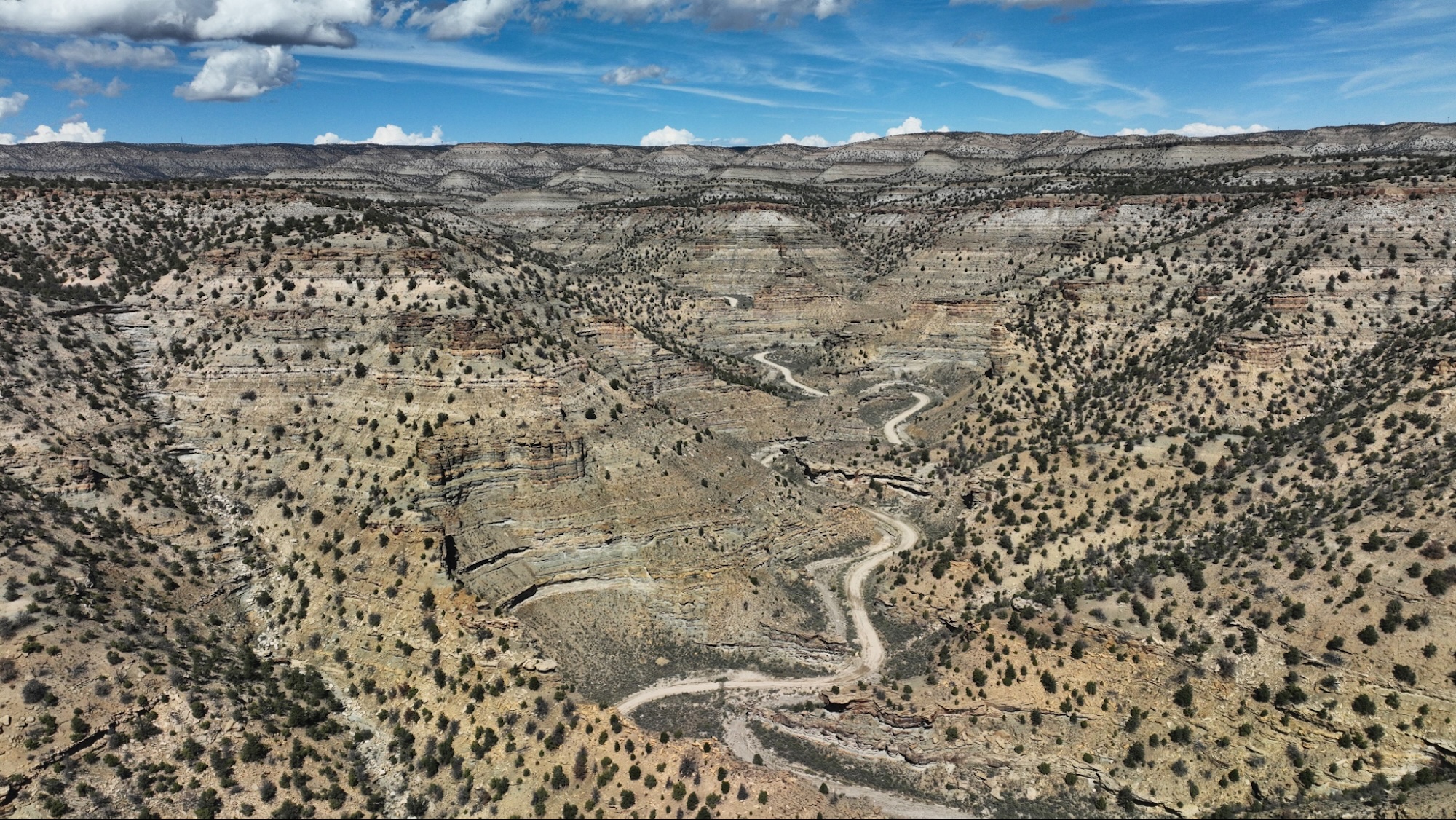
The Trump administration approved a road-widening project in eastern Utah that would expand an existing dirt road through Nine Mile Canyon, an area containing thousands of archaeological sites and Native American petroglyphs. The project aims to create a more direct route for oil industry traffic from the Uinta Basin oil fields to Carbon County rail-loading facilities, potentially accommodating up to 500 heavy trucks daily through the canyon.
The proposed highway would involve dynamiting, paving, and widening approximately 5.3 miles of road through Gate Canyon, a tributary of Nine Mile Canyon that contains 47 historic sites, 43 of which are eligible for listing on the National Register of Historic Places. The Bureau of Land Management approved the final environmental assessment in April of this year, concluding the project would not significantly impact the environment, recreation, wildlife, or quality of life.
Environmental and historic preservation organizations, including the Nine Mile Canyon Coalition, the Southern Utah Wilderness Alliance, and the Center for Biological Diversity, filed a lawsuit last month challenging the approval. The plaintiffs argue the federal approval process violated multiple laws, including the Endangered Species Act, National Environmental Policy Act, Federal Land Policy and Management Act, and National Historic Preservation Act. They contend the BLM bypassed standard public comment and environmental review procedures and failed to properly identify and assess archaeological and historical resources in the project area.
Plaintiffs in the case allege the project could impact habitat for the threatened Mexican spotted owl and argue that the BLM approved the development without adequately identifying dozens of historical and archaeological sites within feet of the planned route. The federal government had not filed a response to the lawsuit as of the article’s publication date.
Article Attribution | Read More at Article Source
Article summary produced by Claude AI