

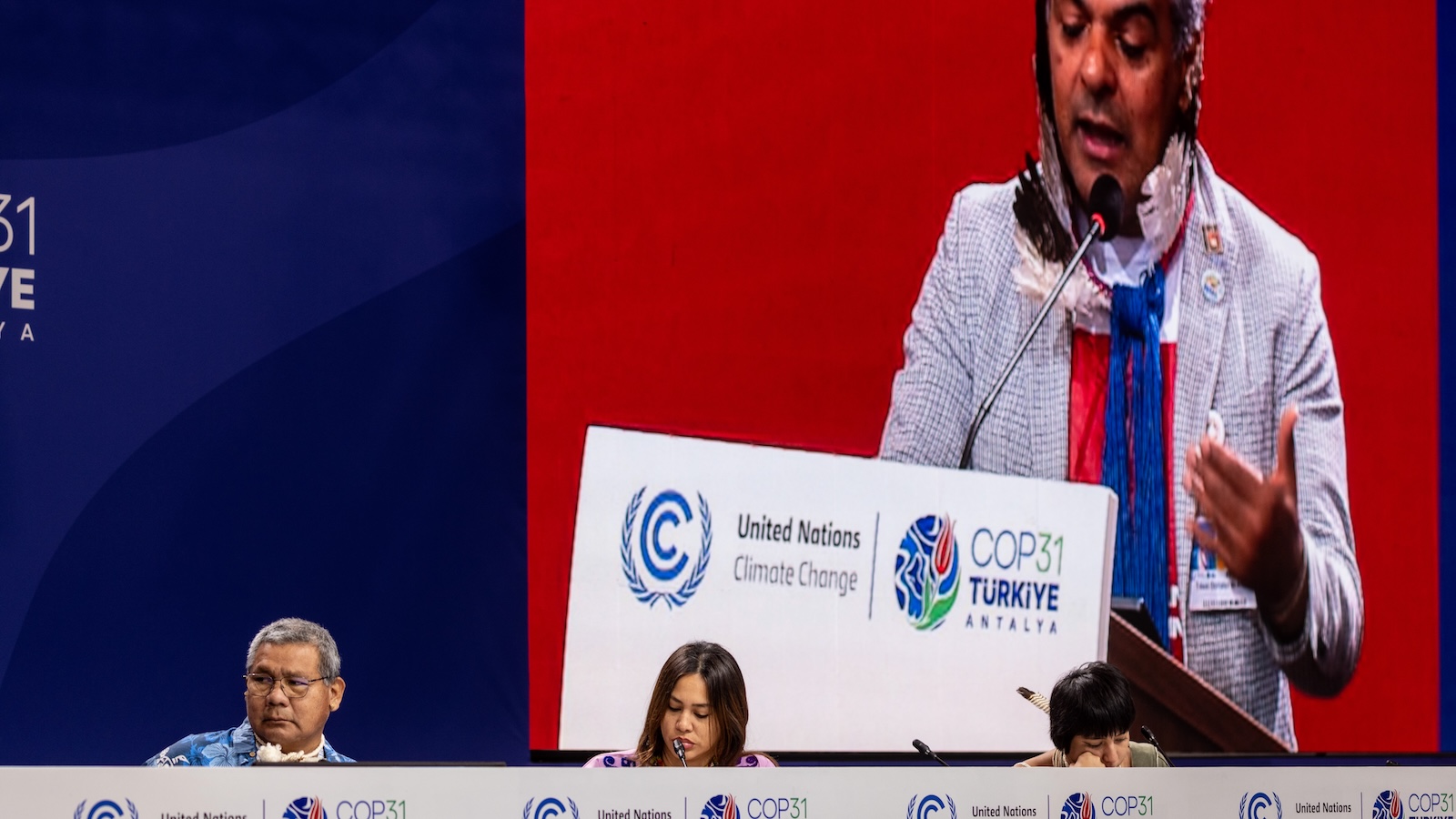
The UN climate conference in Antalya, Turkey, which began November 9, is positioned as an implementation-focused gathering aimed at translating previous international climate agreements into concrete measures. Indigenous representatives are using the conference to assess whether commitments made at last year’s conference in Belém, Brazil—dubbed “the Indigenous COP” due to record Indigenous attendance—will result in meaningful progress on protecting Indigenous rights and land stewardship.
Indigenous advocates are calling on governments to honor pledges regarding land rights management across 400 million acres in tropical forest regions, deliver $1.8 billion in promised funding, and uphold the principle of free, prior, and informed consent regarding energy transition projects. However, Indigenous land defenders report that funding has arrived slowly and their rights continue facing threats. Edward Porokwa, a Maasai member of the UN Permanent Forum on Indigenous Issues, expressed skepticism about whether tangible progress will materialize for Indigenous peoples amid broader climate negotiations.
The conference occurs against a backdrop of intensifying climate-related disasters affecting vulnerable regions. Recent events include severe flooding and landslides in Nepal in August that resulted in substantial casualties and displacement, unprecedented wildfire activity across Canada, and widespread smoke damage in Indonesia. A recent UN report indicated that limiting global warming to the 1.5-degree target established in the 2015 Paris Agreement appears increasingly unattainable, a reality Indigenous delegates attribute partly to decision makers disregarding Indigenous knowledge and proven conservation practices.
Funding mechanisms for climate-affected communities remain inadequate, with the Loss and Damage Fund approving only $21.6 million for Nepal—less than one percent of documented damages. Indigenous leaders emphasize that accessing and distributing these resources requires acceleration. Additionally, Indigenous participants are advocating for holding major emitters accountable, with some highlighting legal cases like a New Zealand climate action lawsuit utilizing Māori customary law that has been blocked by the national government.
Despite logistical and political challenges in participating, Indigenous advocates view the conference as a crucial gathering for strengthening international solidarity while pushing for implementation of commitments rather than further pledges through November 20.
Article Attribution | Read More at Article Source
Article summary produced by Claude AI