

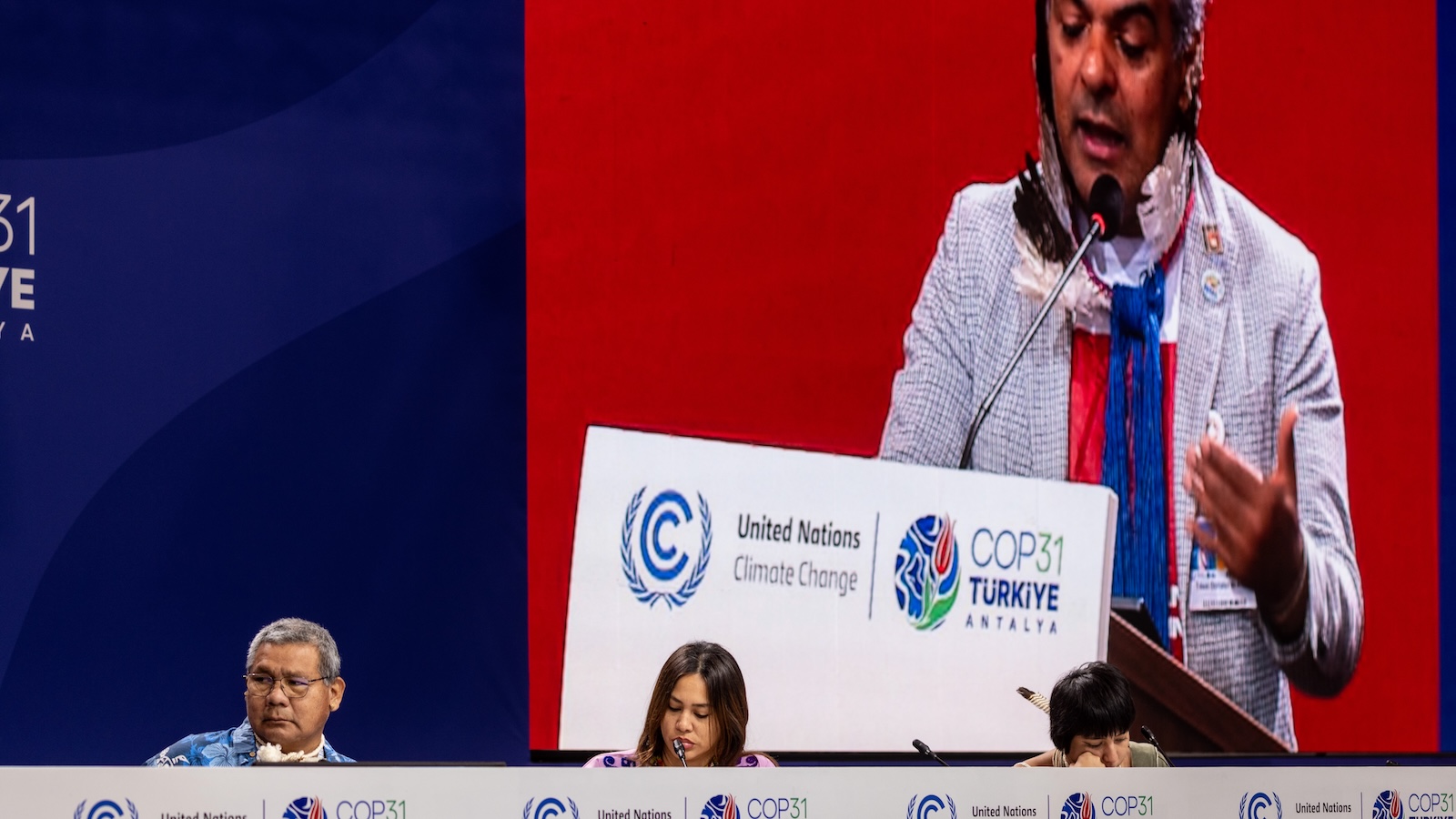
The United Nations climate conference currently taking place in Antalya, Turkey, represents a critical moment for Indigenous advocates to assess whether pledges made at last year’s gathering in Belém, Brazil will materialize into concrete action. Last year’s conference drew record Indigenous participation but was marked by frustration over continued exclusion from decision-making processes. This year’s event, designated as an implementation conference, shifts focus from announcing new commitments to executing mechanisms that translate previous agreements into reality.
Indigenous leaders are pressing for adherence to specific pledges, including the securing and strengthening of Indigenous land rights across approximately 400 million acres in tropical forest regions, the provision of $1.8 billion in funding, and respect for Indigenous consent in energy transition initiatives. Despite these commitments, advocates report that financial resources have moved slowly to communities and that Indigenous land defenders continue facing threats to both their rights and safety. Edward Porokwa, a Maasai representative on the UN Permanent Forum on Indigenous Issues, expressed skepticism about whether the current process will generate meaningful progress for Indigenous peoples.
The urgency of these demands is underscored by recent climate-related disasters. In Nepal, flooding and landslides earlier this year resulted in over 1,500 deaths and significant village destruction. Canada experienced an unprecedented wildfire season affecting millions of acres, while wildfire smoke in Indonesia has caused thousands of deaths and widespread disruptions to education and services. These events exemplify the mounting threats facing Indigenous communities and territories.
Indigenous delegates voice frustration that global emissions continue rising despite decades of presenting Indigenous knowledge and environmental stewardship to international negotiations, rendering the Paris Agreement’s 1.5-degree warming target effectively unachievable. While a Loss and Damage Fund has been established to support impacted nations, Indigenous leaders contend that disbursement processes must accelerate and that financial support represents both a humanitarian and historical justice issue. As negotiations continue through November 20, Indigenous advocates remain focused on ensuring commitments transition from discussion to implementation.
Article Attribution | Read More at Article Source
Article summary produced by Claude AI