

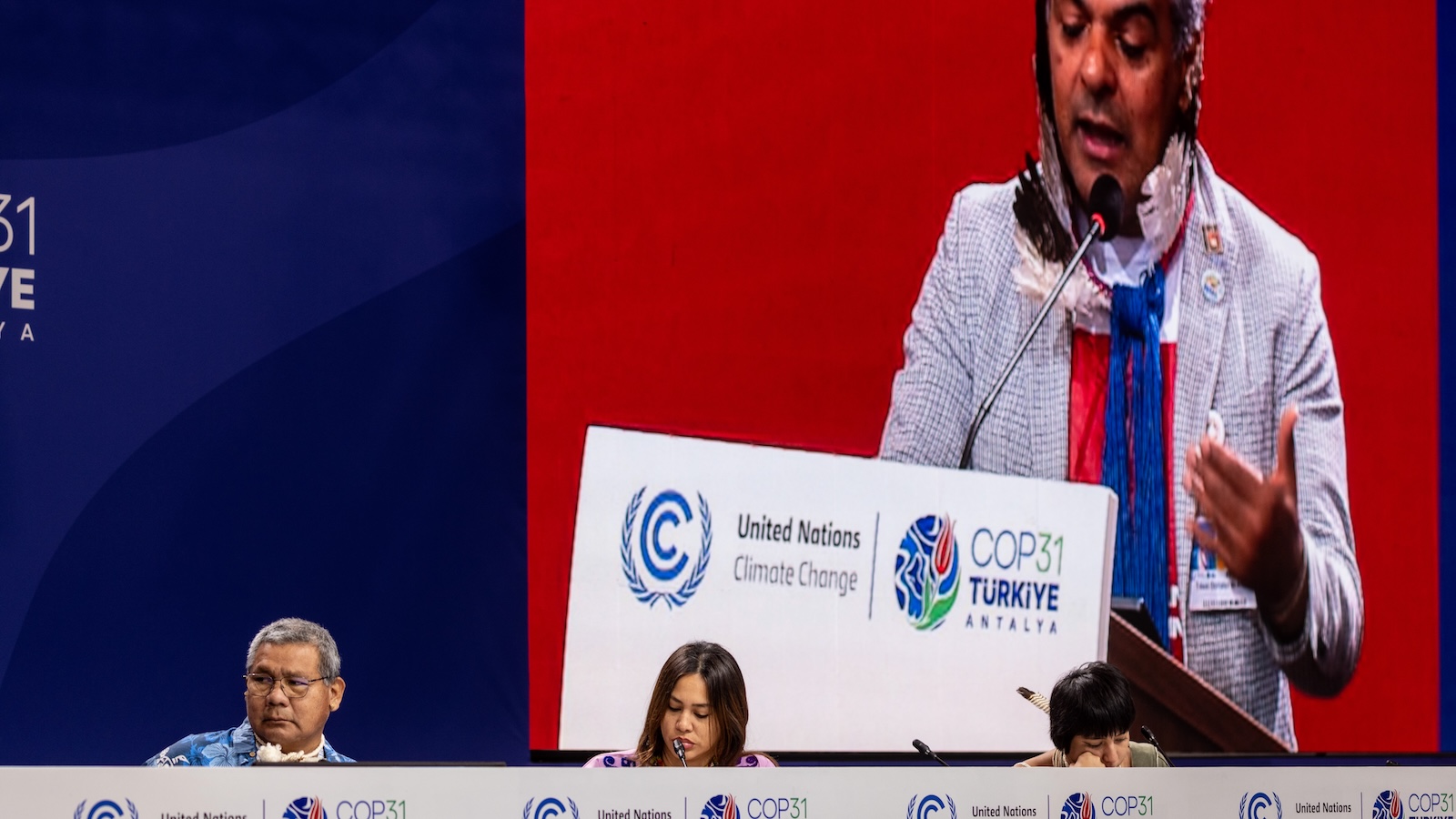
The United Nations climate conference in Antalya, Turkey, which began November 9, is focused on implementation rather than new pledges. Indigenous delegates are using the gathering to assess whether commitments made at the previous year’s conference in Belém, Brazil have translated into concrete action on climate policy and Indigenous rights.
Indigenous advocates are pressing governments to fulfill several key commitments, including securing and strengthening Indigenous land rights across 400 million acres in tropical forest countries, delivering $1.8 billion in funding, and respecting Indigenous consent in energy transition decisions. However, Indigenous land defenders report that funds have been slow to arrive and that their rights and safety remain threatened despite these pledges.
Recent climate disasters underscore the urgency of these demands. Major flooding and landslides in Nepal killed more than 1,500 people, while Canada experienced historic wildfires affecting millions of acres. Indonesia has contended with wildfire smoke causing thousands of deaths and widespread emergency measures. These events illustrate the disproportionate impact of climate change on vulnerable communities and Indigenous territories.
Indigenous delegates have expressed frustration that a recent United Nations report indicates limiting global warming to 1.5 degrees is now virtually impossible, a goal established by the 2015 Paris Agreement. They view this failure as resulting from decision makers disregarding Indigenous knowledge and environmental stewardship practices that research has shown provide climate benefits. Activists emphasized that despite three decades of presenting Indigenous science at climate negotiations, global emissions continue rising.
Additional priorities include accelerating financial support through the Fund for Responding to Loss and Damage and holding major emitters accountable through legal mechanisms. Indigenous leaders stressed that climate finance represents more than humanitarian assistance but reflects issues of equity, historical responsibility, and the right of affected communities to recover with dignity. Negotiations continue through November 20.
Article Attribution | Read More at Article Source
Article summary produced by Claude AI