

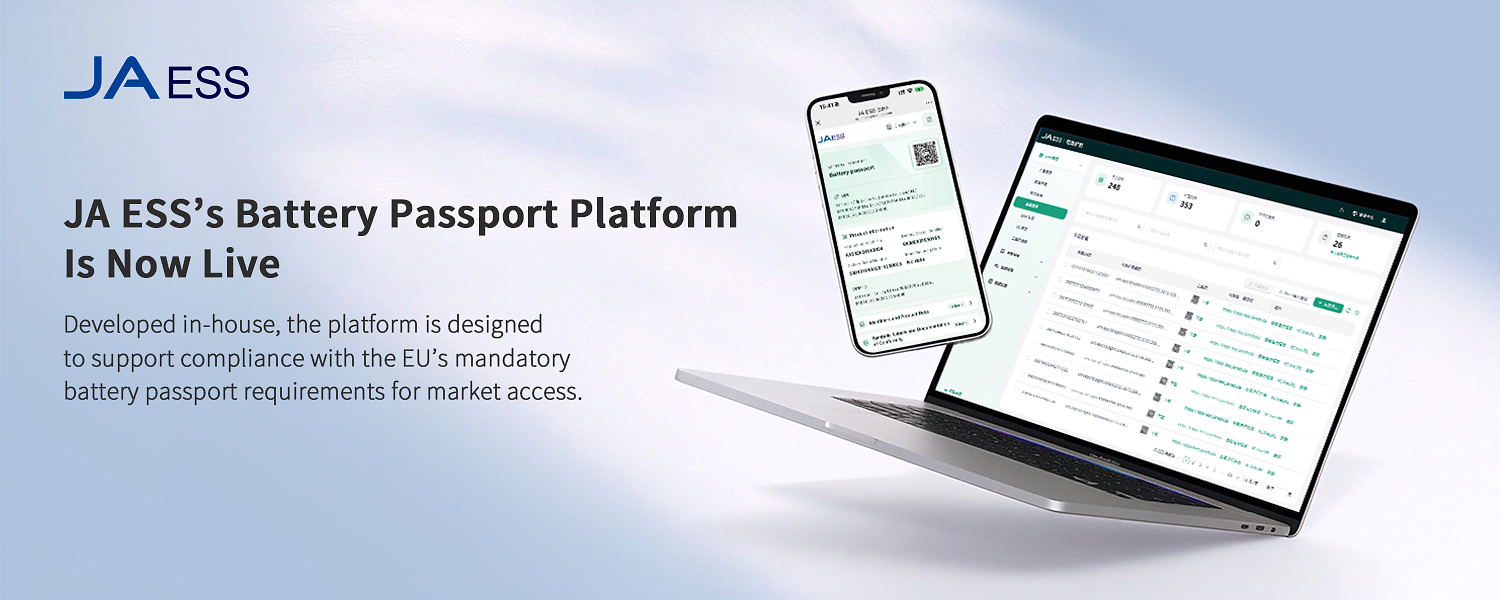
JA Energy Storage has introduced a proprietary battery passport data platform designed to assist companies in managing battery lifecycle information and preparing for European Union regulatory requirements. The platform operates within the company’s own cloud infrastructure, allowing JA ESS to maintain direct oversight of data policies, access controls, and system enhancements.
Under EU Battery Regulation, battery passports become mandatory starting February 18, 2027, for batteries used in light mobility transport vehicles, electric vehicles, and industrial batteries exceeding 2 kilowatt-hour capacity that enter the market or are put into service. These requirements represent the first phase of a broader regulatory framework with additional mandates anticipated in the future.
A battery passport functions as a digital information file connected to an individual physical battery through QR code and unique identifier technology based on international standards. The system enables access to comprehensive data throughout a battery’s entire operational period, encompassing product specifications, material composition details, carbon footprint calculations, recycled content percentages, performance characteristics, supply chain documentation, and end-of-life management information. This integrated data structure facilitates consistent tracking and information management from initial product identification through final disposal.
Manufacturers face substantial implementation challenges beyond simply generating QR codes. Data must maintain traceability to original sources, remain current, and be accessible according to both regulatory mandates and business needs. Organizations must also control access to proprietary information and adhere to regulations governing international data movement and intellectual property protection. These considerations grow more complex for manufacturers serving multiple geographic markets. When companies rely on third-party platforms, the system’s capabilities, available data fields, and cross-platform compatibility depend on the provider’s technical architecture and service offerings.
By developing and hosting its platform internally, JA ESS retains authority over data governance, permission structures, and future modifications. The internal team oversees regulatory compliance regarding data accessibility, information presentation, and system updates while maintaining enhanced authority over information administration. The platform design permits adjustments as regulatory standards evolve and practical implementation experience accumulates. JA ESS operates as the energy storage division within the JA corporate structure, providing various applications for commercial, industrial, and residential markets.
Article Attribution | Read More at Article Source
Article summary produced by Claude AI