

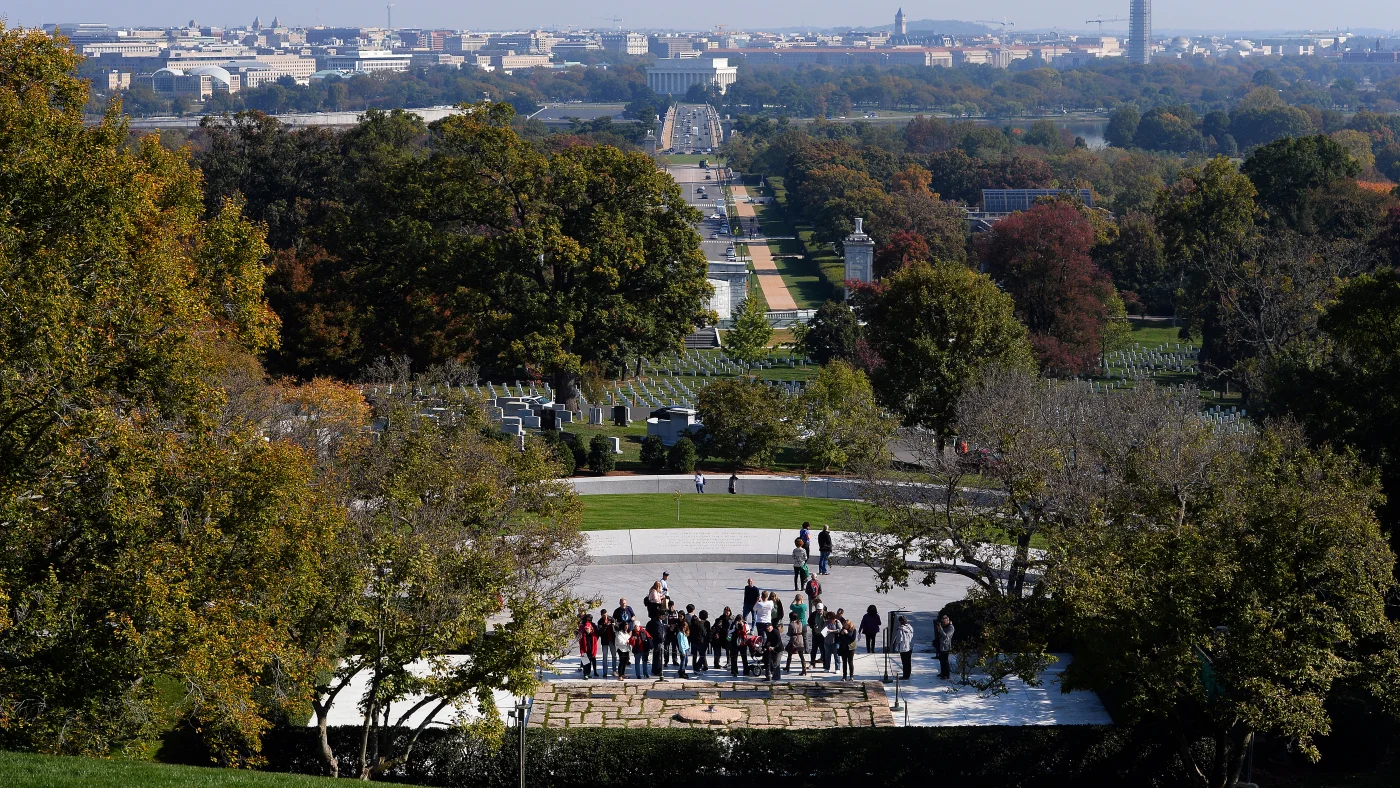
A lawsuit challenging President Trump’s planned 250-foot arch monument in Washington, D.C. has gained prominent plaintiffs with nine members of the Kennedy family filing suit in federal court. The Kennedy relatives, including descendants of Senators Robert F. Kennedy and Edward M. Kennedy, contend that the structure would obstruct views of their family members’ gravesites at Arlington National Cemetery, particularly the John F. Kennedy Eternal Flame.
The Kennedy family argues in their legal filing that the arch would cast a permanent shadow over graves of significant historical importance and would violate the original design intent of JFK’s burial site. According to the family’s court documents, President Kennedy’s gravesite was deliberately positioned on an axis connecting Arlington House to the Lincoln Memorial, symbolizing a link between Lincoln and Lee. The family notes that Kennedy himself expressed affection for the vista from that location, and that the eternal flame burning at his grave since November 1963 was designed to be visible from the bridge connecting the two landmarks.
The Trump administration has defended the project as an appropriate honor to those buried at Arlington Cemetery. A White House spokesperson stated that the administration remains confident it will prevail in the litigation and intends to continue making the case for the monument. Notably, Robert F. Kennedy Jr., who serves as Health and Human Services Secretary in the Trump administration, did not join his siblings in the lawsuit.
The Kennedy family’s motion seeks to join existing legal challenges to the arch, which include separate lawsuits filed by Vietnam War veterans, an architectural historian, and the governments of D.C. and Virginia. A federal judge issued a temporary two-week construction halt following the National Capital Planning Commission’s approval, allowing time for evaluation of the broader legal challenges. A central argument in the opposition centers on whether congressional approval is required for the project, which the Trump administration has not sought.
Article Attribution | Read More at Article Source
Article summary produced by Claude AI