

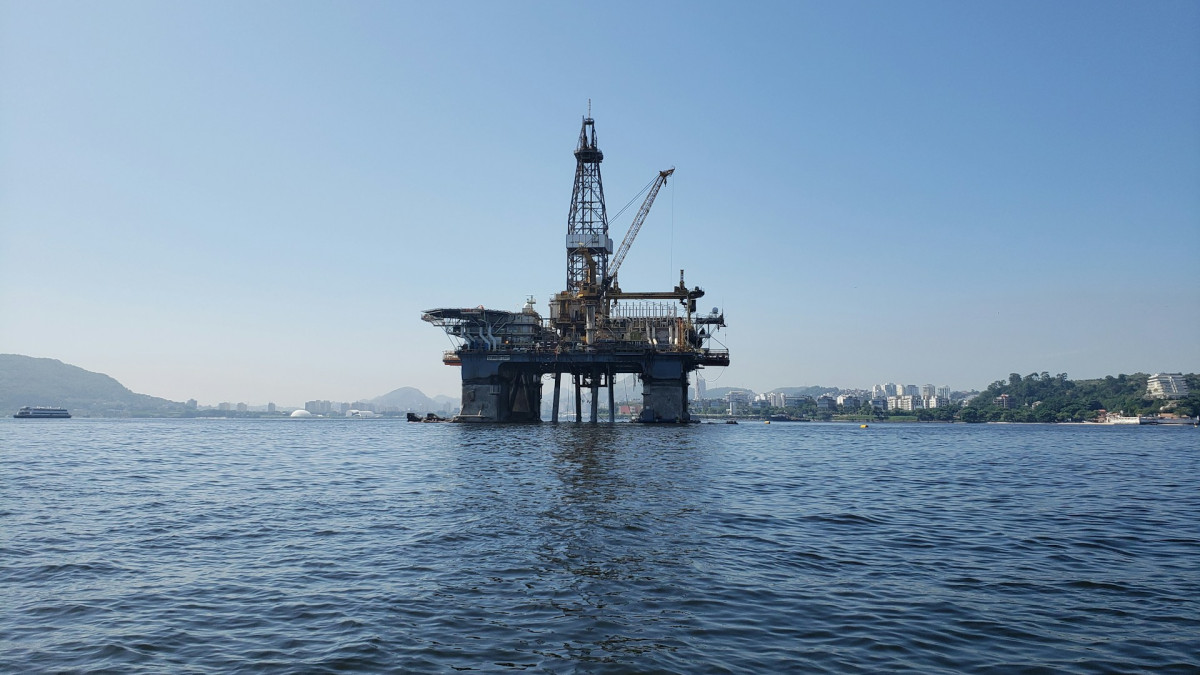
Brazil is on track to add more oil production than any other country this year, with offshore output reaching a record 4.7 million barrels per day in September, representing a 20.3% increase year-over-year. This production surge comes as global markets face constraints on crude supplies that avoid transit through the Strait of Hormuz. Major new projects from state-controlled Petrobras, including expanded capacity at the Buzios and Mero fields along with Equinor’s Bacalhau project, have collectively brought roughly 1.3 million barrels per day of capacity online since October 2024, with additional platforms expected to begin production in 2027.
A significant shift in Brazilian crude export destinations has occurred following the introduction of a 12% export tax in March and the subsequent implementation of an interim trade agreement between Brazil and the European Union under the Mercosur framework. The EU agreement, provisionally applied from May, requires Brazil to reduce qualifying export duties by at least 50% for EU-bound shipments. This preferential treatment creates a substantial economic advantage, allowing producers to offer European refiners competitive pricing while maintaining profitability compared to Asian markets. At typical price levels, producers pay approximately $4.62 per barrel in tax on EU sales versus $9.24 per barrel for sales to China or India.
The financial incentive has dramatically reshaped trade patterns. European-bound crude loadings doubled from roughly 490,000 barrels per day in February to 975,000 barrels per day by August, with the EU’s share of Brazilian exports rising from 22% to approximately 34% over the same period. Brazil now ranks as the fifth-largest crude supplier to the EU, behind the United States, Norway, Kazakhstan, and Libya. Brazilian crude grades have become competitively priced against established suppliers, with shipments reaching refineries across the Amsterdam-Rotterdam-Antwerp region, Spain, Portugal, Poland, France, Italy, and even Norway.
The composition of exports has also evolved, with newer high-volume grades such as Mero gaining prominence alongside traditional Tupi and Buzios varieties. Mero, characterized by a 29-degree API gravity and low sulphur content of 0.31%, has become increasingly favored by European coastal refineries producing IMO 2020-compliant marine fuel. Shipping dynamics have further supported European demand, as Brazil predominantly uses Suezmax-sized tankers for European deliveries while Asian-bound barrels typically require larger VLCC vessels. When global tanker rates surged in September and October, the cost differential between shipping to Europe versus Asia widened, creating additional pressure on Asian sales and further incentivizing producers to redirect volumes westward.
Article Attribution | Read More at Article Source
Article summary produced by Claude AI