

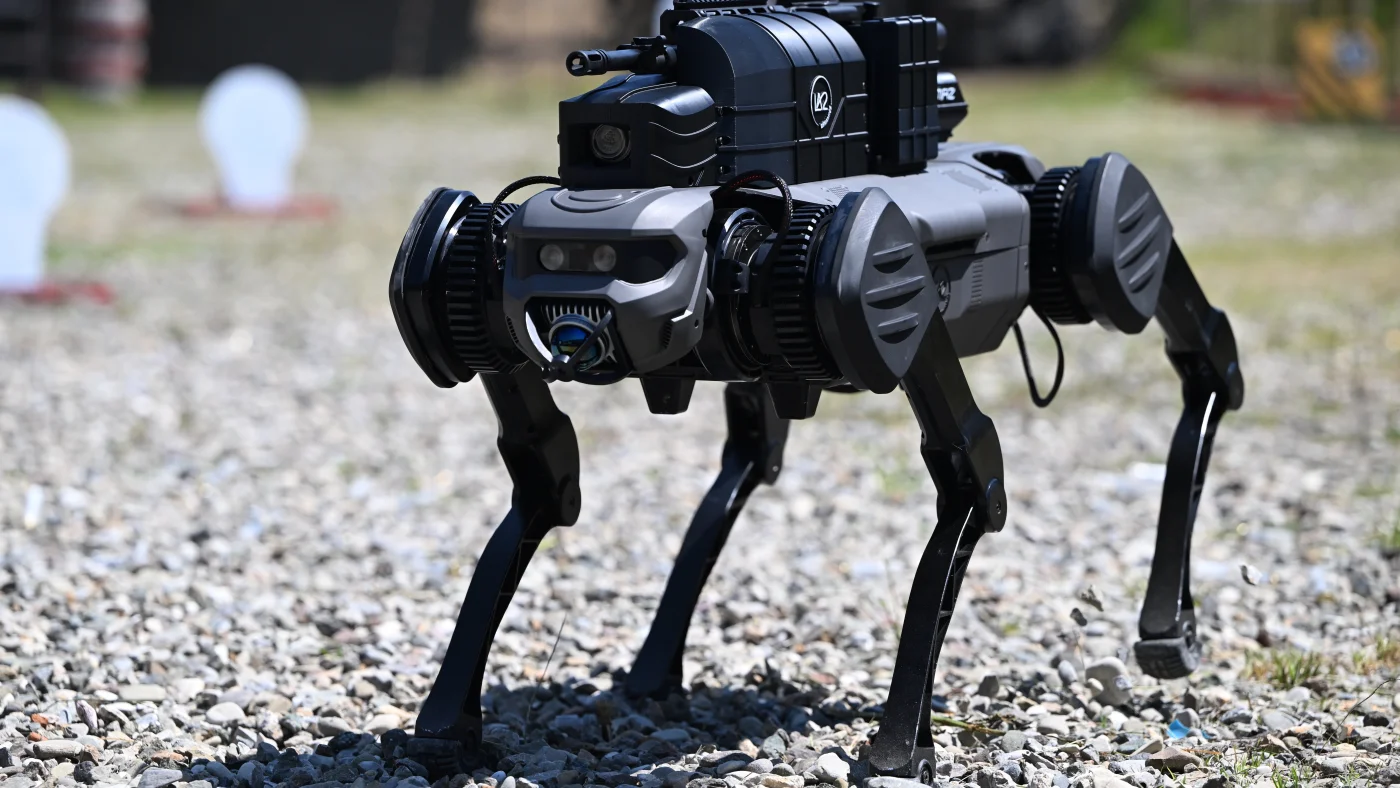
International negotiations on artificial intelligence-powered autonomous weapons concluded this week with countries endorsing a plan to continue deliberations through 2028, rather than establishing enforceable constraints. The week-long conference convened under UN auspices in Geneva brought together dozens of nations to address lethal autonomous weapons systems, but the resulting agreement fell short of binding commitments that the UN Secretary-General and numerous countries had sought.
The accord centers on a commitment to “elaborate” potential frameworks for regulating such systems by 2028. While some officials characterized this as progress, critics and advocacy organizations described the outcome as inadequate. Izumi Nakamitsu, the UN high representative for disarmament affairs, described the scenario as potentially a “glass half full or half empty,” acknowledging the gap between the agreement reached and the more ambitious objectives that had been pursued.
Seven nations, including Brazil, Austria, Belgium, Ireland, Mexico, New Zealand, and Panama, had proposed launching formal negotiations toward a binding rulebook governing autonomous weapons development and deployment. That proposal did not advance. Observers attributed the limited results to resistance from major military powers, particularly those actively developing such technologies. Advocacy groups including Stop Killer Robots and international law organizations criticized the extended timeline, with representatives noting that military developments are outpacing diplomatic progress.
The negotiations took place within the framework of the Convention on Certain Conventional Weapons, a treaty ratified by 128 countries where decisions require consensus. The consensus requirement means any single nation can block agreement, typically resulting in compromises reflecting the lowest common denominator among participating states. Experts and activists expressed concern that autonomous weapons capabilities are advancing rapidly while regulatory frameworks remain absent, with some noting that armed systems capable of independent targeting have already appeared in certain conflict situations, though not yet in widespread deployment.
Article Attribution | Read More at Article Source
Article summary produced by Claude AI