

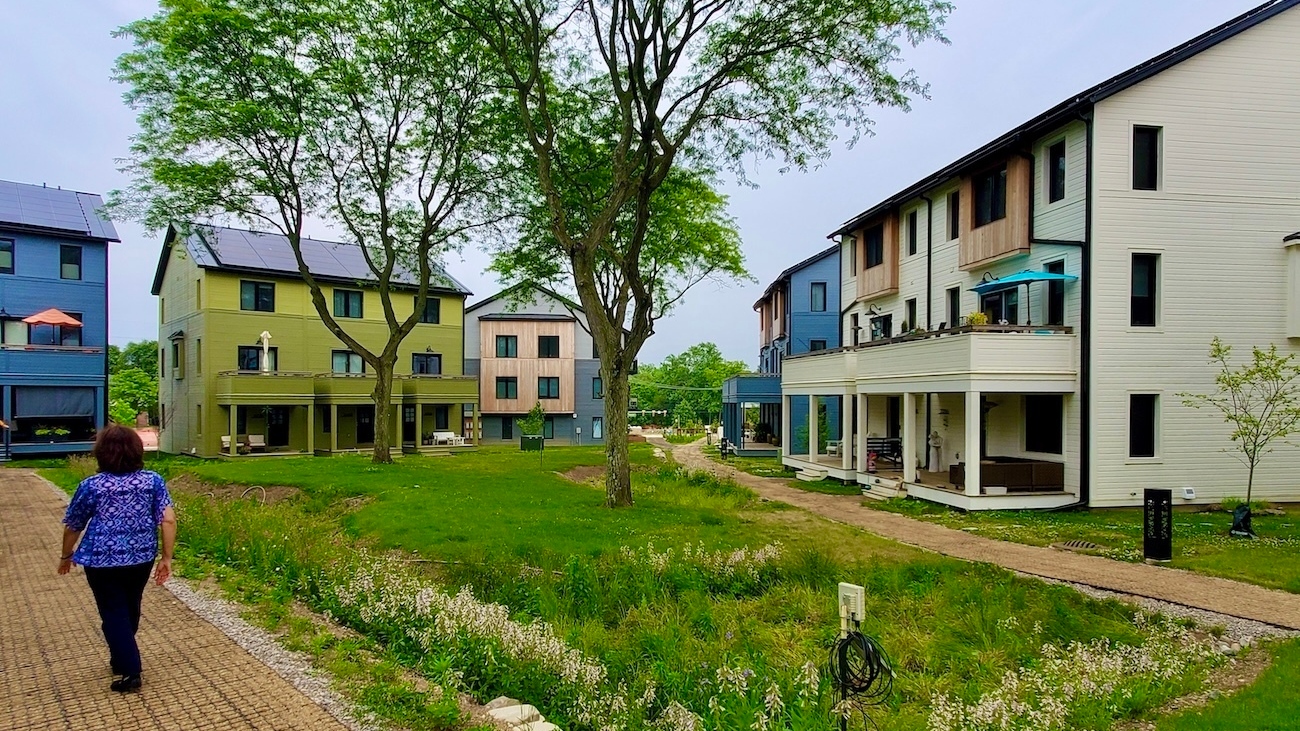
Veridian at County Farm, a fossil-fuel-free residential development in Ann Arbor, Michigan, is launching the state’s first residential virtual power plant pilot program. The community consists of net-zero-energy homes equipped with solar panels and battery storage systems that generate approximately as much electricity as residents consume. Through the pilot, participating households will enable Detroit-based utility DTE Energy to remotely control their home batteries and direct stored solar power to the electrical grid during periods of high demand or grid strain.
Residents enrolled in the program will receive compensation from DTE Energy, though specific payment amounts had not been disclosed. The arrangement offers participants a passive benefit, as the utility manages battery optimization automatically rather than requiring residents to actively monitor energy usage patterns. The pilot is expected to eventually encompass nearly 100 battery-equipped homes at Veridian and generate approximately 300 kilowatts of power for up to three hours.
Virtual power plants address grid reliability by smoothing demand peaks and reducing utilities’ reliance on expensive fossil fuel peaker plants and infrastructure upgrades. According to analysis from the Brattle Group, widespread adoption of distributed energy resources through VPP networks could save households an average of $122 annually by 2050. Battery manufacturer Sonnen USA, which supplied the home storage systems at Veridian, is assisting DTE in operating the pilot using proprietary software.
While virtual power plants have existed for years, adoption has been limited by factors including utility hesitancy and high costs for home solar and battery systems. However, growing electricity demand from electrification and data centers has accelerated interest in VPPs as a rapid deployment solution. A similar pilot program initiated in 2017 at Soleil Lofts near Salt Lake City expanded from an initial test to a full-scale program serving approximately 7,900 homes and businesses across Utah, Wyoming, and Idaho, demonstrating potential for scaled expansion.
The Veridian initiative is already generating interest from developers and utilities nationwide, with inquiries arriving from multiple states regarding replication of the model.
Article Attribution | Read More at Article Source
Article summary produced by Claude AI