

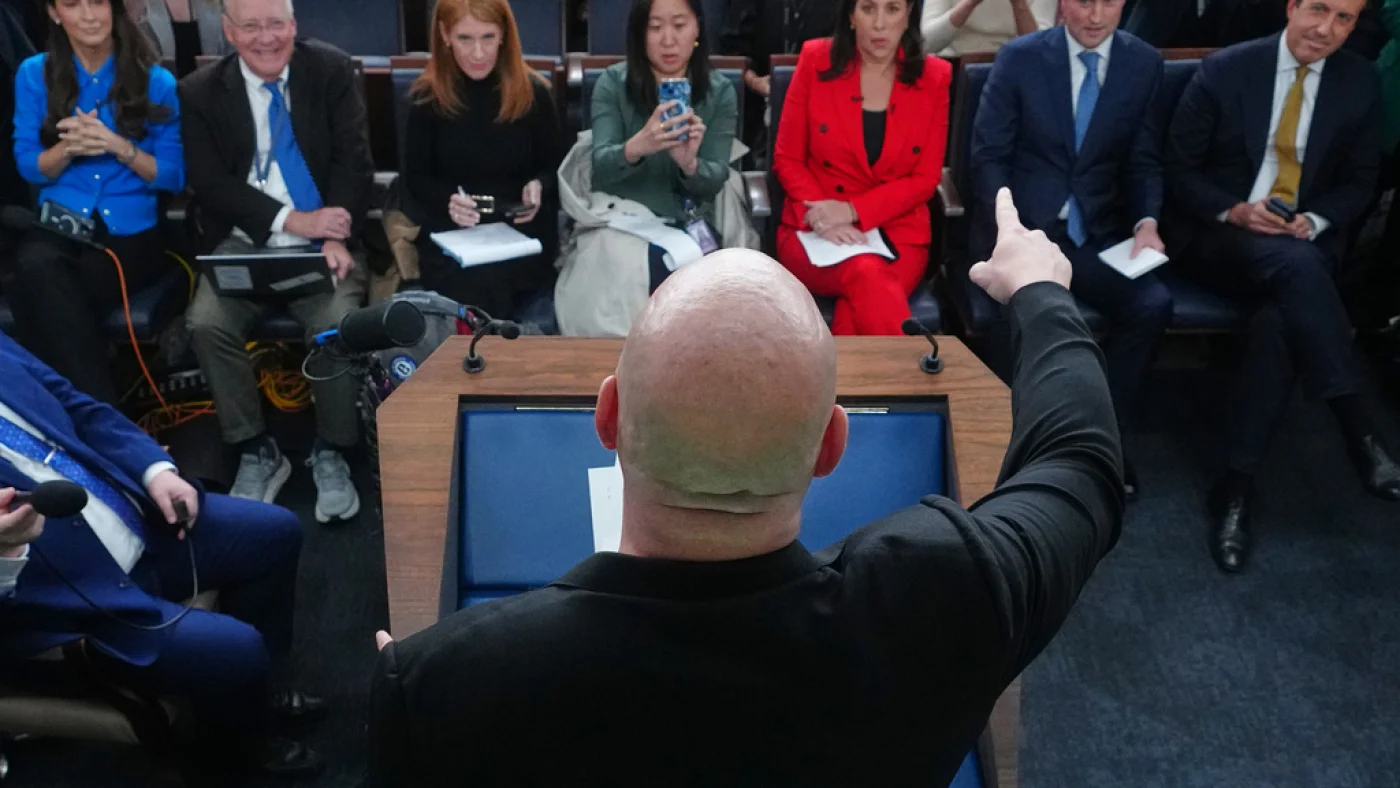
The White House has been without an official press secretary for an extended period, following Katie Zacharia’s five-day tenure in the middle of October, during which she conducted a single briefing that received mixed reviews.
President Trump announced through an online post that he would appoint Dana White, president and CEO of the UFC, to the position, describing him using combative language. Trump subsequently clarified the announcement was meant as a joke, noting that reporters would not challenge White as readily.
Despite the vacancy, the president has engaged with reporters approximately 500 times through various formats, including formal interviews, press conferences, and informal question-and-answer sessions at events, on Air Force One, and near the White House helipad. The number of formal White House press briefings has declined during the current administration.
Commentators have noted that the role of press secretary may have diminished in relevance given the president’s capacity to communicate directly with the public through social media platforms. Trump posts dozens of messages daily on his Truth Social account, bypassing traditional media gatekeepers and the possibility of journalistic fact-checking or contextual framing.
The situation has prompted discussion about whether alternative approaches to White House communications could serve similar functions to those traditionally provided by a dedicated spokesperson.
Article Attribution | Read More at Article Source
Article summary produced by Claude AI