

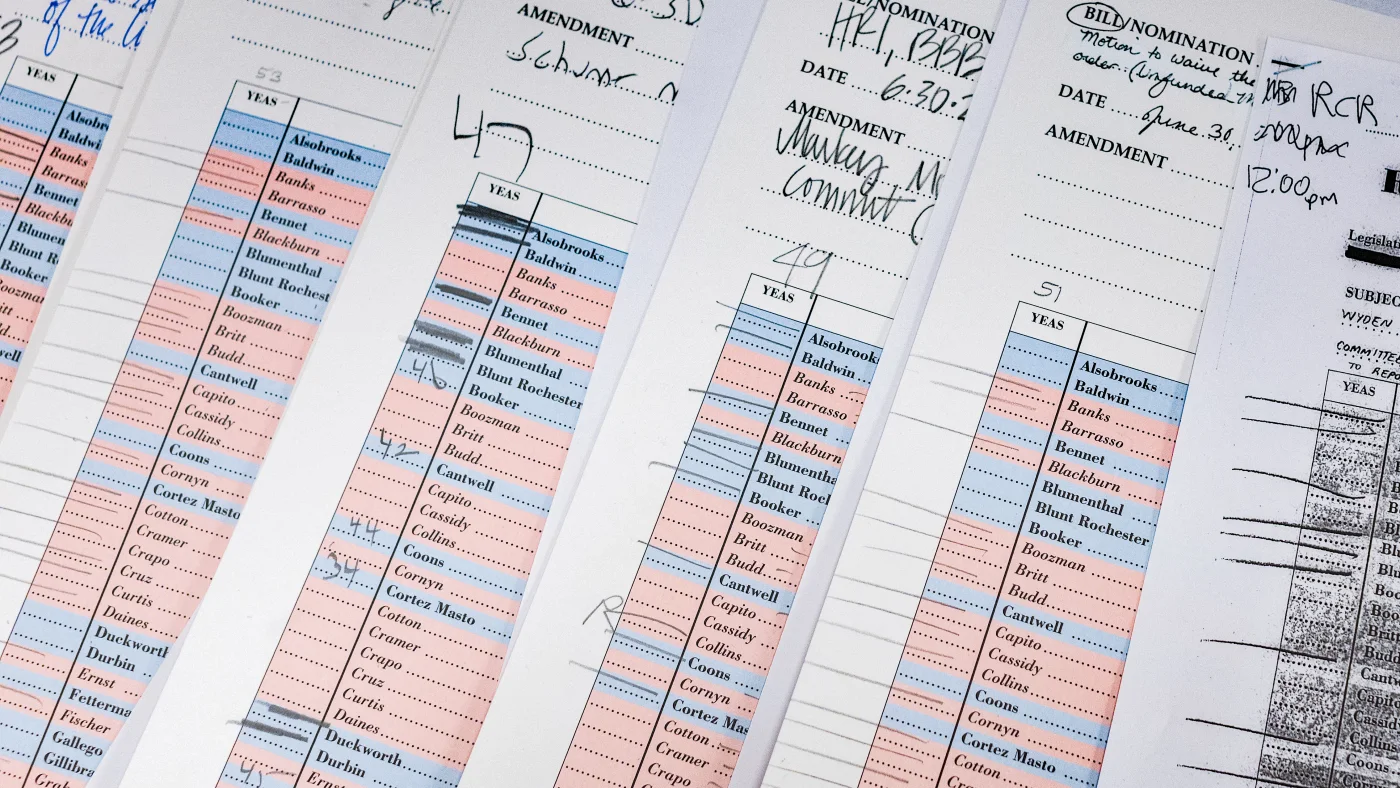
A crosspartisan coalition of open governance advocates has submitted a letter to Senate leadership requesting that the chamber publish bill and amendment text online immediately upon availability to members, rather than waiting until after votes take place.
The advocates argue that the current Senate process creates information disparities, where legislative text may not be publicly accessible until after votes conclude. Daniel Schuman, executive director of the American Governance Institute and a letter author, stated that this lack of transparency enables “problems to often sneak through” and can serve as “a mechanism for the Senate to move legislation to avoid the proper public scrutiny.” He cited a 2013 example in which Congress quietly repealed provisions of financial disclosure and insider trading law without substantial public attention.
Under existing procedures, the Congressional Record—the official legislative record—is not published until after each legislative day ends. When bills or amendments are offered and voted on the same day, they may remain unavailable to the public until after the votes are completed. The House of Representatives operates differently, publishing draft text and proposed amendments online ahead of consideration, with limited exceptions.
The advocates contend that Senate staff and interest groups with direct connections to Senate offices currently possess information advantages over the press, public, and government support agencies such as the Congressional Research Service and the Government Accountability Office. Luke Hogg, a senior fellow at the Foundation for American Innovation, noted that internal Senate systems now provide staffers reliable access to pending legislation, and that information should similarly be made available to the broader public.
Senator Alex Padilla’s office stated that the California Democrat, expected to chair the Senate Rules committee in the new Congress in January, remains open to considering the transparency proposal and other ideas to improve congressional functioning. Senate Republican leader John Thune did not provide a response to requests for comment on the matter.
Article Attribution | Read More at Article Source
Article summary produced by Claude AI