

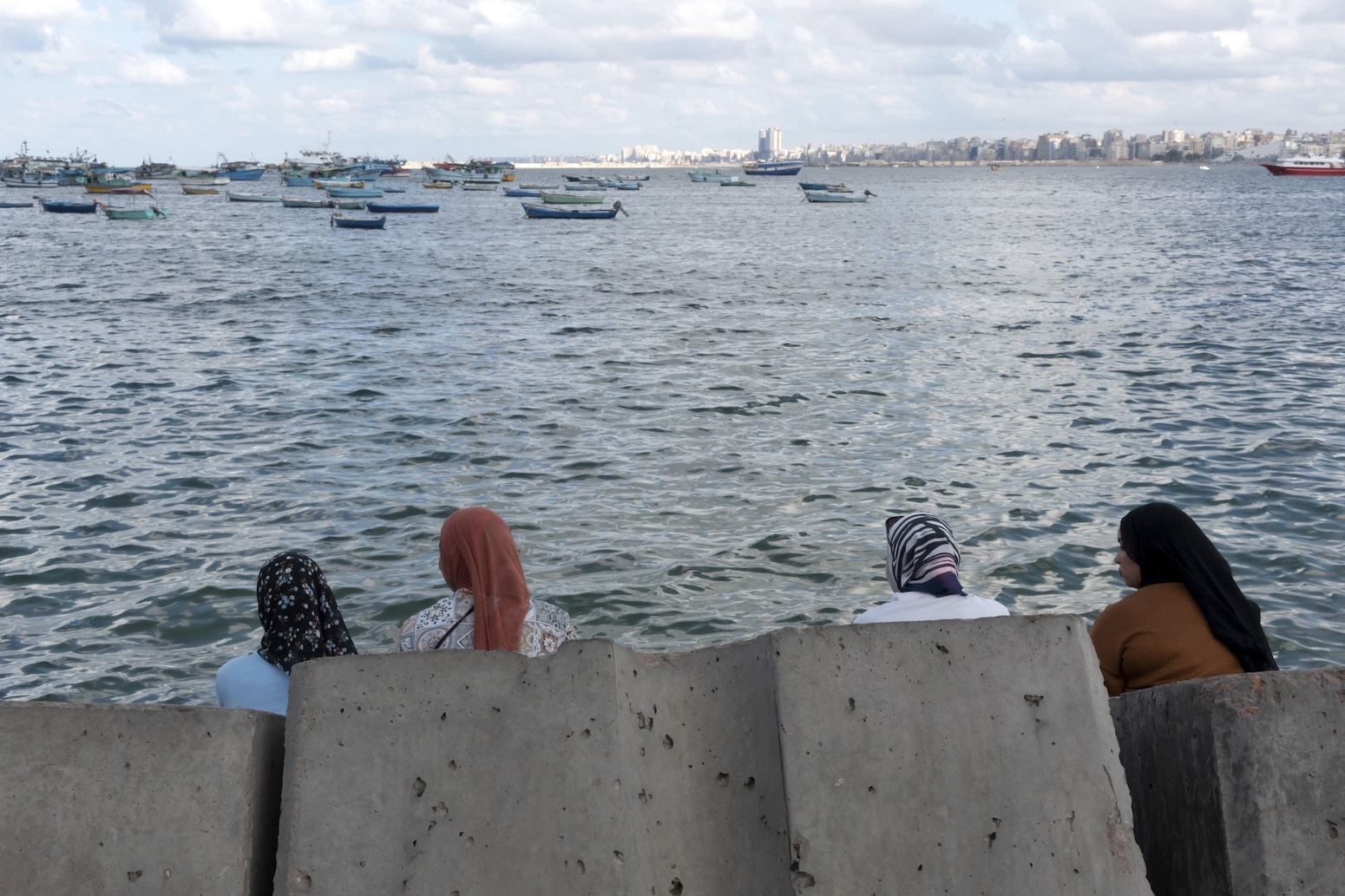
A new study published in Science Advances has assessed flood risk across 20 of Africa’s largest coastal cities by analyzing satellite data and sea level rise projections. The research indicates that under a moderate warming scenario, extreme sea level events could potentially expose approximately one million buildings and $180 billion in assets to flooding.
Lagos and Alexandria emerge as the most vulnerable locations in the analysis, with the two cities accounting for five million people and $150 billion in assets that could face exposure to flooding by mid-century. The heightened risk in these cities stems partly from land subsidence, a process where the ground sinks due to human activities such as groundwater extraction or fossil fuel drilling. Additionally, natural seismic or volcanic activity can alter land elevation. Researchers used more than 4,000 satellite images to measure vertical land movement along Africa’s coastline, finding that Lagos sinks at 5.2 millimeters annually while Alexandria subsides at 6.3 millimeters per year—rates comparable to major Southeast Asian cities.
The study combined subsidence measurements with sea level rise projections from the Intergovernmental Panel on Climate Change’s sixth assessment report across three emissions scenarios. Researchers incorporated 2020 population data, building footprints, and economic metrics to estimate exposure across each city. Other vulnerable coastal areas include Djibouti City, Mogadishu, and Tripoli, though these face lower economic exposure due to smaller populations and infrastructure bases.
Lead researcher Oluwaseyi Dasho notes that the analysis maintains constant 2020 population and city parameters to isolate effects of sea level rise and vertical land movement. This approach means estimates could prove conservative if urban growth accelerates, or excessive if populations migrate away from threatened zones. The model also assumes no coastal defense infrastructure, representing a worst-case physical scenario. The findings highlight the applicability of satellite-based subsidence monitoring for other data-limited coastal regions globally.
Article Attribution | Read More at Article Source
Article summary produced by Claude AI