

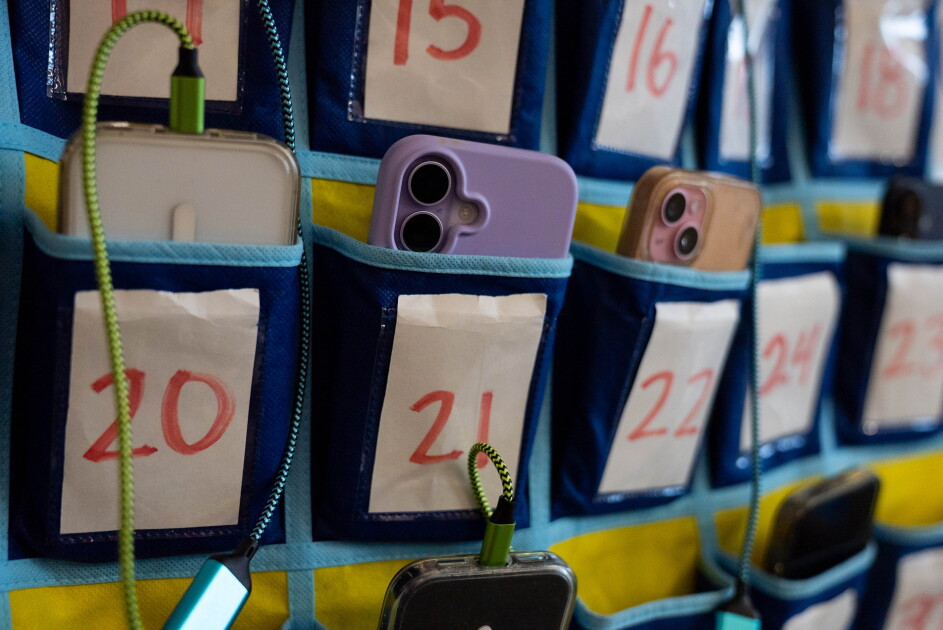
A recent national study from Harvard’s Center for Education Policy Research has documented measurable academic gains associated with strict cellphone bans in schools. The analysis examined achievement data from 3.3 million students across 4,600 schools who completed standardized MAP tests between the 2021-22 and 2025-26 school years. Researchers compared scores from students in schools implementing bell-to-bell phone restrictions, using locked pouches to store devices, with those in schools without such policies.
The findings indicate that schools adopting strict phone restrictions experienced increases in student achievement growth in mathematics and reading equivalent to approximately two additional weeks of instruction per year. While researchers characterized this as a modest improvement, they noted it represents meaningful progress given the cost-effectiveness of phone bans compared to alternative interventions. Geolocation data suggested that pouches reduced cellphones in use on school campuses by roughly 20 percent. Additionally, the analysis found that strict bans appeared to lower the proportion of students who fell significantly behind in reading within any given academic year, with researchers suggesting that students most prone to distraction may benefit most from cellphone restrictions.
The research comes as forty states and the District of Columbia have begun requiring schools to implement or restrict student cellphone use in recent years. However, other recent studies have produced mixed results. Research from Stanford University, the University of Pennsylvania, Duke University, and the University of Michigan published earlier this year found limited short-term achievement improvements from phone bans, while a study by the University of Rochester and RAND Corporation identified slight improvements in test scores and attendance in the second year of restrictions.
Beyond academic metrics, educator surveys indicate perceived benefits including improved classroom behavior and student engagement. Research also suggests cellphone bans may enhance teacher well-being and reduce stress levels. Some studies have identified increases in short-term discipline rates following implementation of restrictions. Harvard researchers emphasize that comprehensive understanding of cellphone effects remains limited, particularly regarding how social media and device use outside school settings influence student learning and achievement trajectories.
Article Attribution | Read More at Article Source
Article summary produced by Claude AI