

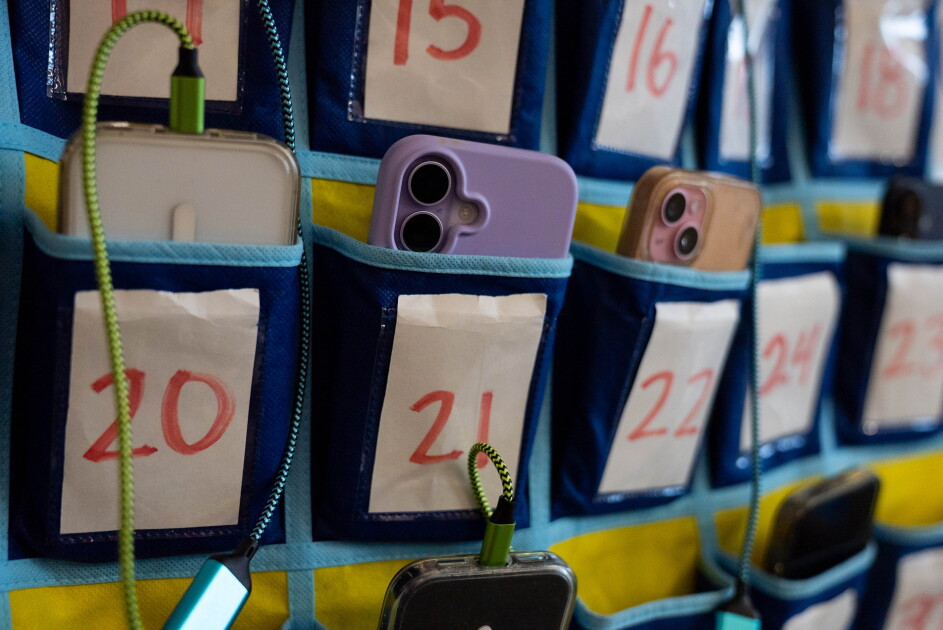
Researchers at Harvard’s Center for Education Policy Research released a new analysis examining the effects of strict cellphone bans on student achievement. The study found that schools implementing bell-to-bell policies that lock away students’ phones during the school day saw improvements in math and reading growth equivalent to approximately two additional weeks of instruction per year. The analysis also identified a reduction in the proportion of students falling significantly behind in reading.
Forty states and the District of Columbia have enacted requirements for schools to ban or restrict cellphone use in recent years. The Harvard study analyzed achievement data from 3.3 million students across 4,600 schools who completed NWEA MAP assessments between the 2021-22 and 2025-26 school years. Researchers compared schools using Yondr pouches—magnetic lockable devices where students store phones—with schools that did not implement such restrictions. Prior to adoption, the two groups showed no significant differences in achievement trends, but after implementation, schools using the pouches demonstrated steady gains in student performance.
While the academic improvements may appear modest, researchers emphasized their significance given the cost-effectiveness compared to alternative interventions. Geolocation data indicated that pouches contributed to approximately a 20 percent reduction in cellphones present on school campuses. Additionally, strict bans appeared to particularly benefit students most susceptible to distraction, particularly in reading achievement.
Other recent research on cellphone bans has produced mixed results. A study from Stanford, Penn, Duke, and Michigan found limited short-term achievement improvements, while research from Rochester and RAND detected slight gains in test scores and attendance in the second year of implementation. However, educator surveys conducted this spring reported largely positive outcomes regarding classroom behavior and student engagement, with roughly seven in ten teachers and administrators indicating beneficial impacts. Researchers noted the need for additional investigation into how cellphone and social media use outside of school environments affects student learning outcomes.
Article Attribution | Read More at Article Source
Article summary produced by Claude AI