

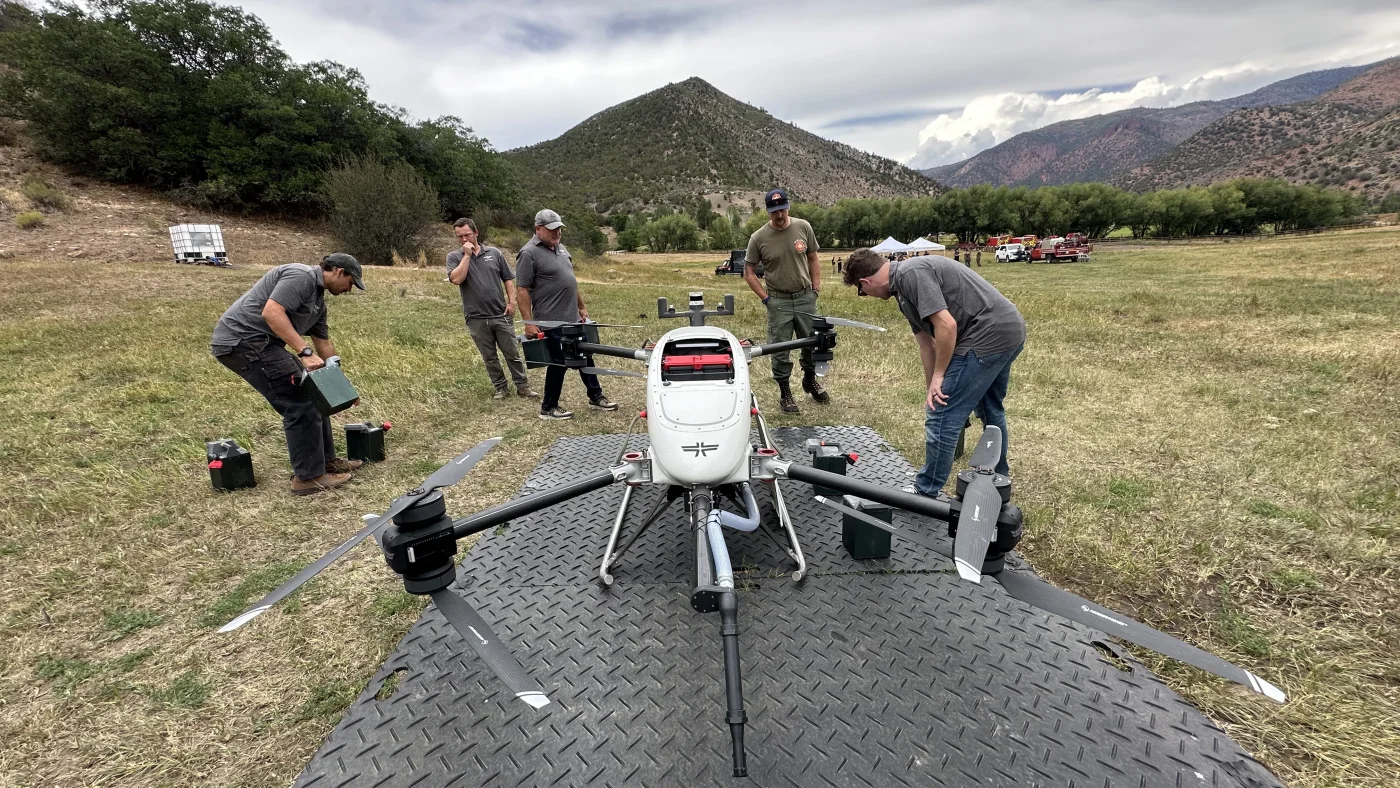
The Aspen Fire Protection District in western Colorado has begun training firefighters to operate experimental drones designed to help suppress wildfires. Manufactured by California-based company Seneca, the aircraft are large unmanned systems roughly 10 by 12 feet in size that can carry 500 to 1,000 gallons of fire-suppressing foam when operating in coordinated groups. The drones are equipped with artificial intelligence-supported sensors that calculate distance and wind speed to release water or retardant at optimal angles and velocities.
Firefighters in Aspen reported the drones were intuitive to operate, with deputy chief Andy Fisher noting their ease of use. Fisher envisions deploying the drones to remote or hard-to-reach fires, such as lightning strikes in dense forests surrounding Aspen, before ground crews arrive. The city sits amid forests that present evacuation challenges for residents and visitors. According to manufacturer founder Stuart Landesberg, the drones can travel 5 to 10 miles with a payload and double that distance when empty, allowing them to traverse steep or difficult terrain quickly.
Aspen Fire plans to launch its drone program as early as next year following completion of training, making it the first fire department to independently operate the technology. The Federal Aviation Administration granted the department a waiver in late October. The drones will initially be authorized to fly up to 200 feet in Pitkin County with visual oversight required at all times. Aspen Fire estimates the program will cost approximately $2.5 million over five years, with private donors funding the initiative.
Landesberg indicated the drones complement rather than replace traditional aerial firefighting assets like large air tankers on major fires, while potentially reducing costs to a fraction of helicopter operations. However, skepticism remains among some experienced firefighting professionals. Joe Stutler, a firefighter with nearly 60 years of experience, praised the technology’s potential but noted the drones have only been tested on prescribed burns in California, not active wildfires. He expressed interest in results and data demonstrating effectiveness before broader adoption.
Article Attribution | Read More at Article Source
Article summary produced by Claude AI