

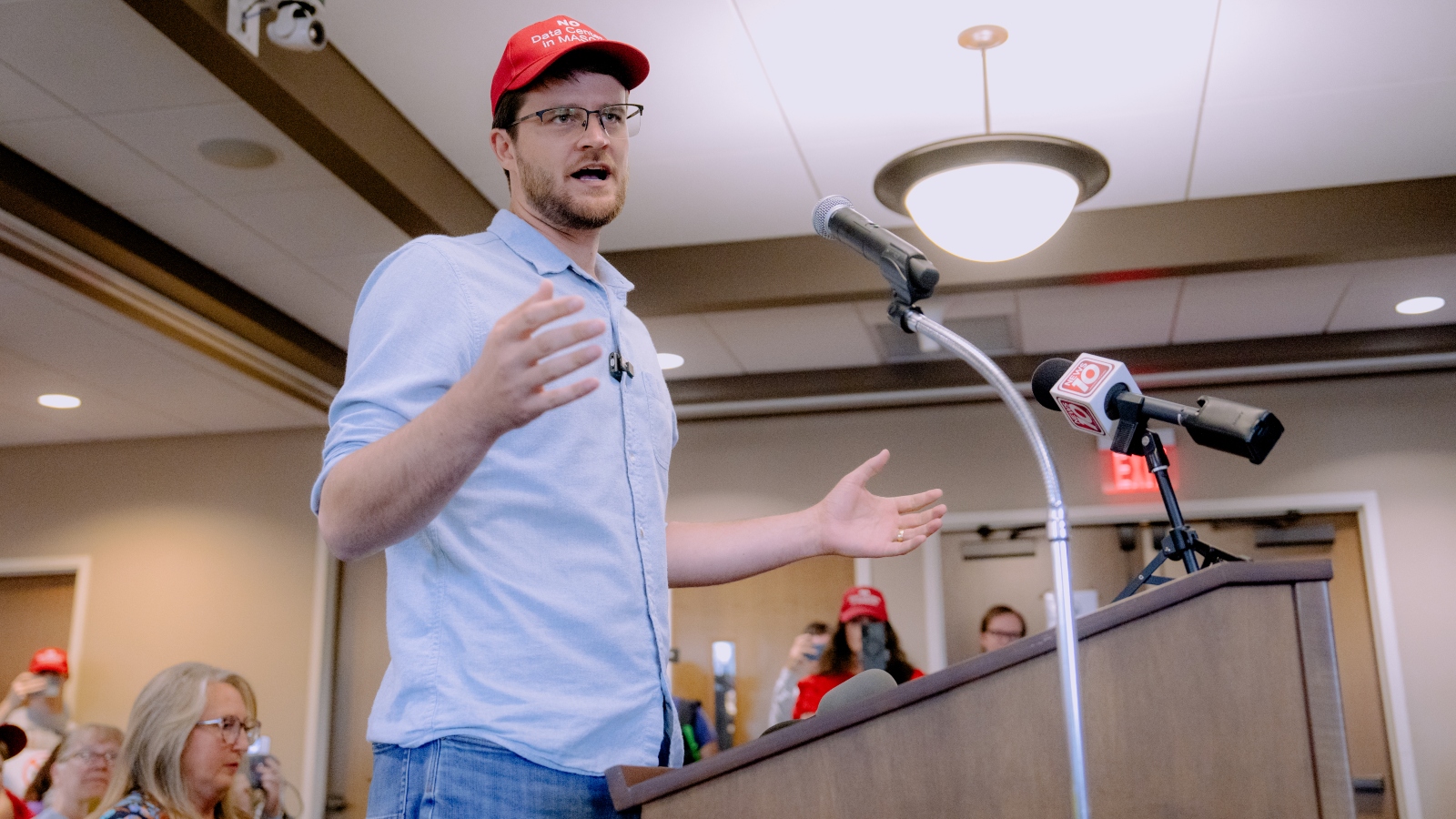
William Lawrence, a Democrat running for U.S. Congress in Michigan’s 7th District, is attempting to forge a cross-partisan coalition that includes both climate-focused progressives and opponents of large-scale development projects, including clean energy infrastructure.
Lawrence co-founded the Sunrise Movement, a prominent climate organization focused on addressing climate change through activism and government intervention. However, his campaign in the Lansing area has required him to engage with critics of solar farms, battery storage systems, and data centers. His outreach to these constituencies included meeting with Marjorie Steele, an activist who runs the Economic Development Responsibility Alliance, which opposes major industrial projects. Despite initial concerns about their opposing views, the two found common ground, and Steele’s organization subsequently endorsed Lawrence.
The 7th District is a highly competitive swing seat that encompasses Lansing and surrounding suburbs. Republican Tom Barrett currently holds the seat after winning it by a narrow margin when Democrat Elissa Slotkin vacated it to run for U.S. Senate in 2024. The district has emerged as one of the most expensive House races in the country. Lawrence advanced from the Democratic primary in August with 40 percent of the vote, outpacing two centrist candidates, and has since secured endorsements from Democratic congressional leadership despite their initial opposition to his candidacy.
Lawrence has campaigned intensively throughout the district, conducting door-to-door outreach and hosting numerous unscripted town halls. His ability to unite constituencies with competing interests—mainstream climate advocates seeking clean energy expansion alongside local residents opposing development projects—reflects broader tensions surrounding how the country pursues decarbonization goals while addressing community concerns about land use and environmental quality.
Article Attribution | Read More at Article Source
Article summary produced by Claude AI