

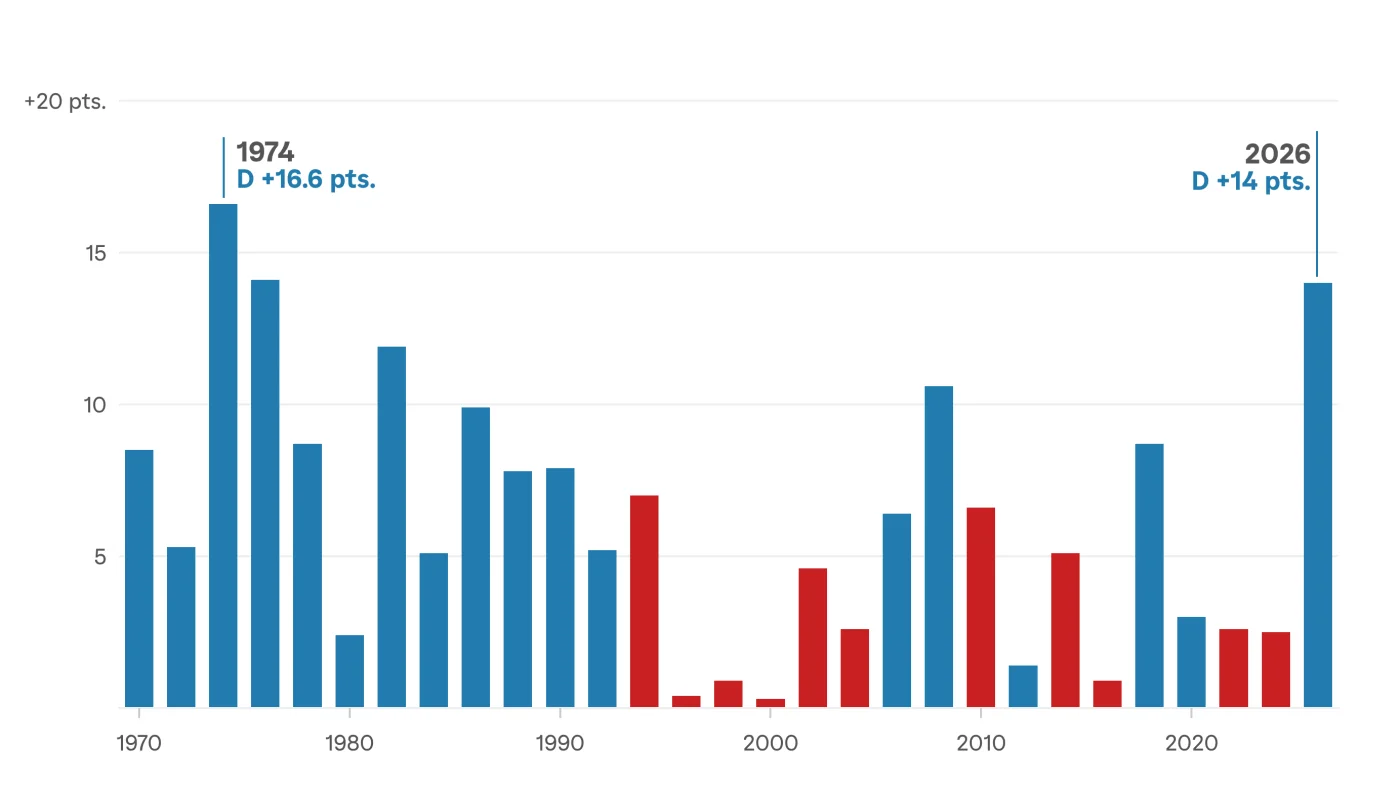
Final vote tallies from the midterm elections show Democrats achieved a commanding 14-point margin in House races, with 56% support compared to 42% for Republicans. Election officials characterized this as the most substantial victory for either party in five decades, surpassing previous significant wins in 2018, 2006, and 2010.
Democrats have successfully flipped 46 House seats previously held by Republicans, with the potential to increase that number to 49 as three additional races remain undecided in their favor. This represents the second-largest number of seat flips in the current century, behind only the 2010 midterms when Republicans gained 66 seats in response to the Affordable Care Act’s passage.
The magnitude of Democrats’ performance suggests they will command their largest congressional majority since the early 1990s. Should Democrats prevail in all races where they currently lead, they would secure 260 seats—the highest total since the 102nd Congress, which served from 1991 to 1993. This comes approximately three decades after the 1994 Republican Revolution, which had shifted House control to the GOP and initiated a period of significant partisan volatility.
In recent decades, the House has experienced unprecedented instability in party control. The current century has witnessed several of the narrowest majorities in American history alongside the most frequent transitions of chamber leadership during any 130-year period. Beginning in January, control of the House will have changed between parties five times across the past 20 years, a frequency of turnover reminiscent only of the post-Reconstruction era following the Civil War.
Article Attribution | Read More at Article Source
Article summary produced by Claude AI