

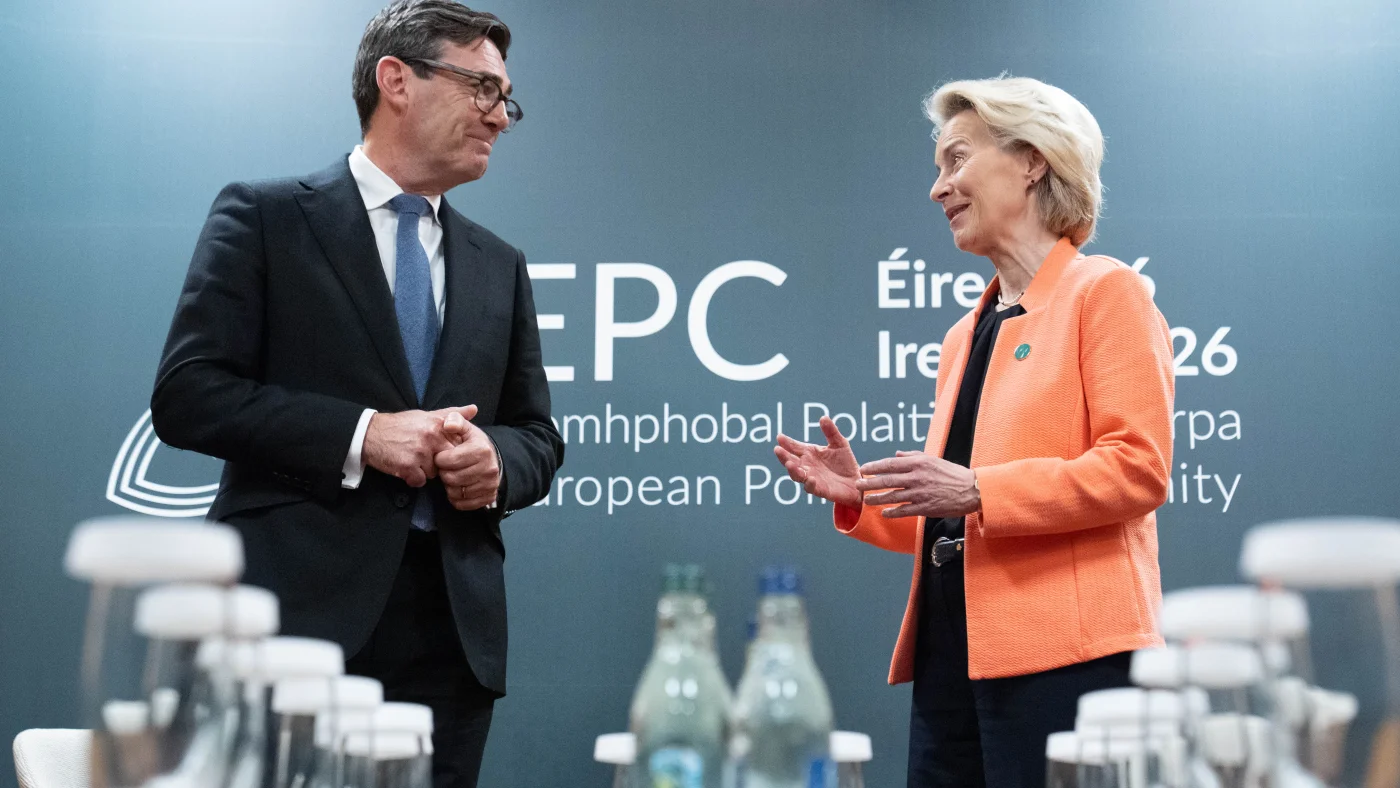
Top European Union officials convened with British Prime Minister Andy Burnham on Friday in Brussels for a bilateral summit, marking only the second high-level meeting between the U.K. and EU leadership since Britain’s departure from the bloc. The gathering brought together Burnham, European Council President António Costa, and European Commission President Ursula von der Leyen for an hour of talks followed by a plenary session with additional government ministers and commissioners.
Burnham has characterized the summit as an effort to address what he describes as damage from Britain’s departure from the European Union. Speaking ahead of the meeting, he stated that the Brexit outcome has not delivered promised benefits, noting that Britain “has lost more than we gained.” While he indicated that all options for future relations should be considered, including potential rejoining of the bloc, he emphasized that such a move would be neither imminent nor certain, requiring support from British voters and unanimous approval from all EU member states.
European Commission President von der Leyen outlined ambitions for “concrete results” including expanded opportunities for young people, streamlined agricultural trade, and enhanced economic security cooperation. The anticipated agreements include provisions allowing up to 100,000 young adults from each side to live and work across the bloc for up to three years, an emissions trading arrangement, and measures to reduce checks on food and agricultural shipments. Officials projected these arrangements could contribute modestly to British economic growth.
Implementing the deals would require the U.K. to adopt certain EU rules and standards without direct participation in their creation, a constraint that Brexit supporters contend compromises national independence. Reform UK leader Nigel Farage warned that discussions would inevitably reignite broader questions about Britain’s relationship with Europe.
The summit also addressed security and defense cooperation, with geopolitical challenges including the war in Ukraine cited as motivating factors for closer partnership. However, EU officials have remained cautious about encouraging reunion discussions, expressing fatigue from interactions with seven different British prime ministers over the preceding decade and seeking clarity on Britain’s long-term intentions before proceeding with deeper negotiations.
Article Attribution | Read More at Article Source
Article summary produced by Claude AI