

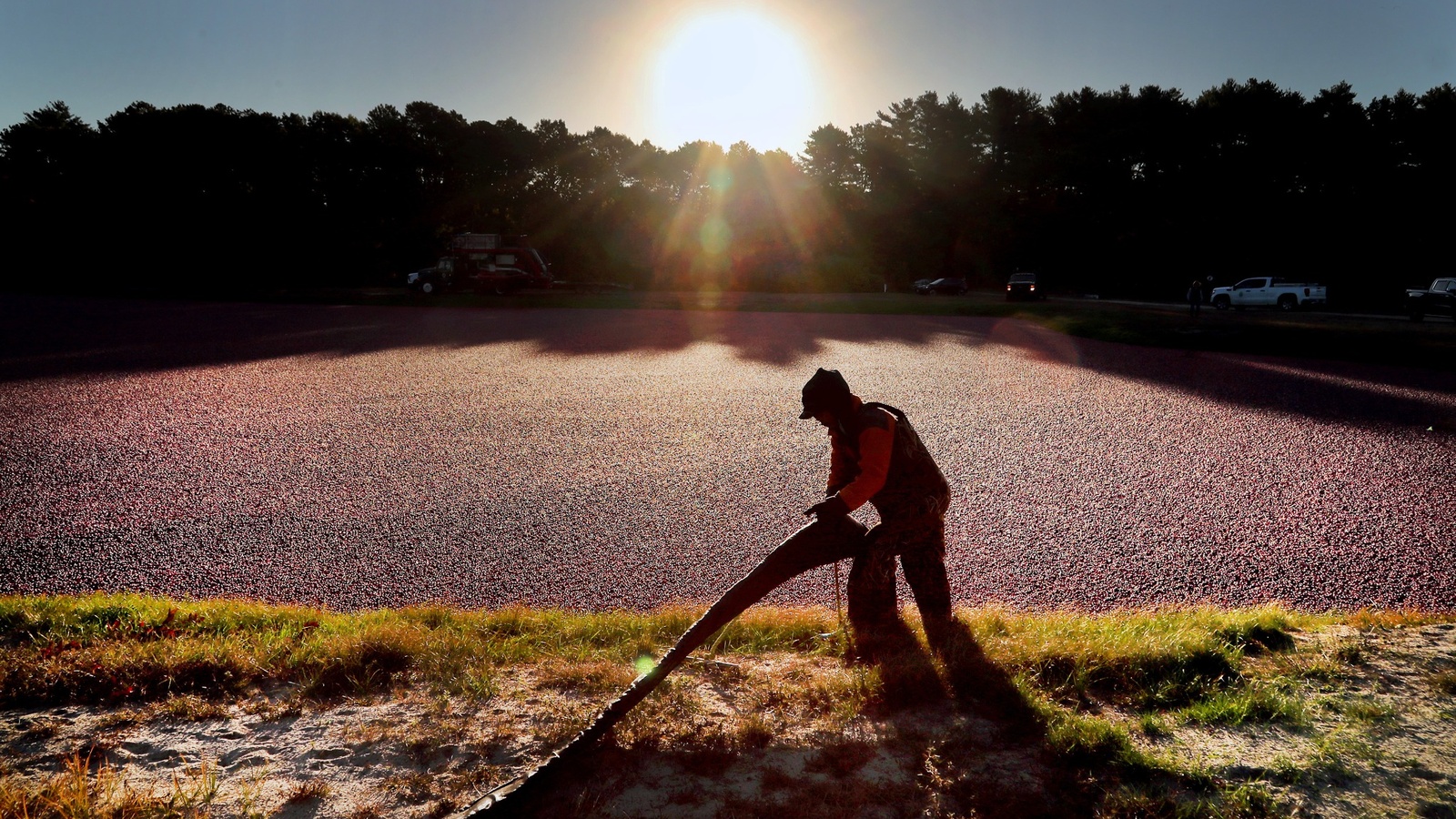
Cranberry growers in southeastern Massachusetts are experimenting with a dual-use approach to land management this fall by installing solar panels above their bogs. Two farms in Kingston and Plymouth now operate the nation’s first cranberry agrivoltaic projects, where pickers navigate around solar equipment while harvesting berries. The installations include a 4.4-megawatt solar array with battery storage in Kingston and a 1-megawatt array in Plymouth, both constructed by Distributed Energy Infrastructure.
Massachusetts has been actively promoting agrivoltaic projects as part of its broader strategy to achieve net-zero carbon emissions by 2050. The state began offering financial incentives for dual-use solar in 2018, providing an additional 9 cents per kilowatt-hour beyond the base rate for projects combining energy generation with active agriculture. This approach addresses a key tension in the densely populated state: finding suitable locations for solar development without consuming undeveloped land or disrupting ecosystems.
Cranberry bogs presented unique engineering challenges for the solar installations. Standard solar foundations typically extend 8 to 10 feet underground, but bog conditions required pilings to reach much deeper depths. Engineers responded by mounting panels 10 feet above ground on tracking systems that follow the sun, spacing pilings farther apart than standard to allow harvesting equipment to move through the bogs. Wiring had to be suspended overhead rather than buried in the saturated soil.
For Massachusetts cranberry farmers, the solar opportunity offers particular significance since the state ranks second only to Wisconsin in cranberry production. Unlike other agricultural operations that can be converted to housing or commercial development, cranberry bogs are protected wetlands that cannot be built upon if abandoned. For farms with adequate grid connections, solar panels can provide financial viability to operations that might otherwise close. The Kingston and Plymouth projects use a community solar model, selling renewable power to customers seeking lower electricity rates.
The successful completion of these two seasons has generated interest in additional agrivoltaic projects. Distributed Energy Infrastructure is developing installations above apple orchards, cattle pastures, and Christmas tree farms. A stalled cranberry solar project in nearby Carver, which was constructed five years ago but never activated due to company bankruptcy, may be revived under new ownership. As developers refine their approach through successive projects, industry observers anticipate acceleration in agrivoltaic adoption.
Article Attribution | Read More at Article Source
Article summary produced by Claude AI