

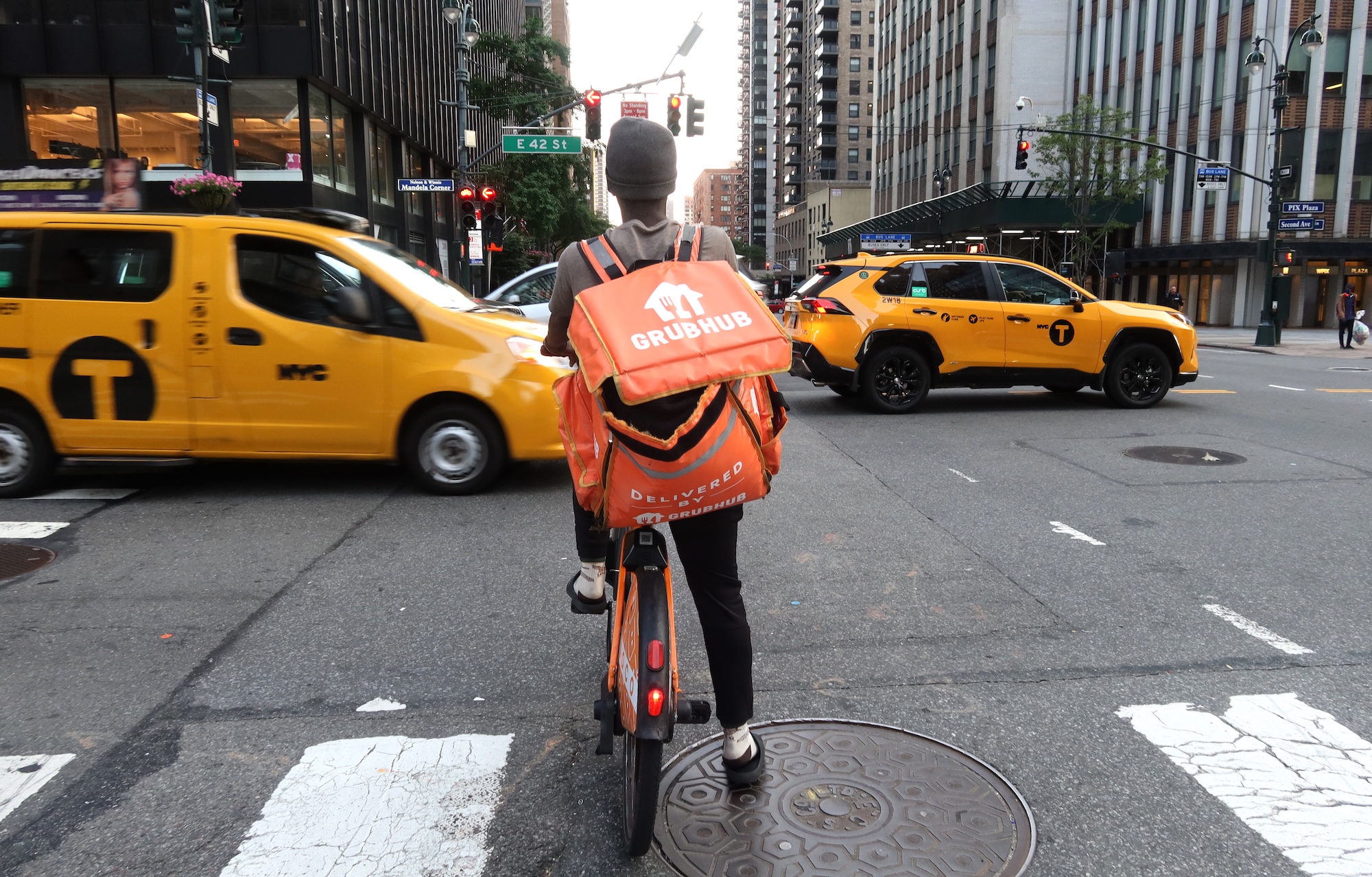
José Yos, a 40-year-old delivery worker from Guatemala, experienced hazardous conditions while working through wildfire smoke and extreme heat in New York City this summer. Despite air quality warnings and heat emergencies affecting the city, Yos continued making deliveries on his e-bike, concerned that taking breaks or slowing down would damage his app-based rating and jeopardize his livelihood.
Delivery work in New York City, performed by approximately 70,000 workers primarily on e-bikes and e-scooters, presents significant health risks during extreme weather. Workers face dangers from heat exposure, poor visibility during rainfall, and air quality degradation from distant wildfires. These conditions can cause dehydration, heat stroke, and traffic accidents, yet the delivery platforms do not adjust delivery timelines or provide additional protections during adverse weather.
Most of New York City’s delivery workforce consists of immigrants from Latin America, sub-Saharan Africa, and South Asia—regions disproportionately affected by climate change. Many workers, like Yos, relocated to the city after climate-related factors undermined agricultural livelihoods in their home countries. In his native Guatemala, unpredictable rainfall patterns linked to climate change and El Niño weather have caused droughts and flooding that suppressed crop yields.
As gig economy contractors, delivery workers lack standard employment protections and benefits. A deactivation protection bill enacted in January 2026 requires apps to provide 72 hours’ notice before account suspension, but workers remain vulnerable to rating penalties during adverse weather. Labor advocates, including Los Deliveristas Unidos and the Worker’s Justice Project, are working to establish delivery workers as essential responders deserving of climate resilience protections and adequate working conditions.
Article Attribution | Read More at Article Source
Article summary produced by Claude AI