

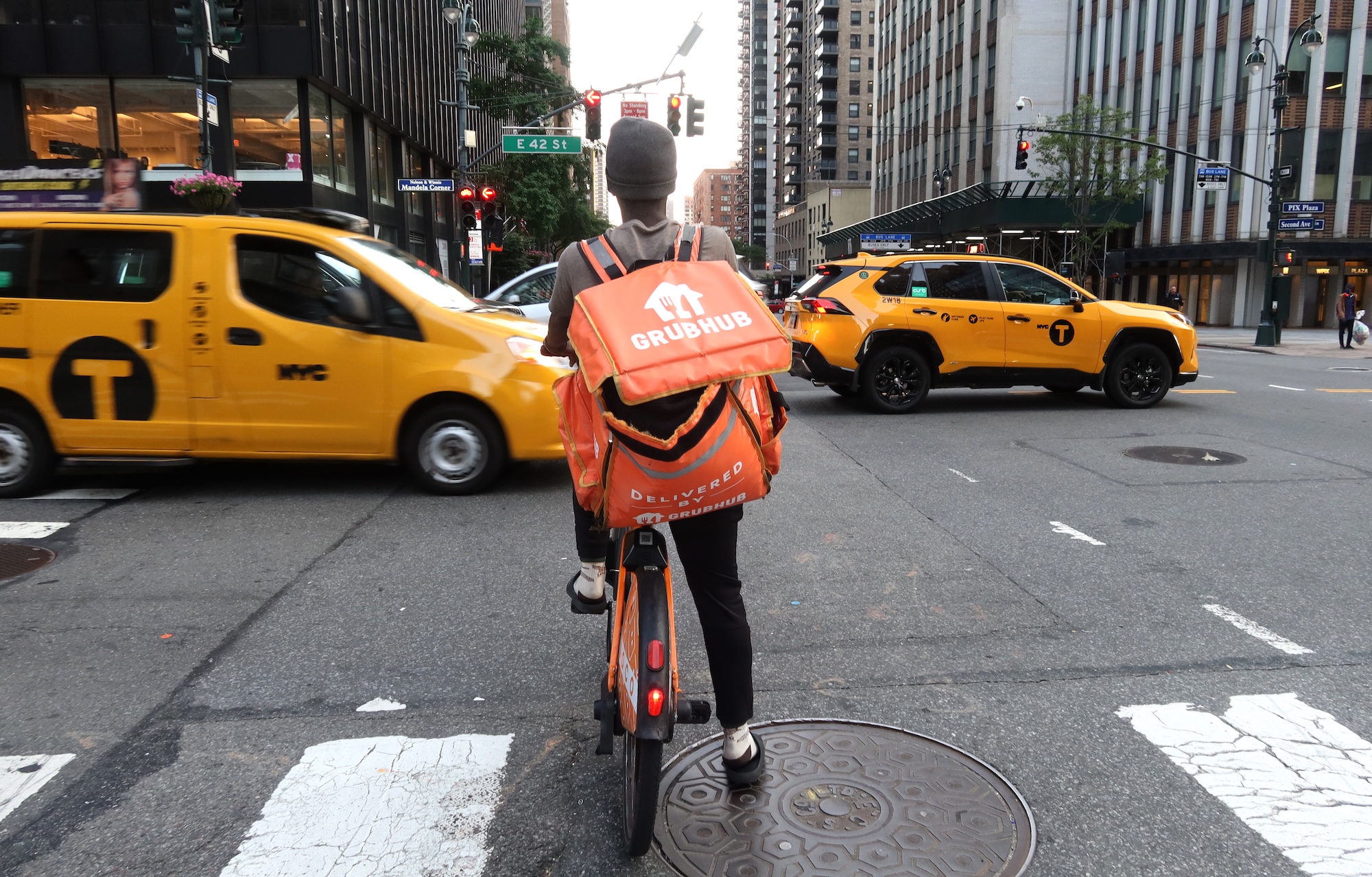
José Yos, a 40-year-old delivery worker from Guatemala, experienced hazardous conditions earlier this year when Canadian wildfire smoke blanketed New York City during a simultaneous heat emergency. Despite health risks, Yos felt compelled to continue working, concerned that taking breaks could damage his app rating and jeopardize his employment status. His situation reflects broader challenges facing the city’s approximately 70,000 delivery workers, many of whom immigrated from regions heavily affected by climate change.
Delivery workers in New York City rely primarily on e-bikes and e-scooters to navigate traffic and complete orders efficiently. This mode of transportation exposes them directly to extreme weather, with risks including heat-related illnesses, reduced visibility during storms, and dangerous road conditions. The app-based platforms they work for do not adjust delivery expectations or timelines during adverse weather, creating pressure for workers to maintain ratings by completing orders at normal speeds despite challenging conditions.
Most of the city’s delivery workforce consists of immigrants from Latin America, sub-Saharan Africa, and South Asia—regions experiencing acute climate impacts. Many, like Yos, came to New York after climate-related disruptions affected their ability to sustain livelihoods in their home countries. Yos migrated from Guatemala partly because agricultural production became unreliable due to droughts, flooding, and unpredictable rainfall patterns linked to climate change.
As gig economy workers, delivery workers are classified as self-employed independent contractors and lack standard employee protections for health and safety. Recent protections established earlier this year require app platforms to provide 72 hours’ notice before account deactivation and allow for investigation of such actions. Despite these measures, workers remain cautious about risking service interruptions. Los Deliveristas Unidos, a labor union, and the Worker’s Justice Project are advocating for recognition of delivery workers as essential service providers who face disproportionate climate-related risks while maintaining critical supply chains during emergencies.
Article Attribution | Read More at Article Source
Article summary produced by Claude AI