

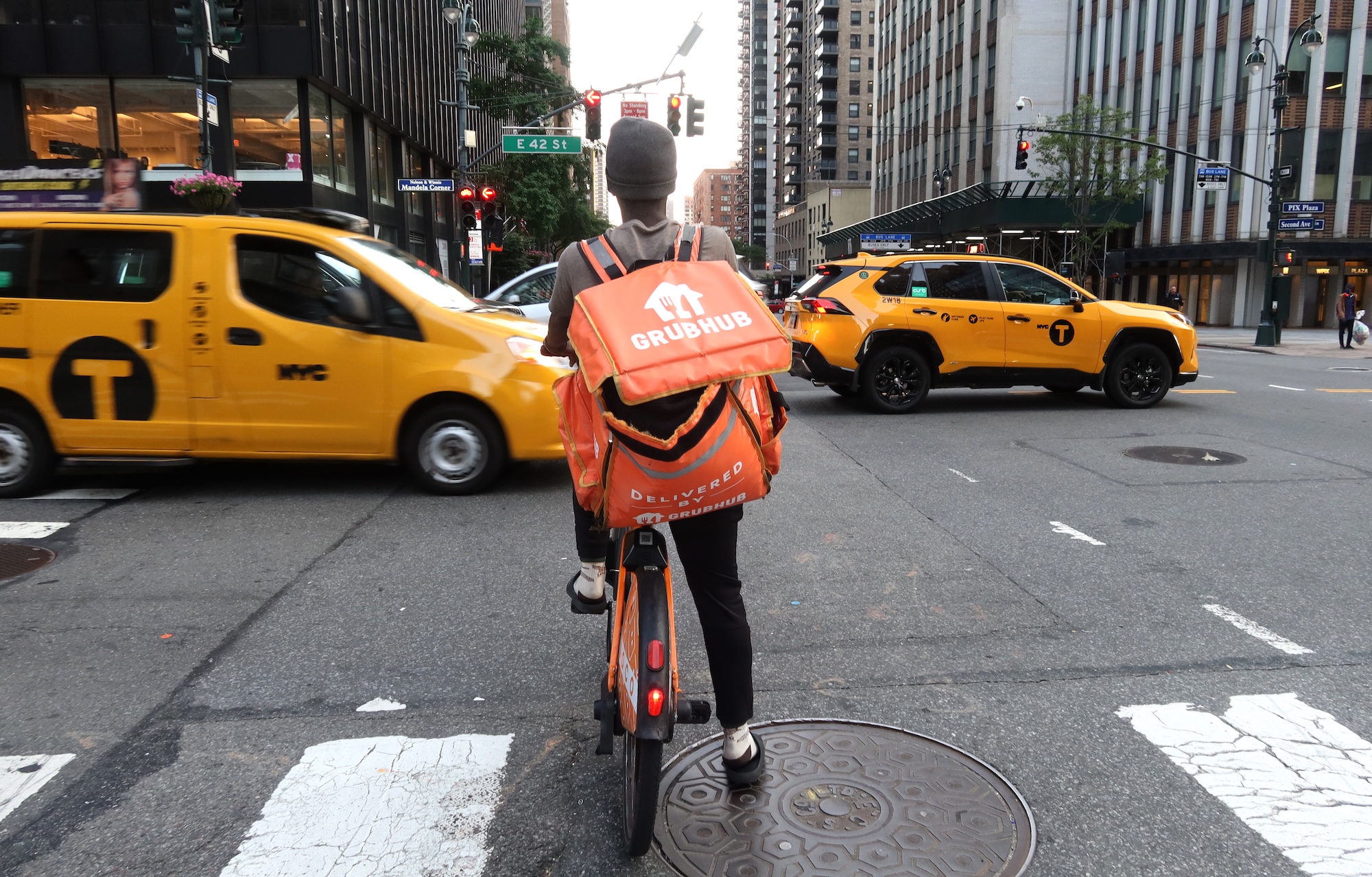
José Yos, a 40-year-old delivery worker from Guatemala, found himself navigating New York City streets during a sweltering summer day marked by wildfire smoke from Canada and dangerously high temperatures. The experience underscored a broader challenge facing tens of thousands of app-based delivery workers in the city who must continue working despite hazardous weather conditions that threaten their health and safety.
Most delivery workers in New York City use e-bikes or e-scooters to navigate the streets, a choice that allows them to avoid traffic while completing orders quickly. However, this dependence on outdoor cycling exposes them to significant risks during extreme weather events, including heat-related illnesses, reduced visibility during storms, and poor air quality from wildfires. The delivery apps that employ these workers do not adjust delivery time expectations or provide additional compensation during adverse conditions, workers say. This creates a dilemma: taking longer to complete deliveries during dangerous weather can lower their app ratings and potentially lead to deactivation, even though new protections enacted in 2026 now require 72 hours’ notice before account suspension.
Many of the city’s roughly 70,000 delivery workers come from Latin America, sub-Saharan Africa, and South Asia—regions disproportionately affected by climate change. Yos himself migrated from Guatemala partly because unpredictable rainfall patterns linked to climate change made farming an unreliable livelihood. Now facing different climate challenges in New York, he and his peers lack adequate health and safety protections as independent contractors in the gig economy.
Labor advocates, including the union Los Deliveristas Unidos and the Worker’s Justice Project, are working to bring attention to delivery workers’ needs and their role as essential responders during weather emergencies. These advocates argue that delivery workers possess valuable firsthand knowledge about how extreme weather impacts the city’s infrastructure and should be recognized as experts in discussions about climate resilience and worker protection.
Article Attribution | Read More at Article Source
Article summary produced by Claude AI