

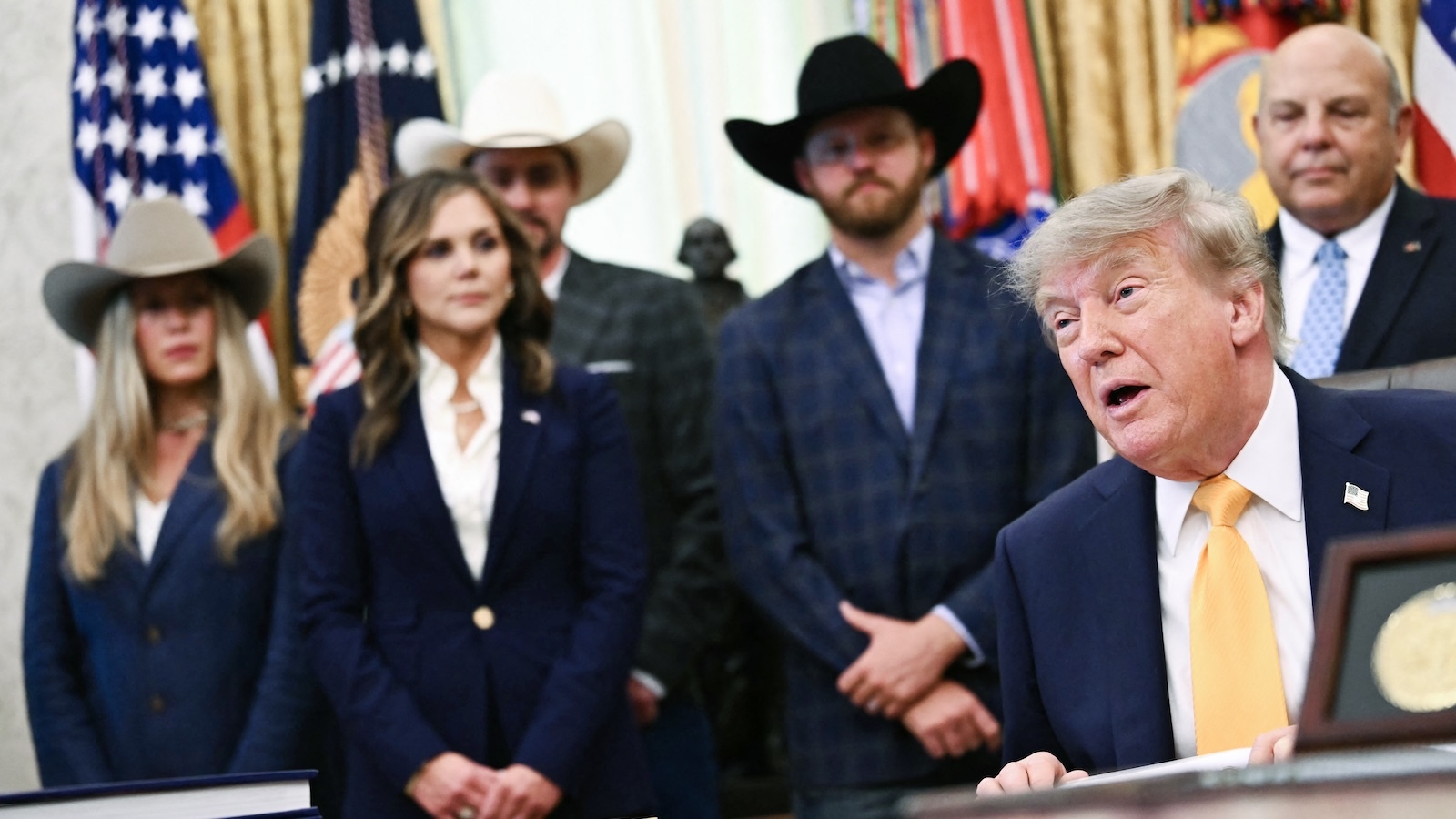
Agricultural producers across the United States have experienced significant hardship over the past two years, marked by rollbacks to Department of Agriculture programs, reduced funding, and persistent challenges in the sector. Cattle ranchers have been particularly affected by climbing beef prices that have reached record levels since the COVID-19 pandemic, compounded by severe droughts that have driven herd sizes to historically low levels. The administration’s efforts to address beef prices through increased imports and trade deals have been counterproductive, with ranchers arguing these measures undermine their business models. Additionally, the USDA recently eliminated solar energy from a renewable energy grant program, creating further frustration among farmers seeking to reduce utility costs and supplement income through renewable installations.
Facing discontent from agricultural voters once considered a core constituency, the Trump administration has announced substantial relief packages just ahead of the midterm elections. On October 19, the president unveiled an $8 billion program to assist farmers with losses incurred from elevated diesel fuel prices. A congressional report indicated that U.S. farmers face approximately $2.4 billion in additional diesel expenses attributable to disruptions stemming from conflicts in the Iran region. On October 26, the USDA separately announced $57 million in funding to support independent ranchers in expanding meat-processing capacity, while also committing to purchase nearly $500 million in agricultural commodities.
The timing and substance of these relief measures have drawn mixed reactions from agricultural advocates. Officials from the USDA characterized the programs as evidence of strong commitment to farming communities, though specific application procedures remain unclear. Critics, however, note the contradictions inherent in the administration’s approach, pointing out that providing diesel relief while simultaneously restricting access to renewable energy alternatives represents an incomplete solution. Policy analysts from agricultural coalitions have characterized these payments as insufficient given broader sector challenges, including farm bankruptcies reaching six-year highs and elevated farmer debt loads. The relief announcements come amid uncertainty surrounding agricultural policy’s future direction, as competing farm bill proposals remain pending in Congress with resolution likely dependent on election outcomes.
Article Attribution | Read More at Article Source
Article summary produced by Claude AI