

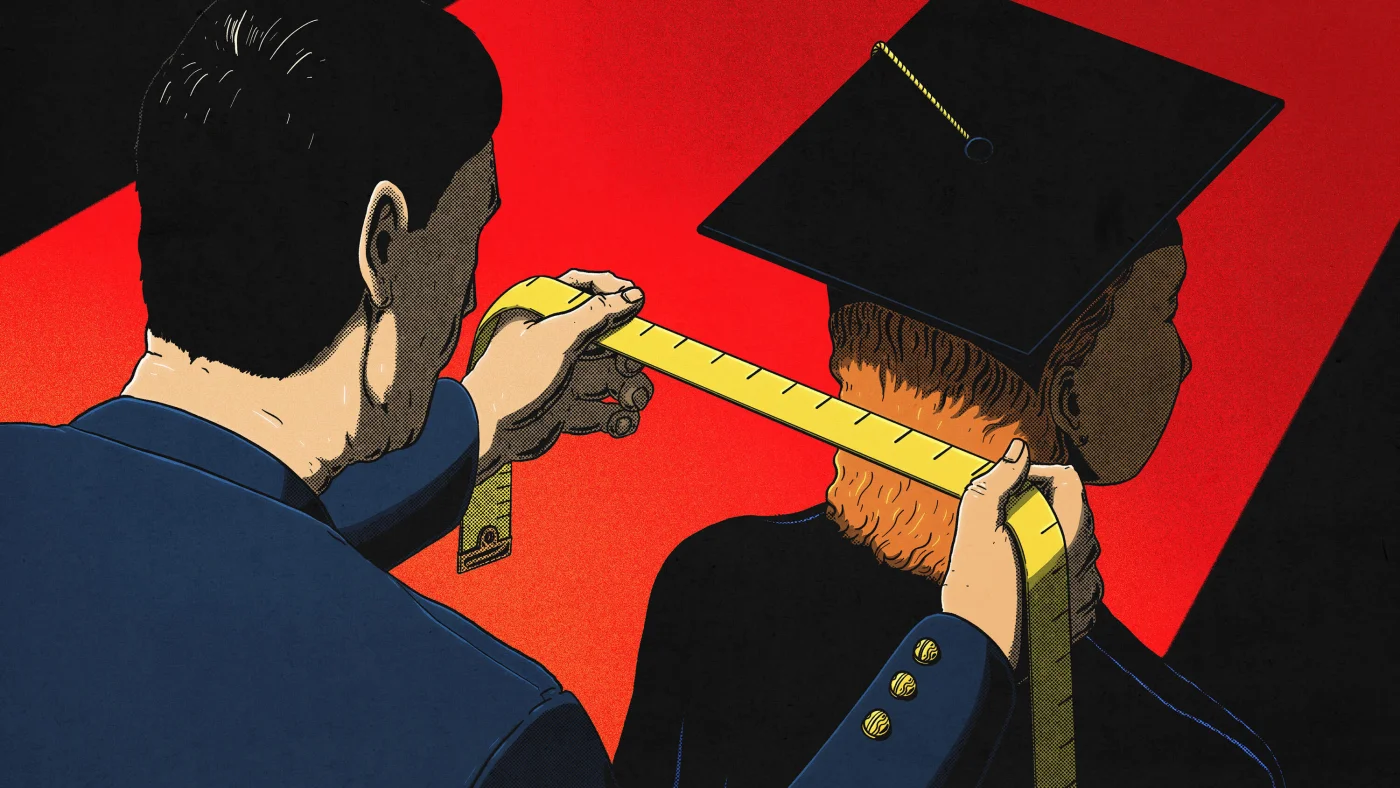
The Trump administration has implemented significant changes to the federal accreditation system for colleges and universities, a shift President Donald Trump previously described as his “secret weapon” for higher education reform. The overhaul modifies the rules governing third-party nonprofit accreditors, which evaluate institutions across multiple categories including curriculum quality, faculty qualifications, and financial soundness to determine their eligibility for federal student loans and grants.
Among the most substantial changes is a new requirement that accreditors evaluate school policies on intellectual diversity, ensuring students are exposed to a range of viewpoints. The Education Department framed this as promoting open debate and preventing enforced consensus. However, critics contend that this expansion grants the federal government unprecedented authority to influence institutional policies through accreditors, potentially allowing the department to threaten a school’s accreditation and access to federal student aid if it judges the balance of perspectives as inadequate.
Opposition to the intellectual diversity mandate has been pronounced. PEN America, an organization focused on defending free expression, warned that the measure could undermine higher education’s protections for academic freedom. Bob Shireman, an accreditation expert and former Obama administration official, characterized the rule as enabling federal meddling in college affairs in unprecedented ways. Even some conservatives expressed concern about the expansion of federal power, with Beth Akers of the American Enterprise Institute noting discomfort with placing the administration in a position to judge whether institutions are appropriately teaching ideology.
The Education Department countered that the regulations do not mandate specific policies or grant authority to police speech, instead reinforcing the principle that truth emerges through rigorous debate. Some accreditation changes have attracted broader support, including modifications that emphasize student outcomes such as earnings potential, licensure pass rates, and graduation rates. The new rules are scheduled to take effect ahead of the 2027-28 academic year and will be difficult to reverse due to the traditional regulatory process used to establish them.
Article Attribution | Read More at Article Source
Article summary produced by Claude AI