

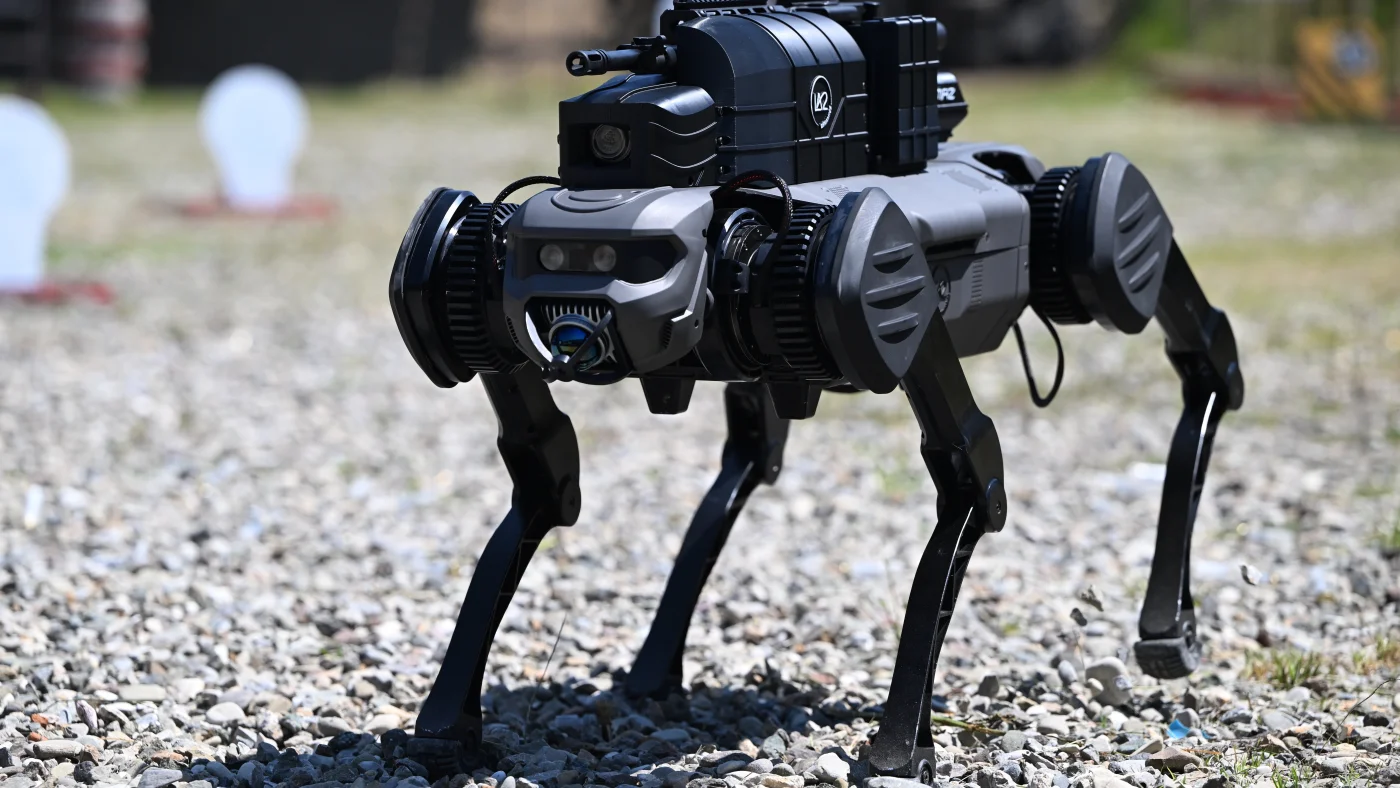
United Nations representatives gathered in Geneva to discuss potential regulations for lethal autonomous weapons systems, commonly referred to as killer robots. The conference on Certain Conventional Weapons, which convenes once every five years, represents what proponents of regulation view as a critical opportunity to establish international rules before fully autonomous military systems become operational.
Technological advancements in recent years have created urgency around the negotiations. Military experts caution that weapons capable of selecting and engaging targets without human intervention could become available within months. While AI-assisted weapons have already seen limited deployment in recent conflicts, including in Ukraine and Gaza, these systems currently operate under remote human control. Humanitarian organizations and international bodies, including the United Nations leadership, the International Committee of the Red Cross, and Pope Francis, have called for legally binding restrictions that would preserve human decision-making authority over lethal force.
Concerns center on the humanitarian implications of fully autonomous weapons. The Red Cross emphasizes that existing laws of war, including the Geneva Conventions, may not be enforceable by autonomous systems operating in chaotic battlefield conditions. Legal advisers note that such weapons might struggle to recognize contextual signals that humans naturally understand, such as distinguishing between active combatants, wounded soldiers, and those attempting to surrender. Human rights advocates also warn that the decreasing cost and complexity of AI-assisted weapons technology increases proliferation risks, potentially enabling deployment by non-state actors and authoritarian governments.
Diplomatically, positions remain divided. At least 50 nations, including France, Germany, Italy, Brazil, and Mexico, advocate for strict timelines to establish binding international rules. However, states developing autonomous weapons systems, particularly the United States, Russia, and Israel, have signaled opposition to legally binding restrictions. The U.S. has proposed a five-year timeline for non-binding guidelines instead, reflecting broader skepticism toward international agreements. U.N. negotiations on weapons limitations traditionally require consensus decisions among member states, complicating prospects for mandatory restrictions.
Delegates are exploring potential compromises, including extended or indefinite negotiation periods that would allow individual nations to adopt either binding or voluntary frameworks. While such approaches might generate some progress, advocates for stronger restrictions view them as insufficient responses to the technological and humanitarian challenges posed by autonomous weapons systems.
Article Attribution | Read More at Article Source
Article summary produced by Claude AI