

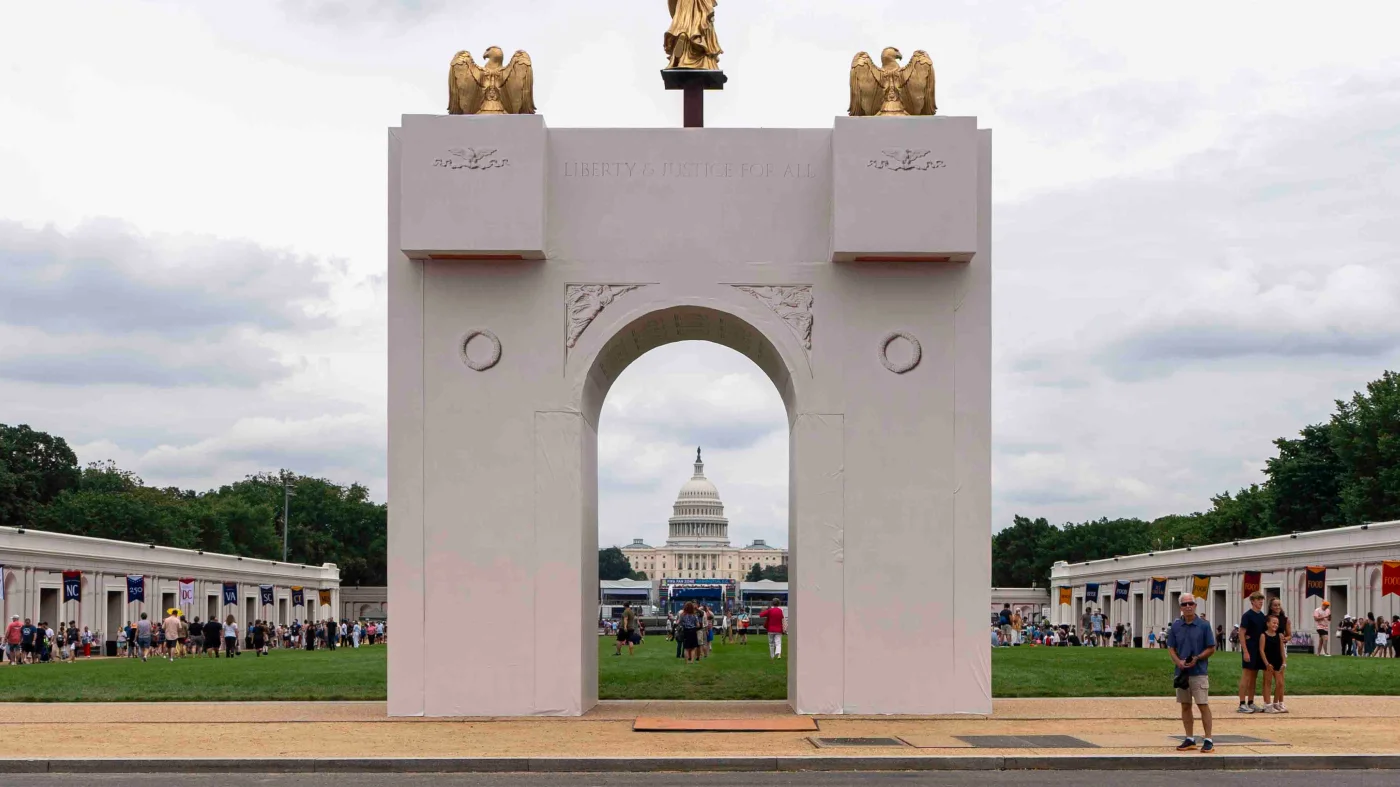
Virginia and the District of Columbia filed a lawsuit in U.S. District Court for the District of Columbia on Saturday challenging President Donald Trump’s proposed triumphal arch project. The 45-page complaint, filed by Virginia Attorney General Jay Jones and D.C. Attorney General Brian Schwalb, characterizes the undertaking as “flagrantly unlawful” and represents the latest legal effort to prevent construction of the structure.
The arch, which stands 250 feet tall, would be located between Arlington National Cemetery and the Lincoln Memorial, and is designed to be approximately twice the height of the Lincoln Memorial. Plans for the project were announced by the Trump administration in October 2025. According to the lawsuit, construction could commence as soon as the following week.
The two jurisdictions argue that the arch would produce substantial negative consequences, including significant traffic disruptions between Virginia and the District. The attorneys general contend that both areas will incur substantial and irreversible costs to evaluate, respond to, and address these effects. They further allege that the federal government has declined to properly account for such impacts or adequately consult with either jurisdiction throughout the approval process, which they describe as “hurried and preordained.”
President Trump has previously stated that the arch would function as a “military complex” designed to house weapons and snipers. However, the most recent architectural plans, which will undergo review by the National Capital Planning Commission, do not incorporate military components.
U.S. District Court Judge Tanya Chutkin issued an order directing both parties to engage in discussions and reach agreement on a proposed briefing schedule regarding the motion for a temporary restraining order by Saturday evening. The White House and Interior Department did not immediately respond to requests for comment on the litigation.
Article Attribution | Read More at Article Source
Article summary produced by Claude AI