

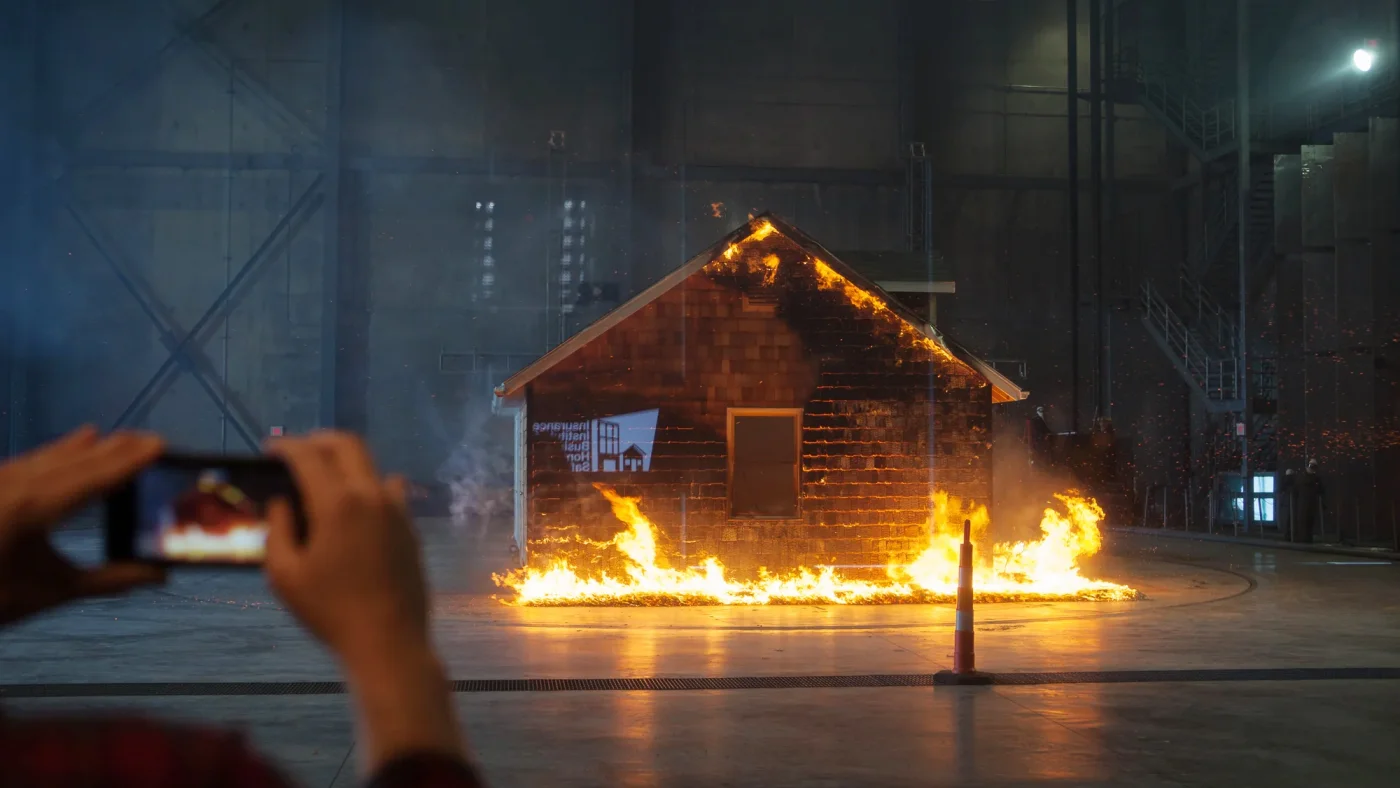
The housing insurance market in fire-prone areas has become increasingly strained as wildfire risks intensify, forcing many homeowners to seek coverage through state backup programs. Major insurance companies have funded research facilities, such as a destruction lab in South Carolina, to understand how homes can better withstand climate-related disasters. These insurers conduct extensive testing on building materials and designs to identify which modifications effectively reduce damage and lower potential claims.
Despite homeowners making substantial investments to harden their properties against fire—such as installing metal roofs and ember-resistant vents—insurance discounts for these improvements have remained minimal. Residents in affected communities like Paradise, California, report that the financial incentives offered by insurers do not adequately reflect the risk reduction achieved through their investments. This disconnect has raised questions about whether the insurance market is functioning efficiently in rewarding residents who take steps to mitigate fire danger.
Experts point to California’s regulatory framework as a contributing factor to the market’s dysfunction. Insurance regulations enacted following voter-approved Proposition 103 in 1988 require insurers to base rate increases on historical wildfire losses rather than forward-looking catastrophe models. This approach kept premiums artificially low relative to emerging risks, potentially encouraging development in fire-prone areas while preventing insurers from charging rates that reflected actual risk exposure.
As fire frequency and severity have increased, insurers have withdrawn from California’s market, leaving many homeowners unable to obtain standard coverage and forcing them into the state’s FAIR Plan, which serves as an insurer of last resort. The core challenge involves determining appropriate pricing for homes in high-risk areas, balancing regulatory constraints, homeowner affordability, and insurers’ financial viability in an evolving climate landscape.
Article Attribution | Read More at Article Source
Article summary produced by Claude AI