

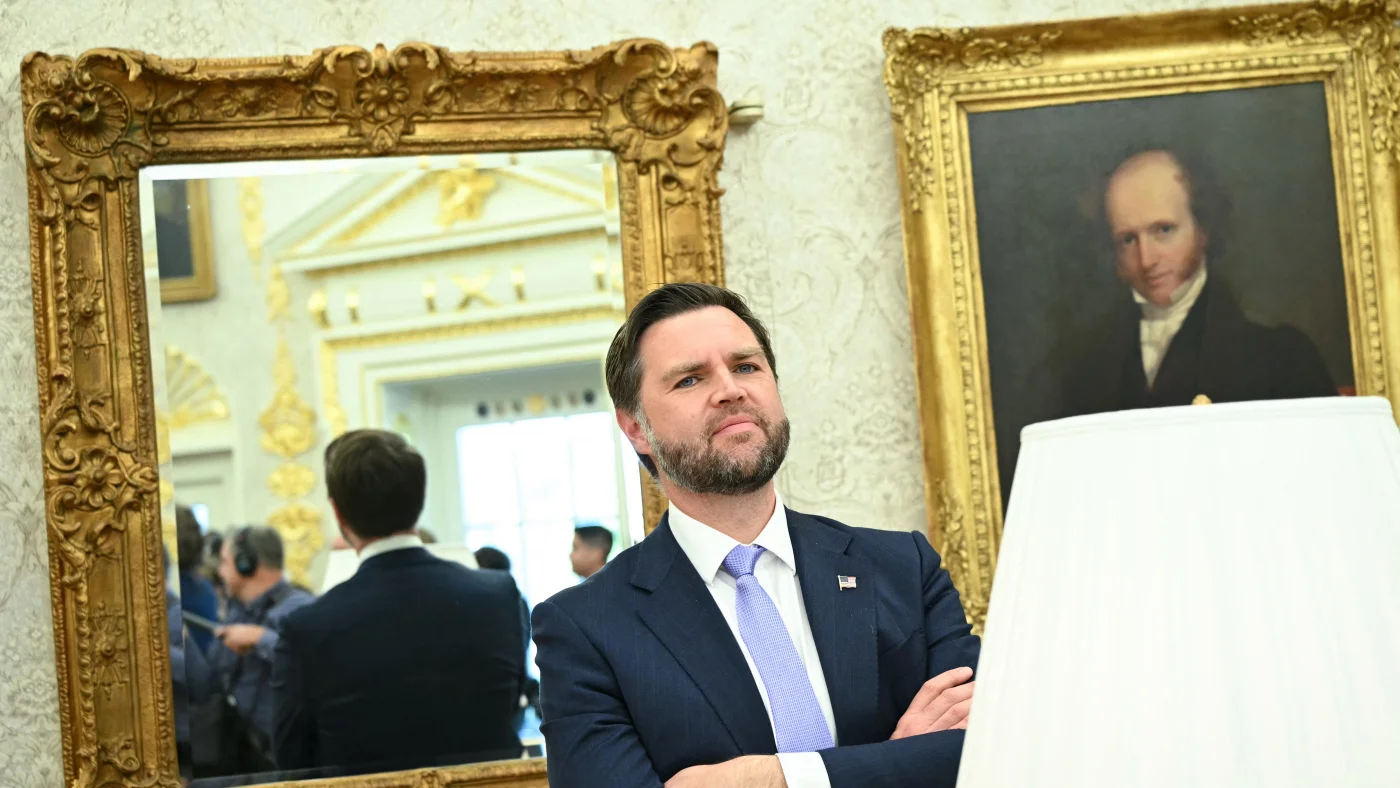
Vice President JD Vance has been actively campaigning for Republican candidates across multiple states, delivering speeches that offer insight into how he might position himself in a future presidential campaign. His recent remarks have ranged from attacking Democratic opponents to invoking nostalgic themes about American life and community.
Vance’s messaging centers on a romanticized vision of mid-century America, frequently referencing his childhood experiences in the Midwest to illustrate themes of lost prosperity and community cohesion. He regularly tells stories about small businesses that sponsored youth sports teams, framing their decline as a consequence of distant Washington policymakers indifferent to working-class struggles. These narratives serve as a foundation for his pitch that populist politics can restore American greatness. He has also emphasized themes of racial harmony among working-class communities, contrasting his recollections with contemporary social movements.
Vance’s campaign rhetoric incorporates elements of Trump’s anti-establishment messaging while employing a somewhat different rhetorical style. While maintaining the combative tone associated with MAGA politics, including personal attacks on opponents, Vance presents himself as a more traditionally eloquent communicator. He has experimented with casual language and occasional profanity, though this remains measured compared to Trump’s typical approach.
A significant challenge for Vance involves defending administration policies that have created economic difficulties for voters. Regarding rising energy prices linked to geopolitical conflicts, Vance has contextualized them as recurring historical phenomena rather than unique policy failures. Similarly, he has addressed agricultural price concerns by pointing to industry consolidation rather than discussing administration actions that have complicated relationships with producers.
Beyond campaign speeches, Vance has undertaken leadership of an anti-fraud task force examining social safety net programs, positioning this work as both credential-building and an opportunity to discuss his personal background. His biography as a working-class memoir author gives him different political tools than Trump, particularly regarding discussions of economic hardship and military service, though observers note that Trump’s appeal has stemmed primarily from his distinctive persona rather than biographical relatability.
Article Attribution | Read More at Article Source
Article summary produced by Claude AI