

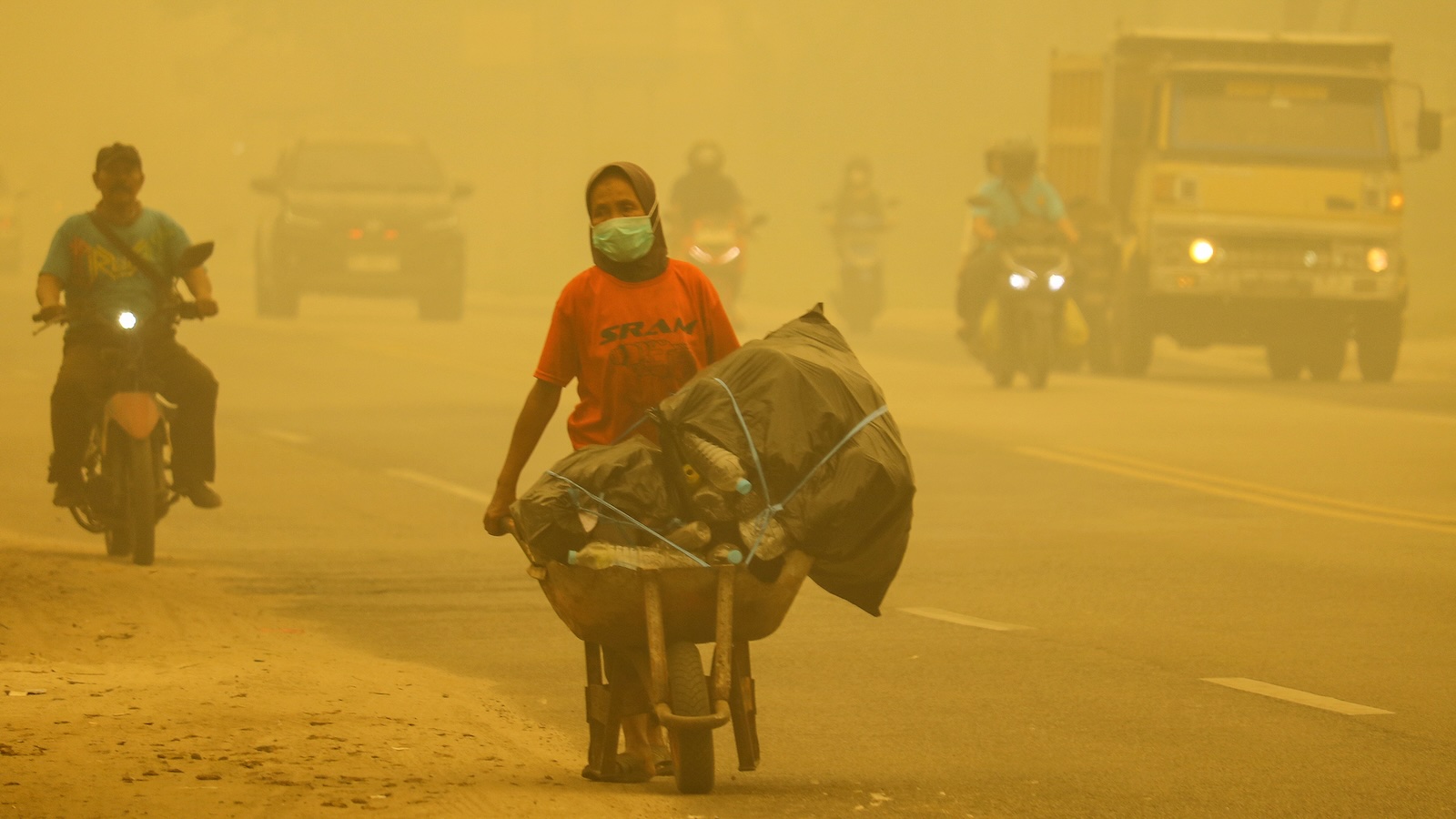
Indonesia is confronting its most severe wildfire season in ten years, with more than 4.6 million acres burning across major island regions including Kalimantan and Sumatra since August. The resulting thick smoke has extended across borders into neighboring countries, creating significant air quality challenges. Health authorities report that over 300,000 Indonesians have sought medical treatment for acute respiratory conditions, with air quality measurements reaching levels more than thirteen times worse than unhealthy thresholds on certain days. Building construction practices that prioritize air circulation rather than filtration have compounded the public health impact.
The fires represent the latest environmental challenge facing Indonesia, a nation that ranks among the world’s most densely populated and disaster-prone countries. The nation is simultaneously grappling with other climate-related crises, including sea level rise threatening its capital city of Jakarta, which already sits partially below sea level. Scientists and officials have attributed the fires primarily to a powerful El Niño weather pattern that has created severe drought conditions across the country, particularly affecting peatlands. Peat soils, composed of partially decomposed plant matter, become highly flammable when dried and can support smoldering underground fires lasting months when ignited.
Agricultural practices have emerged as a key factor in the crisis. Farmers and companies commonly use fires to clear vegetation and debris as a rapid, inexpensive land-clearing method, but these fires frequently escape control in the dried peat conditions. Investigators suspect many fires on unmanaged lands adjacent to working plantations—often cultivating oil palm—were deliberately set to expand agricultural areas. While Indonesia implemented significant fire prevention measures during the previous decade, including restrictions on peat drainage and deforestation controls that reduced forest loss for five years, the situation deteriorated when deforestation rates began rising again in 2022.
Government officials have acknowledged the scale of the crisis. President Prabowo Subianto described the deliberate fire-setting as environmental terrorism and a crime against humanity, pledging investigations into responsibility. Despite warnings issued by forestry officials to international bodies earlier this year about heightened fire risks from El Niño conditions, the outbreak still occurred. Experts note that managing peat fires presents exceptional challenges due to their subsurface characteristics, which can conceal burning from satellite detection while releasing substantial carbon and smoke.
Article Attribution | Read More at Article Source
Article summary produced by Claude AI