

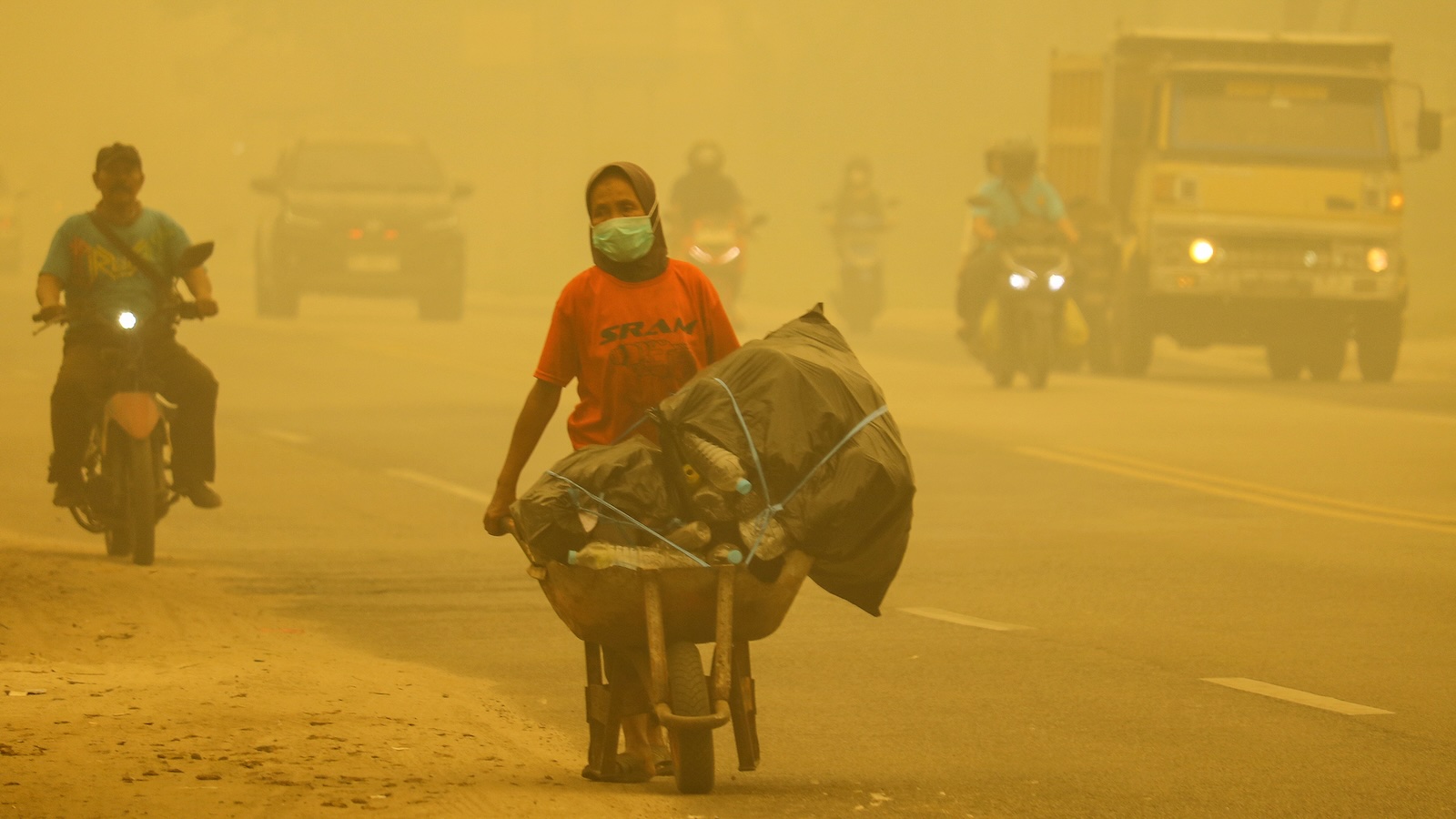
Indonesia is grappling with its most severe wildfire outbreak in ten years, with over 4.6 million acres consumed by flames since August across major island regions including Kalimantan and Sumatra. The resulting smoke has created hazardous air quality conditions that extend beyond Indonesia’s borders into neighboring countries. Government data indicates more than 300,000 residents have sought medical treatment for acute respiratory ailments, with air quality reaching levels more than 13 times worse than unhealthy thresholds on certain days. The fires represent a significant public health emergency, particularly given that Indonesian buildings are typically designed to maximize ventilation rather than filter or exclude outdoor air.
The primary driver of this year’s crisis is a superstrong El Niño that has created severe drought conditions across the country, drying out the extensive peatlands found throughout Indonesia. Peat—soil composed of partially decomposed organic material—becomes highly flammable when desiccated. Farmers and agricultural companies have deliberately ignited fires to clear vegetation and debris for farming purposes, a common practice in the region that has catastrophic consequences when applied to peat. These subsurface fires can smolder for extended periods underground, making them difficult to detect and control. Government officials, including President Prabowo Subianto, have characterized the fire-setting as an environmental crime, pledging investigations into those responsible and labeling the actions as environmental terrorism.
Much of the fire activity appears concentrated on unmanaged lands adjacent to active plantations, particularly those cultivating oil palm. Researchers suggest the fires are likely being used to clear overgrowth to expand crop cultivation. Indonesia had made substantial progress on fire management over the past decade, implementing peatland drainage restrictions in 2014 and significantly reducing deforestation rates following severe outbreaks. Despite government preparation efforts and forecasts of El Niño conditions released earlier this year, fires were nevertheless set and spread beyond control. The complexity of managing fire across such a large and diverse country, combined with the particular challenges posed by underground peat combustion, demonstrates the ongoing difficulty of preventing these catastrophic events even with increased preparedness.
Peat fires present unique management obstacles because their subsurface nature allows them to burn for months while remaining difficult to detect via satellite. Dense smoke can even obscure surface fires from detection systems. Fires that appear extinguished frequently reignite spontaneously. These characteristics make peat blazes exceptionally hard to locate and suppress, amplifying both immediate health impacts and long-term environmental consequences including substantial carbon emissions and habitat destruction.
Article Attribution | Read More at Article Source
Article summary produced by Claude AI