

President Trump is adopting a holding strategy in a nine-month conflict with Iran, shifting away from previous threats of rapid military strikes. In recent statements, Trump indicated that direct negotiations are no longer necessary, citing billions of dollars in frozen Iranian assets. He characterized the prospect of military action as unlikely in the near term while emphasizing the U.S. remains militarily prepared.
Trump’s approach reflects altered political circumstances. His Israeli ally, Prime Minister Benjamin Netanyahu, faces potential removal from power following recent elections, while Republicans lost control of Congress in midterm elections. Vice President JD Vance attributed some party losses to unpopularity surrounding the Iran conflict. Gulf Arab leaders have expressed preference for maintaining current economic pressure rather than pursuing diplomatic resolution.
Under this status quo arrangement, significant economic consequences persist across the region. Iran continues controlling shipping lanes through the Strait of Hormuz under new navigation requirements, forcing alternative routes for oil tanker traffic. The International Monetary Fund reports Gulf Arab states face recession, with economies in Kuwait, Qatar, and Iraq contracting approximately 16 percent while Bahrain’s contracted 11 percent. Economic measures against Iran include a naval blockade that has cut Iranian oil revenue by at least $25 billion, complemented by the United Arab Emirates severing trade ties with the country.
Tensions remain unstable despite the absence of major new escalation. The U.S. is deploying a third aircraft carrier to the region, and tit-for-tat military strikes between American and Iranian forces continue, including recent strikes on radar installations and military sites. Iran announced a new underground missile production facility while occasional clashes in the Strait of Hormuz persist involving shipping and military targets.
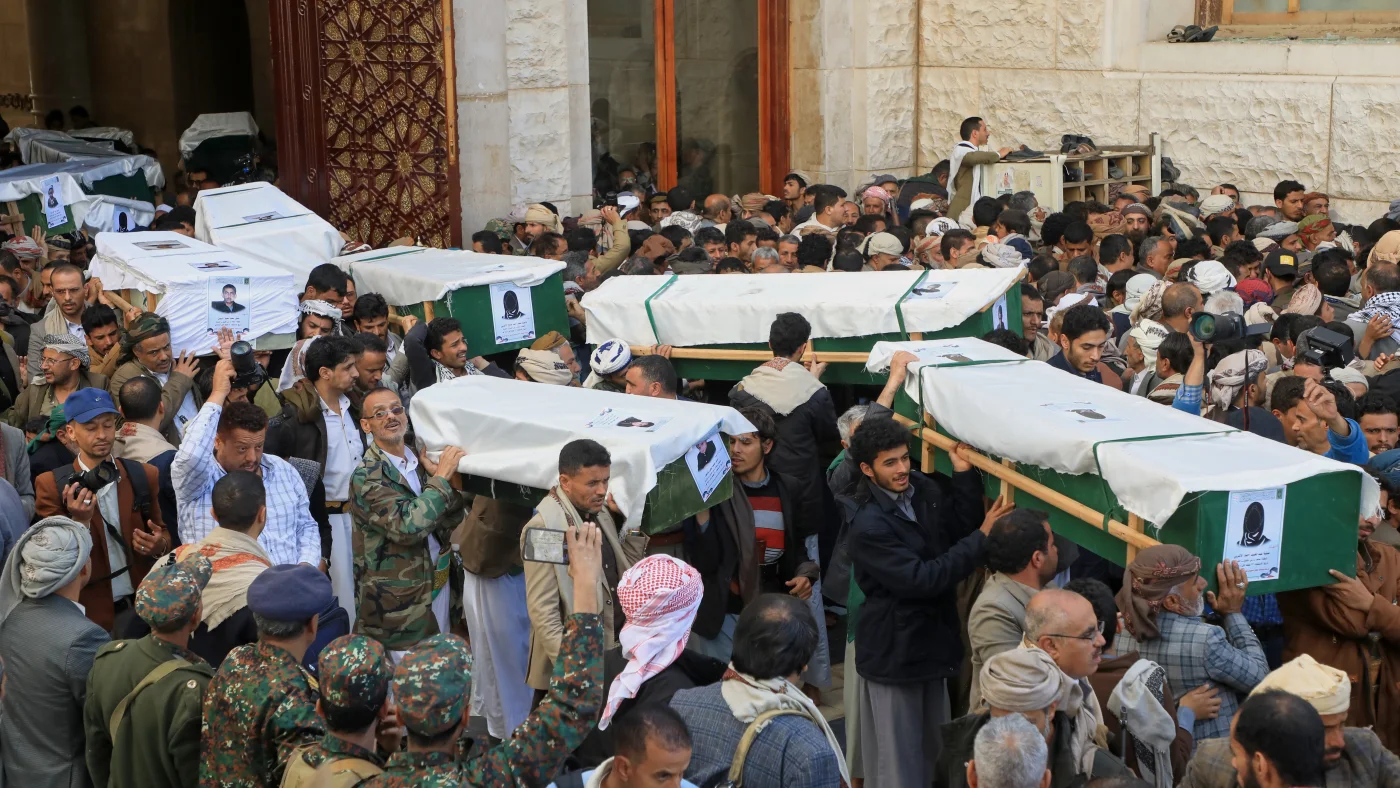
Regional consequences extend beyond direct U.S.-Iran interactions. Fighting between Saudi Arabia and Houthi forces in Yemen has intensified, displacing approximately 330,000 Yemenis according to the United Nations. Houthi attacks on Saudi infrastructure, including petroleum pipelines and corporate headquarters, occur regularly, prompting multiple nations including Pakistan, Turkey, and Egypt to provide defensive support. Secretary of State Marco Rubio stated economic sanctions remain effective tools for limiting Iranian capabilities without requiring immediate military action.
Article Attribution | Read More at Article Source
Article summary produced by Claude AI