

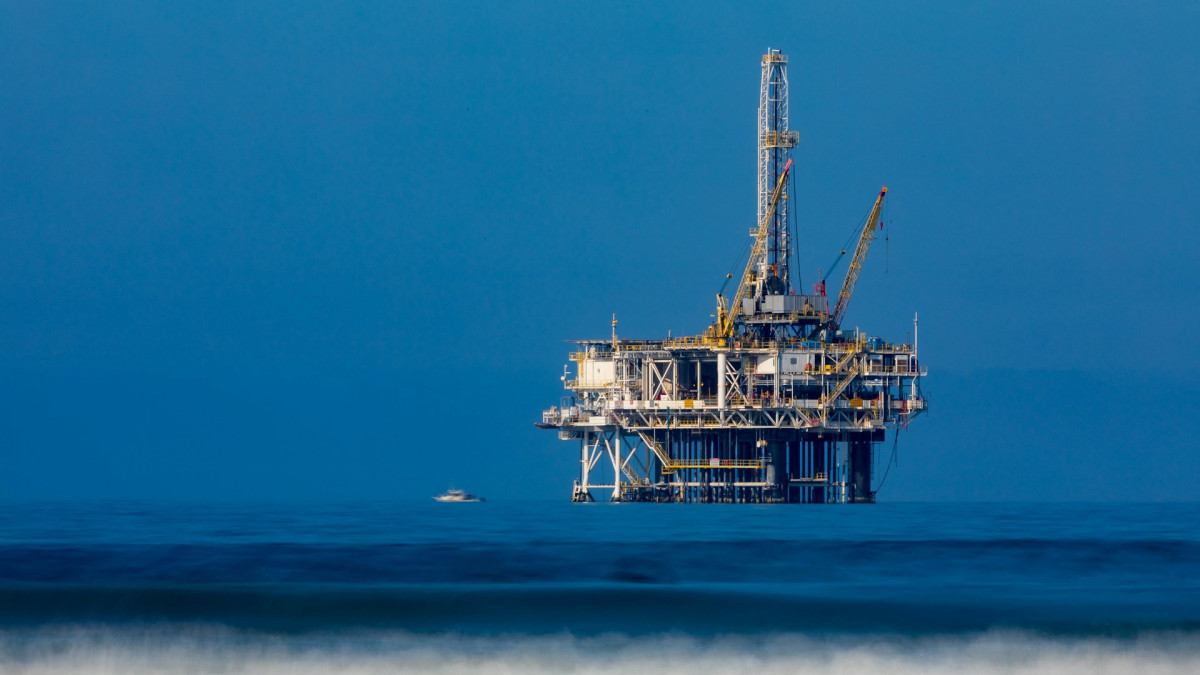
Sable Offshore’s Santa Ynez offshore project, located in federal waters off California’s coast, has become a focal point in the debate over oil production policy and federal-state authority. The complex, originally developed by ExxonMobil and sold to Sable in 2024, comprises three production platforms and associated infrastructure. Its operations were disrupted following a 2015 pipeline rupture that spilled crude near Refugio State Beach, creating regulatory and legal obstacles to resumption.
Restarting production required intervention from the Trump administration. The federal Pipeline and Hazardous Materials Safety Administration reclassified the onshore pipeline infrastructure as interstate in December 2025, asserting federal oversight and approving operations. When geopolitical tensions with Iran escalated in late February 2026, Energy Secretary Chris Wright invoked the Defense Production Act to direct pipeline restoration on March 13, citing energy security concerns. Pipeline shipments resumed the following day. California’s Democratic administration challenged both federal actions, transforming the project into a continuing dispute over federal and state regulatory authority.
Sable faces significant commercial challenges despite regulatory progress. The company relied solely on Chevron as a customer until early October, when the refiner halted crude purchases due to maintenance and storage upgrades. This single interruption triggered a liquidity crisis, with Sable’s stock declining more than half and the company warning of substantial doubt regarding its ability to continue operations. Subsequently, the company secured arrangements with three additional refiners—Chevron, Marathon, and PBF Energy—though volumes remain limited to starter quantities.
California’s broader hydrocarbon sector presents structural headwinds for Sable’s long-term prospects. State crude production has declined sharply to approximately 245,000 barrels per day through August 2026, down from roughly 550,000 barrels per day in 2015. Multiple refinery closures and renewable-fuel conversions by major operators have reduced conventional refining capacity to approximately 1.34 million barrels per day across 11 facilities. Simultaneously, seaborne crude imports to the state total around 890,000 barrels per day, indicating ongoing demand despite state policy efforts to phase out fossil fuel dependence by 2045.
Sable’s Santa Ynez crude presents additional marketability constraints. The project produces heavy, sulfur-rich crude approximately 15-20 degrees API with 4-5 percent sulfur content, trading at roughly $30 per barrel below Brent crude amid ample competing supply. The planned restart of the Hondo platform is expected to produce lighter-grade crude beginning in December, potentially improving the combined product quality and marketability. However, increased production volumes compound storage and outlet challenges while California’s regulatory environment and refinery closures continue limiting potential customer options.
Article Attribution | Read More at Article Source
Article summary produced by Claude AI