

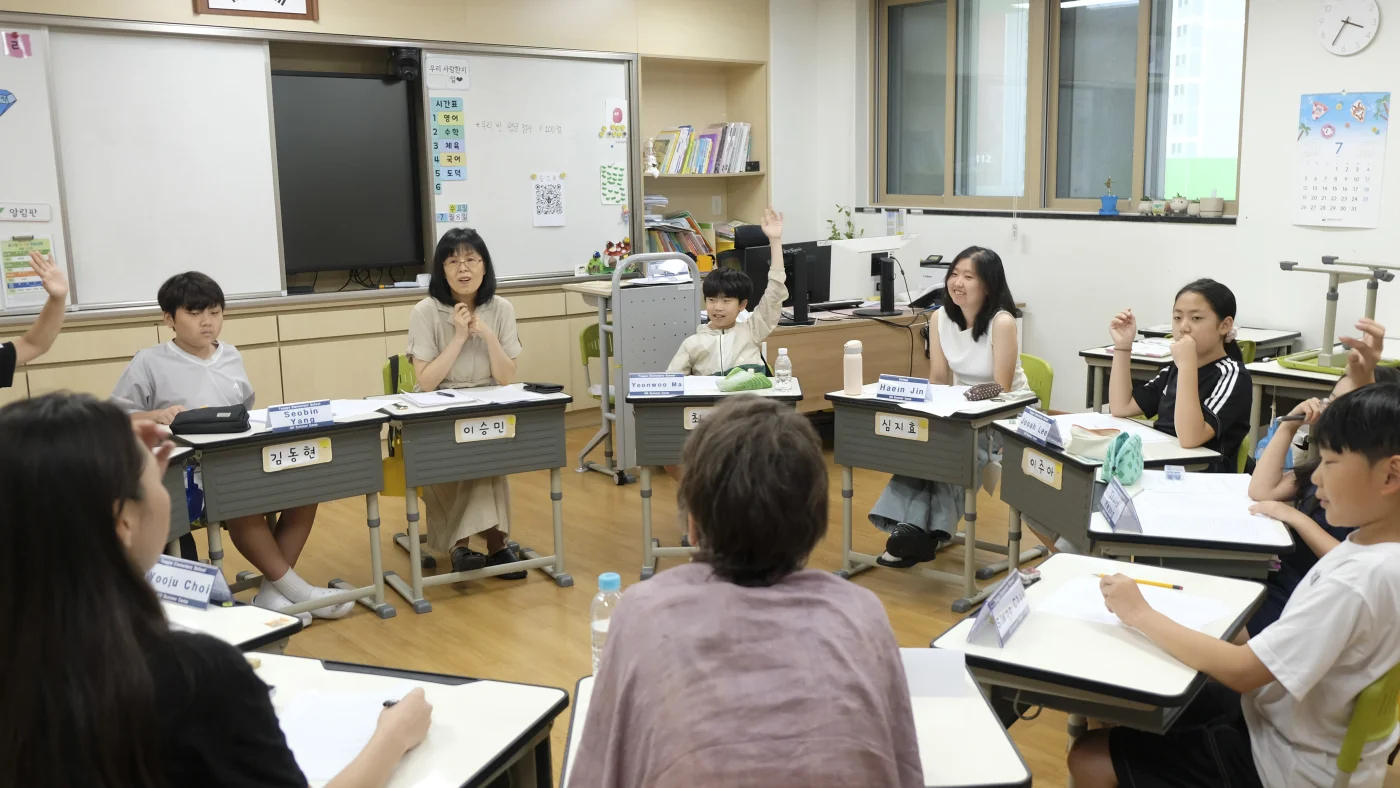
Chuncheon, a city located approximately 50 miles east of Seoul, has established an academic partnership with St. John’s College to implement the Great Books educational approach in local schools. This initiative represents an effort to address multiple educational challenges facing South Korea, including a documented decline in reading proficiency among students following the COVID-19 pandemic and the widespread adoption of artificial intelligence tools in academic settings.
The Great Books model differs significantly from traditional educational practices in South Korea. Rather than lectures and exam-focused instruction, teachers serve as discussion facilitators while students engage in seminars centered on classic and contemporary texts. Students rely solely on assigned readings, peer discussions, and their own reasoning rather than external resources like the internet. This approach contrasts sharply with South Korea’s competitive educational system, which emphasizes standardized testing and memorization, often requiring students to attend supplementary cram schools.
Current data indicates that over half of South Korean students use AI chatbots for studying at least weekly, according to OECD figures. Educators and officials express concern that this dependency, combined with traditional test-focused instruction, leaves students without adequate time for critical reading and independent thinking. Professor Lee Yonghwa, who established South Korea’s first Great Books program at Incheon National University in 2019, notes that students increasingly lack the ability to evaluate the quality of information generated by artificial intelligence because they have not developed independent reasoning skills.
The program has expanded to include approximately 120 college students, 770 younger students, and 40 teachers in training across South Korea. Participants read works by classical and contemporary authors, including Shakespeare, Aristotle, and Nobel laureate Han Kang. Chuncheon Mayor Yook Dong-han characterized the initiative as a revolutionary educational breakthrough that has generated unexpectedly strong student engagement and interest in critical thinking and civic discourse.
Educators view the Great Books approach as addressing systemic limitations in South Korea’s educational landscape. Discussion-based learning encourages students to examine complex ideas, connect historical texts to contemporary issues, and develop the reasoning capabilities necessary for navigating an increasingly AI-dependent world.
Article Attribution | Read More at Article Source
Article summary produced by Claude AI