

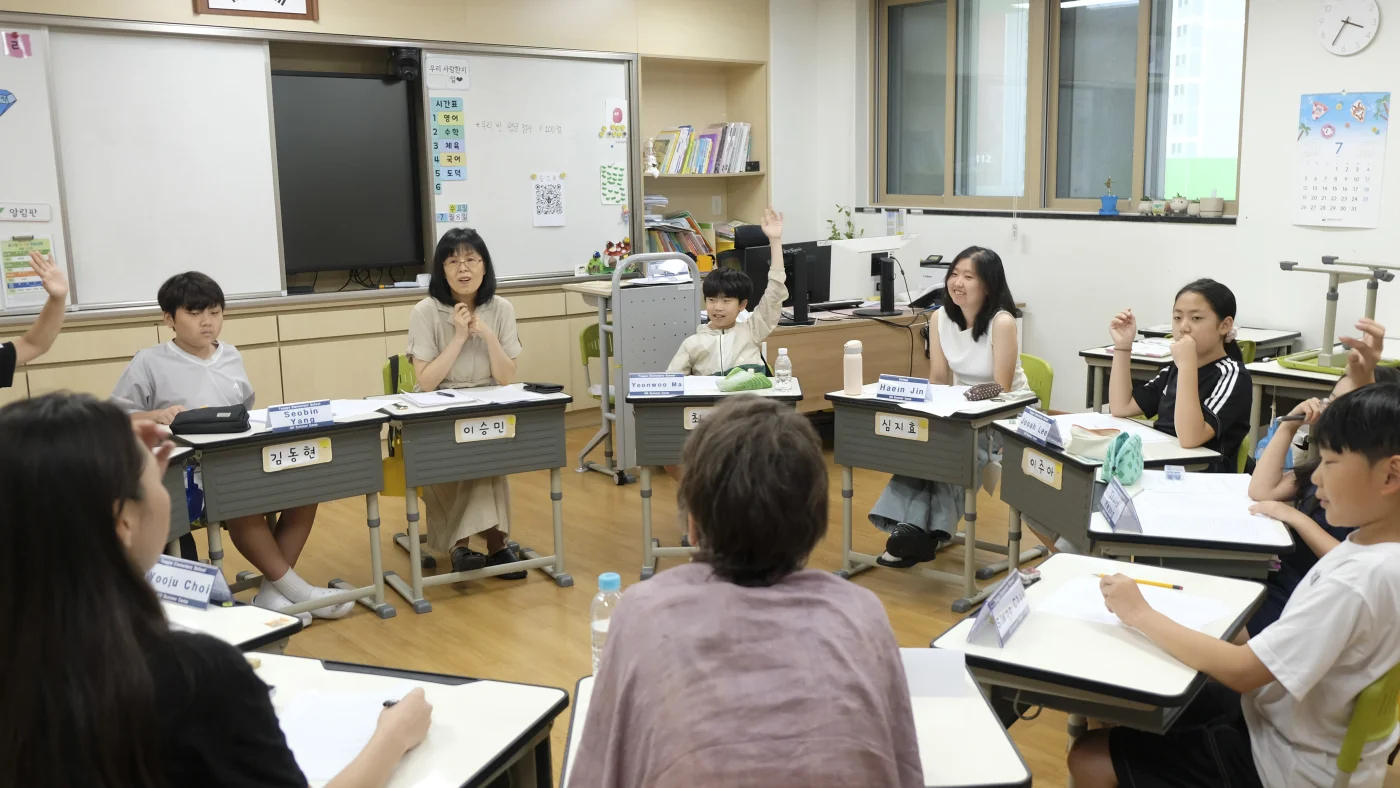
Chuncheon, a city located approximately 50 miles east of Seoul, has begun implementing the Great Books educational approach used by St. John’s College in Annapolis, Maryland. The city established an academic partnership with the institution last year to introduce this alternative model to its schools. Currently, the program serves around 120 college students and approximately 770 younger students across South Korea, with roughly 40 educators undergoing training in the methodology.
The Great Books model operates distinctly from conventional educational systems. Rather than delivering lectures, instructors facilitate seminar-style discussions where students engage directly with classic texts from authors such as Aristotle, Shakespeare, Euclid, and contemporary writers including Nobel Prize recipient Han Kang. Students rely exclusively on assigned readings, their own reasoning capacity, and peer discussion without consulting external sources like the internet. This approach has generated considerable interest among participating students, according to Chuncheon’s mayor.
South Korea’s educational establishment faces mounting challenges that have prompted interest in alternative models. Recent international assessments indicate a decline in reading proficiency following the pandemic, reversing decades of strong performance by East Asian students. Concurrently, the nation has rapidly integrated artificial intelligence into educational settings, with roughly half of South Korean students reporting weekly use of AI chatbots for studying. Additionally, intense pressure surrounding college entrance examinations has created a highly competitive academic environment beginning at early education levels, driving families toward supplementary cram schools or foreign educational institutions.
Educators implementing the program argue it addresses critical gaps in current systems. Professor Lee Yonghwa of Incheon National University, who established South Korea’s inaugural Great Books program in 2019 and is himself a St. John’s College graduate, contends that traditional methods leave students insufficient time for reading and independent thought while overemphasizing fact memorization. He further warns that reliance on artificial intelligence for information gathering may undermine students’ capacity to evaluate the quality and accuracy of AI-generated content. The Great Books seminar format, proponents suggest, functions as a deliberate counterbalance to these trends by cultivating reasoned discourse and critical evaluation skills among participants.
Article Attribution | Read More at Article Source
Article summary produced by Claude AI