

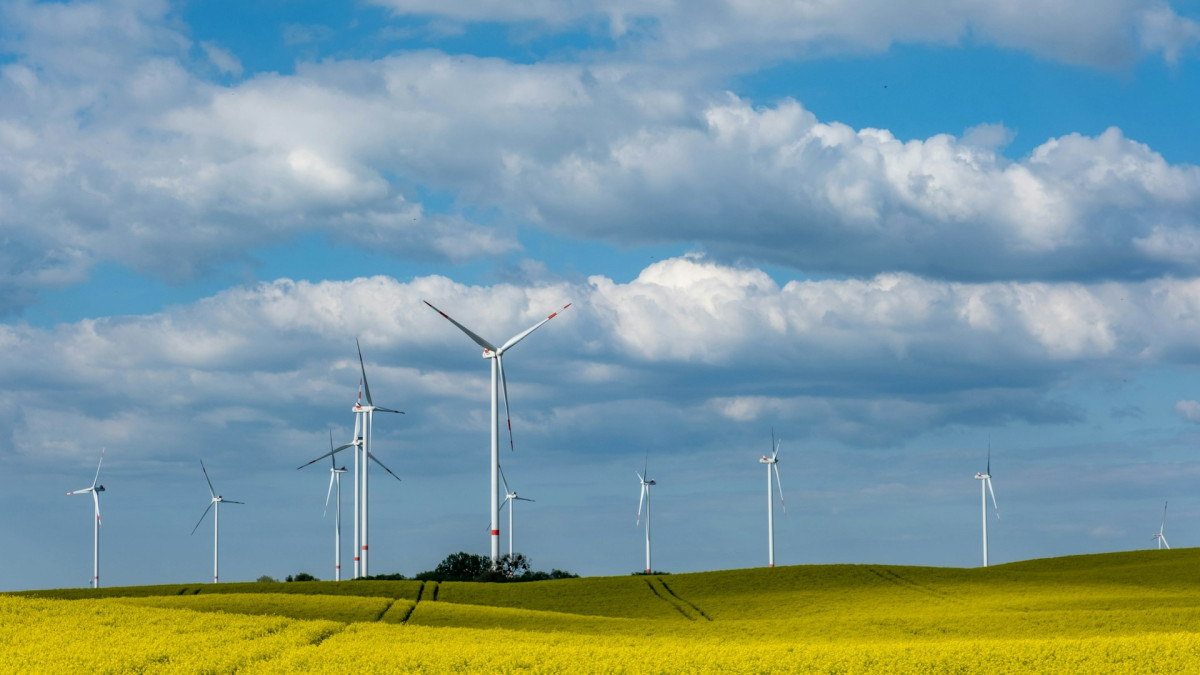
Ember Energy has released a report titled “Harnessing the Winds” highlighting significant economic benefits that could result from expanding wind power deployment alongside solar energy and battery storage systems. The analysis demonstrates that wind energy serves as a complementary resource to solar installations, as the two sources produce electricity at different times of day and in different seasons, thereby optimizing overall energy generation.
According to Ember’s findings, approximately 90 percent of global electricity demand could be met at substantially lower costs through the combined deployment of wind, solar, and battery technologies. Under this scenario, the median cost per megawatt hour would decrease by more than 18 percent, falling from $105 to $86, with the remaining 10 percent of power needs addressed through gas or diesel generation. This cost reduction reflects the complementary nature of these renewable energy sources and their capacity to meet demand more efficiently than solar and batteries alone.
Beyond cost considerations, integrating wind power into renewable energy portfolios would enhance grid resilience and energy security by reducing exposure to simultaneous weather phenomena that could disrupt power generation. Such diversification mitigates risks associated with extended periods of low solar and wind output, sometimes referred to by the German term Dunkelflaute. However, the benefits of wind power expansion would not be uniformly distributed globally, with equatorial regions experiencing minimal impact due to consistent seasonal solar patterns, and economically disadvantaged areas facing prohibitive deployment costs.
Technological advancement presents a pathway toward broader wind energy adoption. Researchers at MIT have developed a high-pressure wind tunnel capable of simulating atmospheric conditions more accurately than traditional laboratory methods, enabling more sophisticated testing and validation of wind turbine designs. This innovation could accelerate the pace of wind energy research and development, potentially improving the efficiency and cost-effectiveness of wind power generation in the coming years.
Article Attribution | Read More at Article Source
Article summary produced by Claude AI