
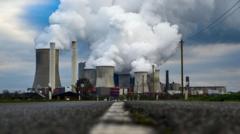
Germany, Europe’s largest coal consumer and the world’s fourth-largest user, has committed to eliminating coal from its electricity generation by 2038, with an accelerated timeline of 2030 for lignite, the country’s most polluting coal variant. Currently, coal accounts for roughly 20% of German electricity production, while renewables already comprise 59% of the power supply. The government has planned to transition away from coal by expanding reliance on natural gas and renewable energy sources.
However, recent developments have prompted reconsideration of this trajectory. Global gas price volatility stemming from geopolitical tensions has led multiple countries to revisit coal dependency, including Japan, Italy, and India. Germany faces particular pressure given its reliance on imported natural gas supplies, of which it imports 95%, compared to its abundant domestic lignite reserves and third-largest global reserves of the fuel. Chancellor Friedrich Merz indicated in March that phase-out commitments may be unrealistic given current energy security demands.
The decision presents a complex challenge for the German government, which operates as a coalition between the centre-right CDU/CSU and left-wing SPD, parties with divergent perspectives on coal policy. CDU leaders, including Saxony’s Michael Kretschmer, emphasize affordability and supply security, while SPD representatives argue that relaxing coal restrictions would undermine the energy transition. Energy company LEAG, the nation’s second-largest lignite miner, supports extending coal capacity, while environmental advocates and some industry groups oppose further delay.
One proposed compromise involves permitting six imported hard coal power stations currently operating as backup capacity to run continuously, potentially supplying electricity to millions of households. A parliamentary committee established in March is examining this possibility. A statutory review scheduled for August will evaluate the coal phase-out’s impact on energy supply, security, and pricing, with potential implications for the 2030 lignite deadline and future coal policy direction.