
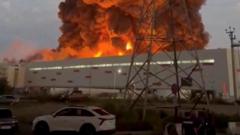
Ukrainian forces have conducted multiple drone attacks on warehouses operated by Wildberries, Russia’s largest online retailer, over several days. The initial assault struck facilities in Elektrostal and Kotovsk, resulting in eight deaths and dozens of injuries, with destroyed inventory valued around £750 million. Subsequent strikes targeted additional logistics hubs in Koledino, Krasnodar, and Nevinnomyssk. Ukrainian officials characterized the campaign as targeting supply lines for military equipment and drone components, though independent verification of these claims remains unavailable.
The attacks have created significant hardship for the hundreds of small and medium-sized businesses that rely on Wildberries as their primary sales channel. The marketplace model used by Wildberries and rival Ozon means sellers themselves bear the costs of losses rather than the company absorbing them. Individual traders have reported losses ranging from hundreds of thousands to over one million roubles, with some suspending new inventory purchases due to uncertainty about future strikes. While company owner Tatiana Kim has announced compensation measures and waived certain fees, sellers express skepticism about the adequacy of relief.
The warehouse attacks represent an escalation in Ukraine’s targeting strategy, which has previously focused on Russian energy infrastructure. Russia has conducted similar attacks on Ukrainian retail and logistics facilities, including warehouses operated by Nova Poshta, ATB, and Roshen. Both Wildberries and Ozon serve an estimated 85-90 percent of Russia’s economically active population, particularly in remote areas lacking physical retail infrastructure.
The strikes compound existing pressures on Russian small businesses, which have faced multiple challenges since the year began. Approximately 209,000 small and medium-sized enterprises closed in the first quarter, representing a 9 percent increase compared to the same period last year. Additional headwinds include increased VAT, internet disruptions, messaging app restrictions, and fuel shortages caused by Ukrainian attacks on energy infrastructure. Analysts note that while Russian businesses have historically demonstrated resilience, the combination of high inflation, widening budget deficits, and resource constraints imposed by sustained military operations create a constraining environment for economic activity.
Article Attribution | Read More at Article Source
Article summary produced by Claude AI