
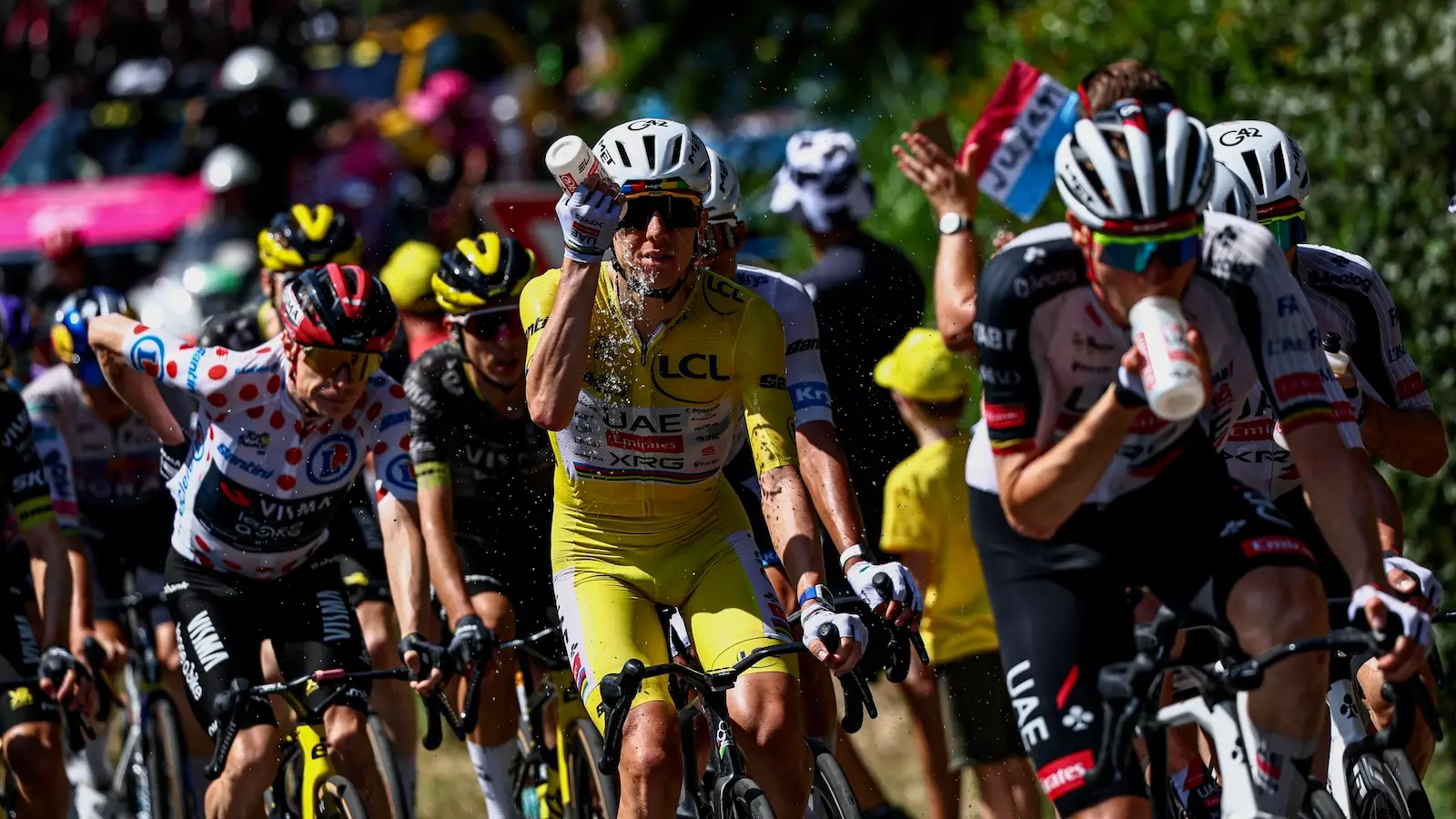
The Tour de France is concluding with Tadej Pogačar positioned to win on the Champs-Élysées. However, the 23-day cycling event has been marked by severe weather extremes linked to climate conditions, drawing attention to environmental challenges facing the historic sporting competition.
Wildfires threatened the Pyrénées-Orientales region during an early stage of the race, prompting organizers to consider cancellation. While the stage ultimately proceeded, officials restricted the caravan of support vehicles and requested spectators avoid the final 27 miles and finish line to prioritize public safety. According to race director Christian Prudhomme, the exceptional circumstances warranted exceptional precautions focused on protecting people.
A record-breaking European heatwave has presented the most persistent challenge. Data from ProCyclingStats.com indicates the first two weeks of the Tour registered the highest average temperature in two decades at 90 degrees Fahrenheit, compared to 79 degrees in 2022. Competitors face an average of roughly 100 miles of riding daily across 21 stages, often maintaining speeds near 30 mph while traversing the Alps and Pyrenees with only two rest days. Extended exertion during extreme heat poses health risks even for elite athletes. Officials relaxed hydration and nutrition protocols, and riders consumed approximately 28 bottles of water daily—several times normal intake. Cooling measures including ice vests and socks became standard. For the first time in Tour history, organizers shortened one stage by 30 kilometers. Even nighttime offered minimal relief, as high temperatures persisted and many European hotels lack air conditioning, preventing adequate physical recovery.
Climate scientists have highlighted the severity of current conditions. Ivana Cvijanovic, lead author of climate research and scientist at the French National Research Institute for Sustainable Development, stated the summer was “clearly extreme” with France and Spain under sustained heat wave warnings. Kurt Shickman from the World Resources Institute noted that insufficient nighttime temperature decreases compromise recovery and compound health risks.
The race’s reliance on fossil fuel company sponsorship has sparked discussion. TotalEnergies sponsors a team and funds the event through a three-year deal, while Australian energy company Santos backs the Tour Down Under. This sponsorship dynamic creates tension between financial support for cycling and the companies driving climate change that threatens sports viability. Proposed solutions for the Tour’s future include relocating the event to a cooler season or adjusting start times, though logistical and broadcast scheduling complexities present significant obstacles to implementation.
Article Attribution | Read More at Article Source
Article summary produced by Claude AI