
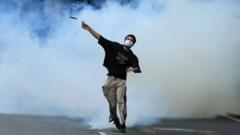
A student-driven movement known as the Cockroach Janta Party (CJP) has emerged as one of India’s most significant youth mobilizations in recent years, centered on grievances regarding repeated examination paper leaks and broader concerns about the education system. The movement gained momentum following weeks of organizing and culminated on Monday when tens of thousands attempted to march on India’s parliament, prompting police responses involving tear gas and baton charges. The protests have continued in subsequent days, with demonstrators demanding education reforms and the resignation of Education Minister Dharmendra Pradhan.
Activist Sonam Wangchuk, a prominent figure in the movement, conducted a 26-day hunger strike in support of the CJP’s demands before ending his fast late on Thursday. Student leaders have indicated that protests will persist until their demands are addressed. The movement’s distinctiveness lies not merely in its scale but in the nature of its core grievance, which centers on systemic failures rather than ideological disputes or the interests of a single community. Experts note that the grievance cuts across traditional divisions of caste, class, and gender, appealing to aspirational young Indians and their parents who view examinations as pathways to social mobility.
Analysts characterize the movement as fundamentally different from previous major protests against Prime Minister Narendra Modi’s government, as it challenges the state’s administrative capacity to govern fairly rather than disputing specific policies or ideology. This distinction potentially complicates the government’s response strategies, as the movement cannot be easily framed as representing singular interest groups. The BJP’s top leadership responded on Wednesday through Defence Minister Rajnath Singh, who accused the opposition of instrumentalizing students, while insisting the government remains committed to addressing concerns. Prime Minister Modi addressed the issue publicly on Thursday, announcing fast-track courts to ensure swift punishment for those involved in paper leaks.
Experts remain divided on whether the movement represents a significant turning point or a temporary outlet for public frustration. Some analysts view Monday’s demonstrations as evidence the movement has crossed a critical threshold, while others note that student mobilizations in India have historically erupted dramatically before fading. Beyond the immediate examination scandal, observers identify broader economic anxieties, job scarcity, and diminishing economic prospects as underlying factors fueling participation. Whether the movement can sustain political momentum and translate street activism into lasting change remains an open question, contingent on government responses, media coverage, leadership continuity, and the movement’s ability to maintain broad social cohesion.
Article Attribution | Read More at Article Source
Article summary produced by Claude AI