
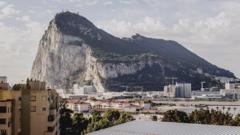
Gibraltar, a British Overseas Territory of approximately 40,000 residents located at the southern tip of mainland western Europe, is preparing for a significant shift in its relationship with neighboring Spain. The territory has maintained border controls that have created daily logistical challenges, particularly during rush hours when roughly 15,000 Spanish workers cross into Gibraltar. Starting on July 15, these controls are scheduled to be dismantled as part of a negotiated agreement between the European Union and the United Kingdom following Britain’s departure from the bloc.
The border removal stems from careful negotiations addressing the unique challenges Gibraltar’s location posed after Brexit. Under the new arrangement, Gibraltar will align with the European customs union and the Schengen free travel zone, allowing unrestricted movement of people and goods between the territory and Spain. However, this integration comes with significant changes to Gibraltar’s regulatory and tax environment. Goods sold in Gibraltar must now comply with EU regulations, and a new transaction tax is being introduced, starting at 15% this year and eventually reaching 17%, alongside higher excise taxes on certain products.
Local officials and business leaders anticipate substantial economic benefits from the border removal. La Línea de la Concepción, an economically disadvantaged Spanish municipality with unemployment near 30%, stands to gain significantly, as many local businesses depend heavily on Gibraltarian clients. Gibraltar’s Chief Minister Fabian Picardo characterizes the agreement as introducing “complete and utter fluidity” that will boost visitor numbers and commerce. Business owners acknowledge the deal represents a positive resolution to years of uncertainty, though some express concerns about the new regulatory requirements and their potential impact on competitiveness.
The border removal marks a dramatic departure from Gibraltar’s turbulent history with Spain. The territory has endured military conflicts and sovereignty disputes, most notably a 13-year blockade imposed by Spanish dictator Francisco Franco beginning in 1969. Gibraltar’s residents voted overwhelmingly against Brexit in 2016, driven partly by concerns about Spanish sovereignty claims. The new arrangement is being framed by both territories’ leadership as a historic opportunity for cooperation and mutual benefit, fundamentally reshaping the relationship between Gibraltar and the European Union it will now be more closely integrated with.
Article Attribution | Read More at Article Source
Article summary produced by Claude AI