
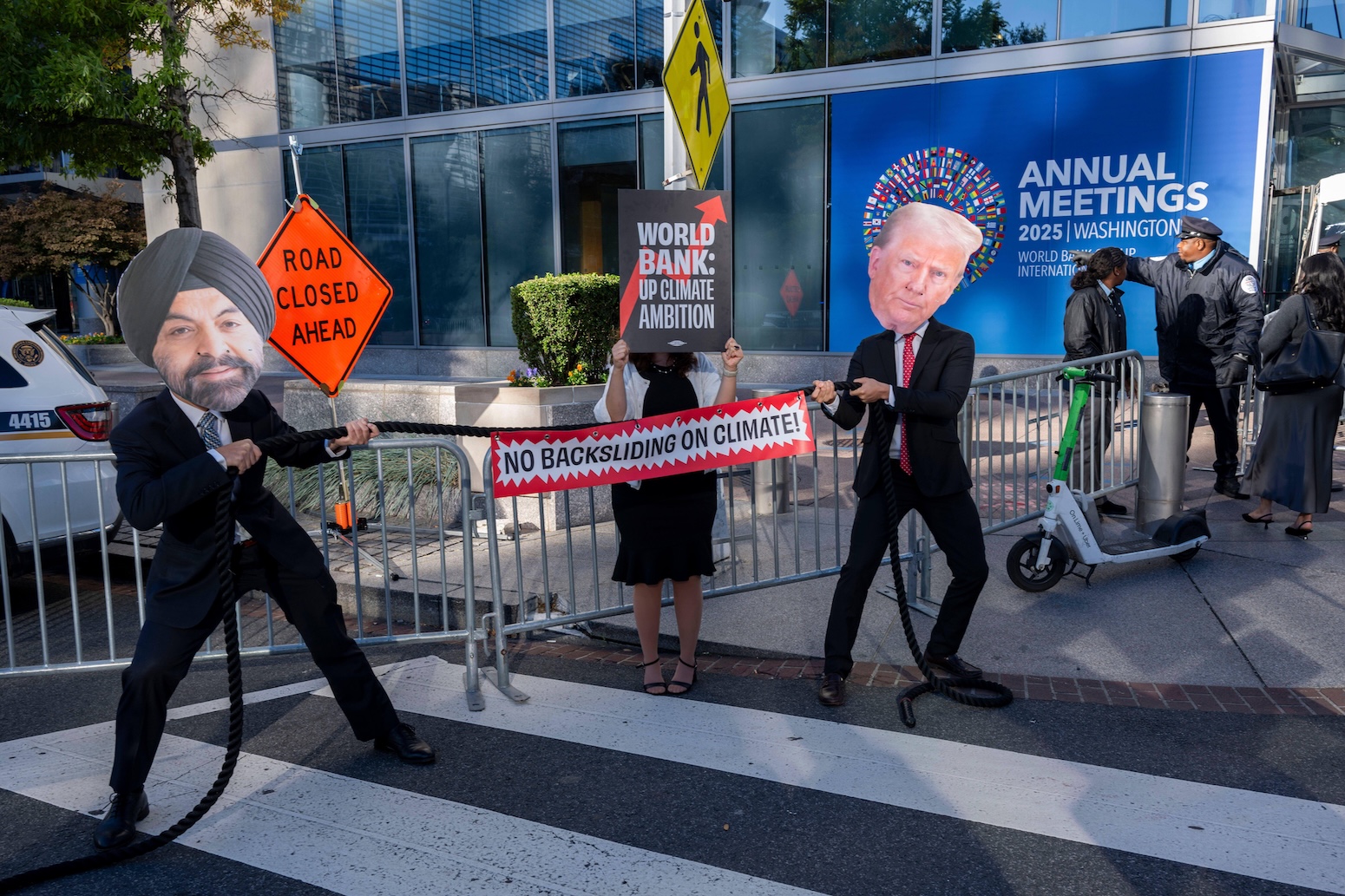
The World Bank, the largest provider of climate finance globally, has discontinued its recently established goal requiring 45% of its funding to developing countries be designated as climate finance. This decision came after months of pressure from the Trump administration in the United States, which has shifted toward opposing international climate cooperation efforts.
The decision represents a negotiated compromise among the bank’s board of directors, which represent its 189 member governments. While the US, supported by Russia, Saudi Arabia and Kuwait, pushed for complete elimination of climate-related targets, a coalition of European nations and developing countries advocated for maintaining climate priorities. The outcome allows the World Bank to extend its Climate Change Action Plan, though with the quantitative targets removed. The bank said it would also commission an independent evaluation group to assess the plan’s effectiveness.
The World Bank distributed $39.2 billion in climate-related financing during 2025 alone, predominantly through loans to emerging economies including Turkey, India and Nigeria. The bank had previously more than doubled its climate finance output, from $17.2 billion in 2020 to the 2025 figure, exceeding the now-abandoned 45% target. Experts note this financing proves critical for developed nations to meet international climate finance commitments, including a pledge to provide $300 billion annually by 2035 under the Paris Agreement.
While the immediate impact remains uncertain, the policy shift has generated concern among climate finance advocates. Some experts characterize the change as largely symbolic, noting that individual bank divisions retain their own climate targets and that demand for climate-related investments continues from client nations. Recent surveys indicate that developing-country officials broadly support renewable energy investment over fossil fuel projects, potentially sustaining climate finance flows regardless of formal targets.
Experts emphasize that the World Bank’s continued role proves essential for achieving international climate finance goals, particularly given reduced aid commitments from numerous developed nations. The bank’s ability to mobilize private investment alongside direct financing gives it outsized influence in climate action globally. Whether climate funding continues at previous levels will depend partly on client-country demand and the results of the commissioned independent evaluation.
Article Attribution | Read More at Article Source
Article summary produced by Claude AI