
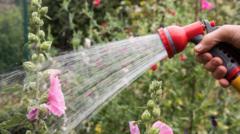
Drought conditions have been officially declared in North Wales and the Upper Severn river basin following an extended period of hot, dry weather. Without substantial rainfall in coming days, Wales faces the possibility of recording its driest July in 190 years of record-keeping, according to Natural Resources Wales. The situation has resulted in hosepipe restrictions affecting over 20 million households across England and Wales, preventing the use of hoses for garden watering, vehicle washing, and pool filling.
Eight UK water companies have implemented hosepipe bans, with seven located in southern and eastern England and one in Wales. Beyond the two officially declared drought zones, other areas are classified under different water stress categories. Large portions of England, including East Anglia, the West Midlands, Devon, Cornwall and surrounding regions, have been designated as experiencing prolonged dry weather. Northern regions of England maintain normal water status, while Scotland monitors water scarcity rather than declaring droughts, with some eastern Scottish areas showing moderate scarcity levels.
Water supplies depend on three primary sources: rivers, reservoirs, and groundwater. River flows measured low in June across affected regions, with some locations in North Wales and Upper Severn recording exceptionally low levels for the time of year. Reservoir levels in Wales, Northern Ireland and Scotland remained normal or above expected in June, though English reservoirs have fallen below average. Groundwater levels, which respond more slowly to weather changes and provide buffering during droughts, were generally at or slightly below normal in June after being replenished by above-average winter rainfall.
Climate projections suggest the UK may experience drier summers as global temperatures rise, with warmer air drawing additional moisture from soil through evaporation. A recent major review criticized water companies for historical underinvestment in infrastructure. The government and water companies are planning nine new reservoirs for England by 2050, with one already under construction. The Environment Agency has indicated that additional measures targeting water leak reduction and demand management may be necessary alongside existing restrictions.
Article Attribution | Read More at Article Source
Article summary produced by Claude AI