
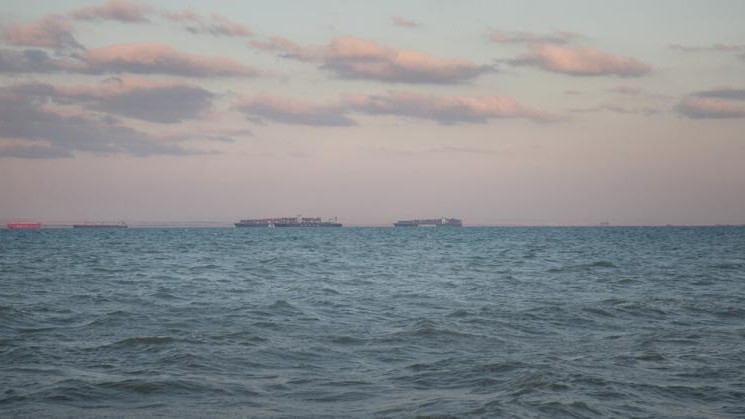
Saudi Arabia confronts a significant logistical challenge in exporting crude oil from its Red Sea terminal at Yanbu due to security disruptions affecting the Bab El Mandab strait. The kingdom’s East-West Pipeline, which moves crude westward to bypass potential Persian Gulf chokepoints, has long served as a strategic asset to reduce dependence on the Strait of Hormuz. However, a sustained Houthi blockade at Bab El Mandab has exposed a critical gap in this infrastructure strategy: once oil reaches Yanbu, it still must transit the Red Sea to reach global markets.
With the East-West Pipeline’s nameplate capacity of approximately seven million barrels per day, substantial volumes require export. While some crude supplies domestic refineries and petrochemical facilities in western Saudi Arabia, the remainder must be exported through maritime routes. The Suez Canal presents an apparent alternative, yet the route introduces multiple complications. Large Very Large Crude Carriers (VLCCs), which typically transport around two million barrels each and form the backbone of Saudi export logistics, cannot transit the Suez Canal at full cargo capacity due to draft restrictions. This limitation necessitates partial cargo transfers via Egypt’s SUMED pipeline, which runs from the Red Sea to the Mediterranean.
The SUMED pipeline, while operational, presents another bottleneck. Its effective throughput capacity of 2.3 to 2.5 million barrels per day falls substantially short of potential diverted volumes from Yanbu should Bab El Mandab remain inaccessible. The pipeline already serves existing commercial flows and other regional producers, leaving insufficient additional capacity. This shortage would create congestion at both pipeline terminals, requiring VLCCs to occupy berth space and storage facilities for extended periods, introducing delays and additional costs through demurrage charges.
The broader maritime infrastructure also faces strain. The Suez Canal, already one of the world’s busiest shipping corridors, operates within practical limits for convoy management, pilot availability, and traffic scheduling. Introducing several dozen additional crude and product tankers weekly would create inevitable congestion, longer transit times, and increased security procedures. For Asia-bound volumes representing the majority of Saudi crude consumption, the challenges multiply significantly. Vessels would need to transit northward through the Red Sea, traverse the Suez Canal, cross the Mediterranean, then navigate around the Cape of Good Hope—a journey adding weeks to transit times and thousands of nautical miles compared to direct Red Sea routes.
The cascading effects extend throughout energy markets. Longer voyage durations consume additional bunker fuel, increase working capital requirements for traders, and temporarily reduce effective global tanker fleet capacity. Refined product exports face similar disruptions, with smaller industry storage buffers meaning delays propagate rapidly into price increases. The crisis reflects a fundamental shift in energy security focus: from production capacity to logistical resilience and the ability to deliver crude to consuming markets on schedule.
Article Attribution | Read More at Article Source
Article summary produced by Claude AI