

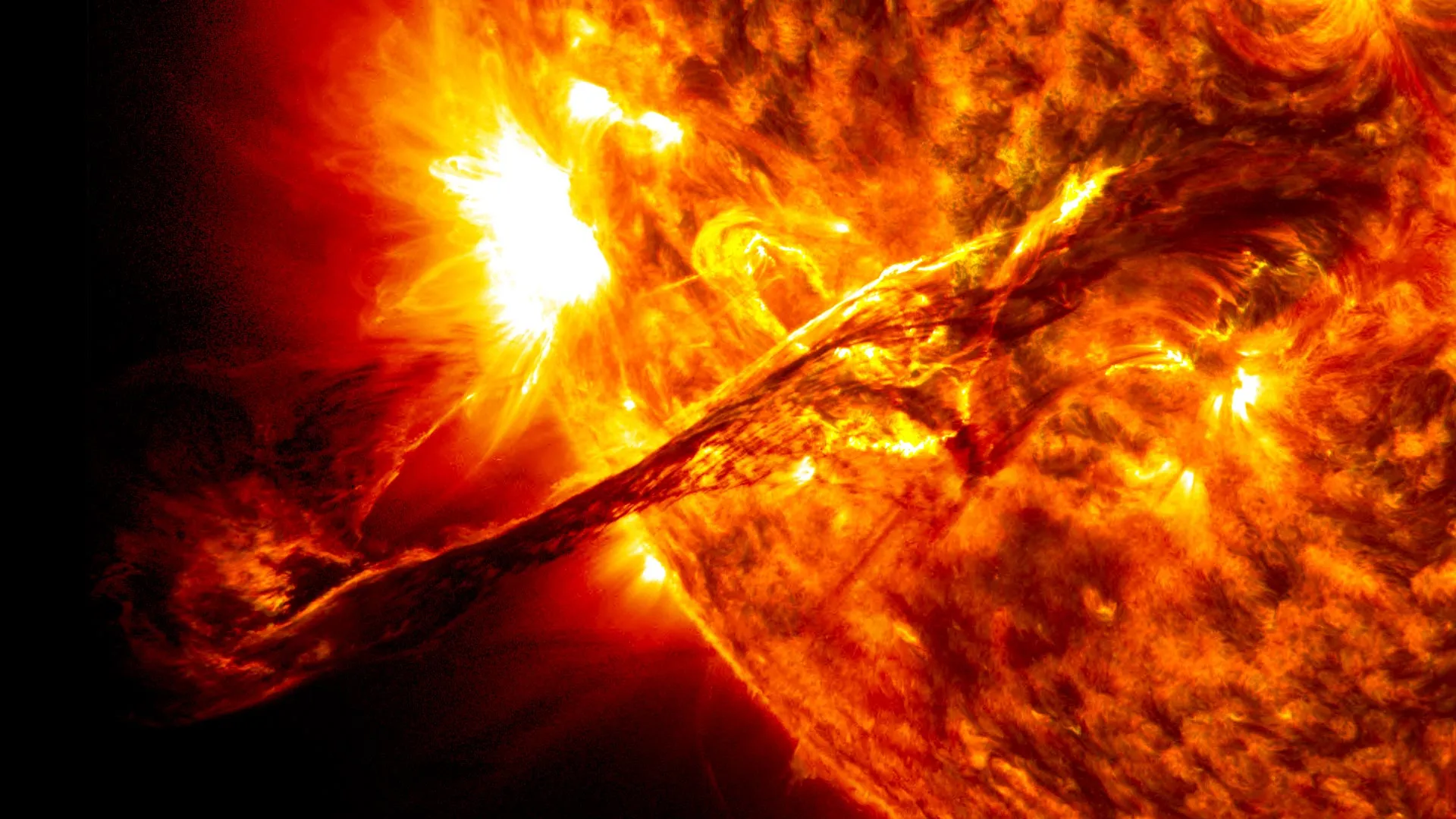
Researchers at the University of Warwick have developed a new forecasting technique based on a newly identified transition point in the Sun’s activity cycle. The method analyzes the number of sunspots present at a stage where the Sun’s most severe space weather phenomena end abruptly, allowing scientists to estimate the intensity of the subsequent solar cycle with considerable advance notice.
The Sun follows an approximately 11-year cycle during which its magnetic field reverses and sunspot activity increases and decreases. Sunspots are magnetically active regions capable of producing solar flares and coronal mass ejections that send energy and charged particles into space. These phenomena can disrupt satellites, communications systems, navigation equipment, and power grids on Earth. Although sunspots have been observed for centuries, the highly variable nature of each solar cycle has made forecasting difficult, as cycles differ in duration and intensity.
The new technique builds upon earlier work that placed the Sun’s irregular cycles onto a standardized timeline. Researchers discovered that extreme space weather does not gradually fade as a cycle concludes but instead ceases at a clearly defined point. The count of sunspots visible at this transition stage correlates closely with the peak sunspot number in the following cycle. This relationship enables forecasts approximately six to seven years before the next cycle reaches maximum intensity, providing more advance warning than existing methods that typically require waiting until the Sun reaches solar minimum.
Initial projections using this technique suggest that Solar Cycle 26 could be moderate in strength, with a sunspot count between 100 and 120, potentially comparable to or weaker than the current cycle. More precise predictions are expected approximately two years from now, when the current cycle reaches the newly identified switch-off point and scientists can base calculations on direct observations rather than estimates.
The technique previously predicted that Solar Cycle 25 would display greater activity than many earlier forecasts had anticipated, a forecast that proved accurate as the cycle produced remarkable auroral displays. The method also offers insights into the solar dynamo process that generates and maintains the Sun’s magnetic field, potentially advancing understanding of how planetary magnetism produces space weather.
Article Attribution | Read More at Article Source
Article summary produced by Claude AI