

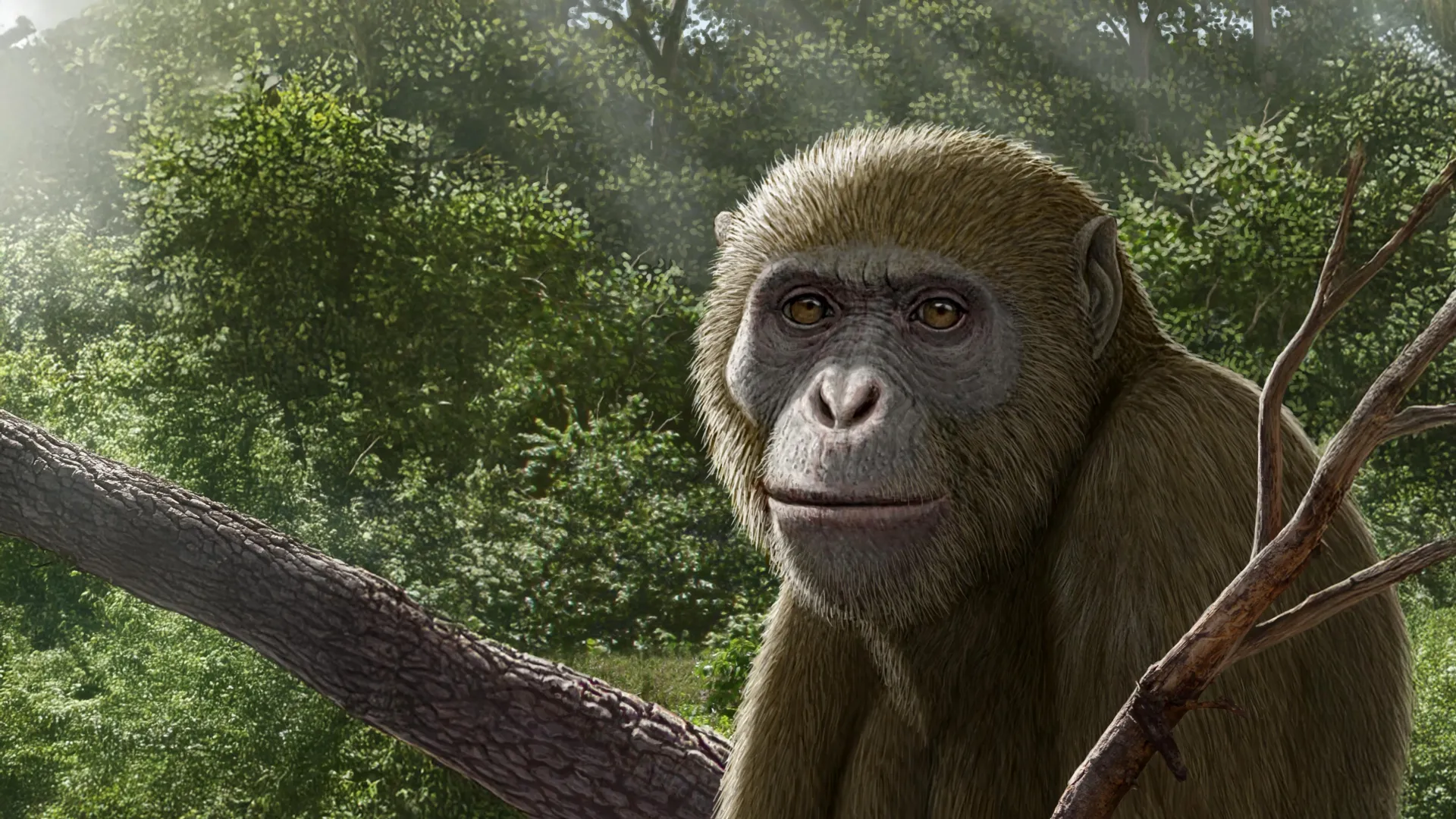
An international research team has identified a previously unknown ape species from Early Miocene Egypt, fundamentally reshaping understanding of where modern apes originated. The fossil, named Masripithecus moghraensis, was discovered at Wadi Moghra in northern Egypt and represents the first definitive evidence of an ape from North Africa during this period. The remains were uncovered during fieldwork in 2023 and 2024 by researchers from Mansoura University and the University of Southern California.
The fossil consists of part of a lower jaw containing distinctive anatomical features not previously identified in apes from the same time period. The specimen exhibits unusually large canine and premolar teeth alongside molars with rounded, heavily textured surfaces and a notably sturdy jaw structure. Researchers interpret these characteristics as evidence that Masripithecus possessed a versatile diet centered on fruits, with the capacity to consume harder foods such as nuts and seeds when necessary. This dietary flexibility would have enabled the species to adapt during a period when climatic shifts were increasing seasonal variation across northern Africa and the Arabian Peninsula.
The presence of this ape in North Africa challenges long-standing assumptions about ape distribution and evolution. Prior to this discovery, Early Miocene fossil sites in North Africa had yielded only monkey remains, leading researchers to conclude that apes were predominantly confined to regions farther south. Using advanced comparative analysis combining anatomical traits from living and extinct apes, genetic data from modern species, and fossil chronology, the research team determined that Masripithecus was more closely related to contemporary living apes than any Early Miocene species known from East Africa.
Biogeographic analyses examining the probable location of the ancestor shared by all living apes indicate northern Africa and the Middle East during the Early Miocene as the most likely origin point. During this period, geological processes including the northward movement of the African and Arabian plates created temporary land connections facilitating animal migration between regions. The discovery of Masripithecus provides evidence that ape diversification had already begun in this area before these terrestrial routes opened, allowing subsequent dispersal into Europe and Asia.
The findings have prompted reconsideration of established theories among researchers in the field. Scientists previously held that the common ancestor of all modern apes likely originated in or near East Africa, but the new evidence and analyses suggest this scenario requires significant revision. Researchers expect that continued fieldwork in North Africa and the Middle East will reveal additional fossils clarifying the origin and early diversification of modern ape lineages.
Article Attribution | Read More at Article Source
Article summary produced by Claude AI