

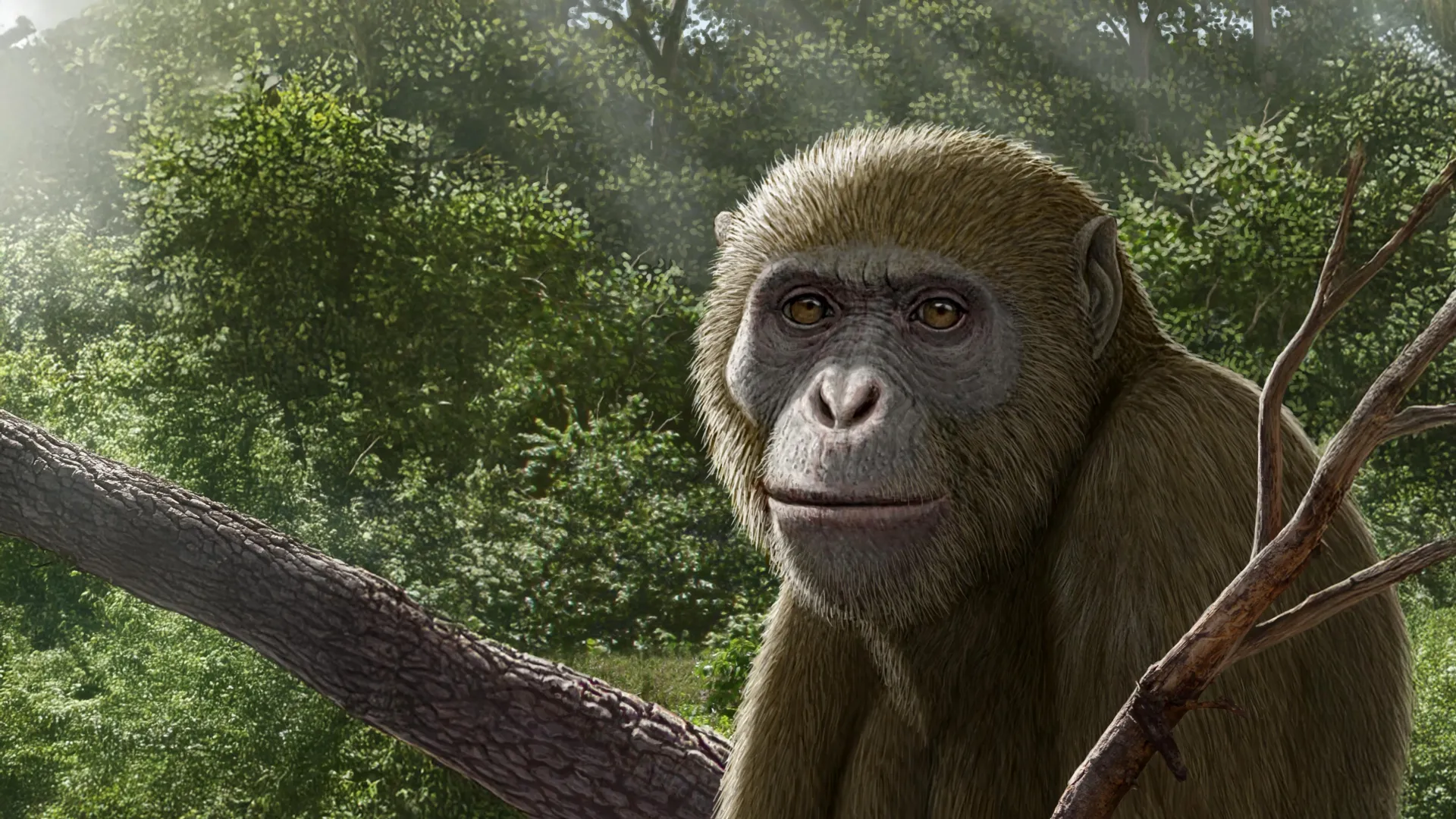
An international research team has described a newly identified fossil ape species named Masripithecus moghraensis, discovered in northern Egypt at the Wadi Moghra site. The fossils date to approximately 17 to 18 million years ago during the Early Miocene period. This discovery represents the first definitive evidence of an ape from North Africa and expands the known geographic range of early apes beyond previously documented locations.
The research, conducted by scientists from Mansoura University in Egypt and the University of Southern California, was published in Science. The fossil material consists of partial lower jaw remains containing distinctive dental and structural features not previously observed in other apes from the same time period. The specimen exhibits unusually large canine and premolar teeth, molars with rounded and heavily textured surfaces, and a robust jaw structure. Researchers interpret these characteristics as indicating dietary flexibility, suggesting the animal primarily consumed fruit but possessed the ability to process harder foods such as nuts and seeds when necessary.
The positioning of Masripithecus within the ape family tree holds significant implications for understanding primate evolution. Using advanced analytical methods that combined anatomical comparisons, genetic data from living species, and fossil age estimates, the research team determined that Masripithecus shared a closer evolutionary relationship with modern apes than any Early Miocene species currently known from East Africa. Biogeographic analyses conducted by the team suggest that the common ancestor of all living apes most likely originated in northern Africa and the Middle East during the Early Miocene, rather than in East Africa as traditionally theorized.
The timing and location of Masripithecus coincided with significant geological changes in the region. During this period, the African and Arabian plates were moving northward and colliding with Asia, creating fluctuating sea levels that periodically opened land bridges between regions. The discovery helps bridge the previously separate fossil records of Africa and Eurasia, indicating that ape diversification was already underway in northern regions before species dispersed into Europe and Asia.
Researchers involved in the study anticipate that additional fieldwork across North Africa and the Middle East will yield further fossils that clarify the evolutionary history and diversification patterns of modern apes. The findings challenge long-standing assumptions about ape origins and underscore the importance of exploring regions that have received limited paleontological investigation.
Article Attribution | Read More at Article Source
Article summary produced by Claude AI